



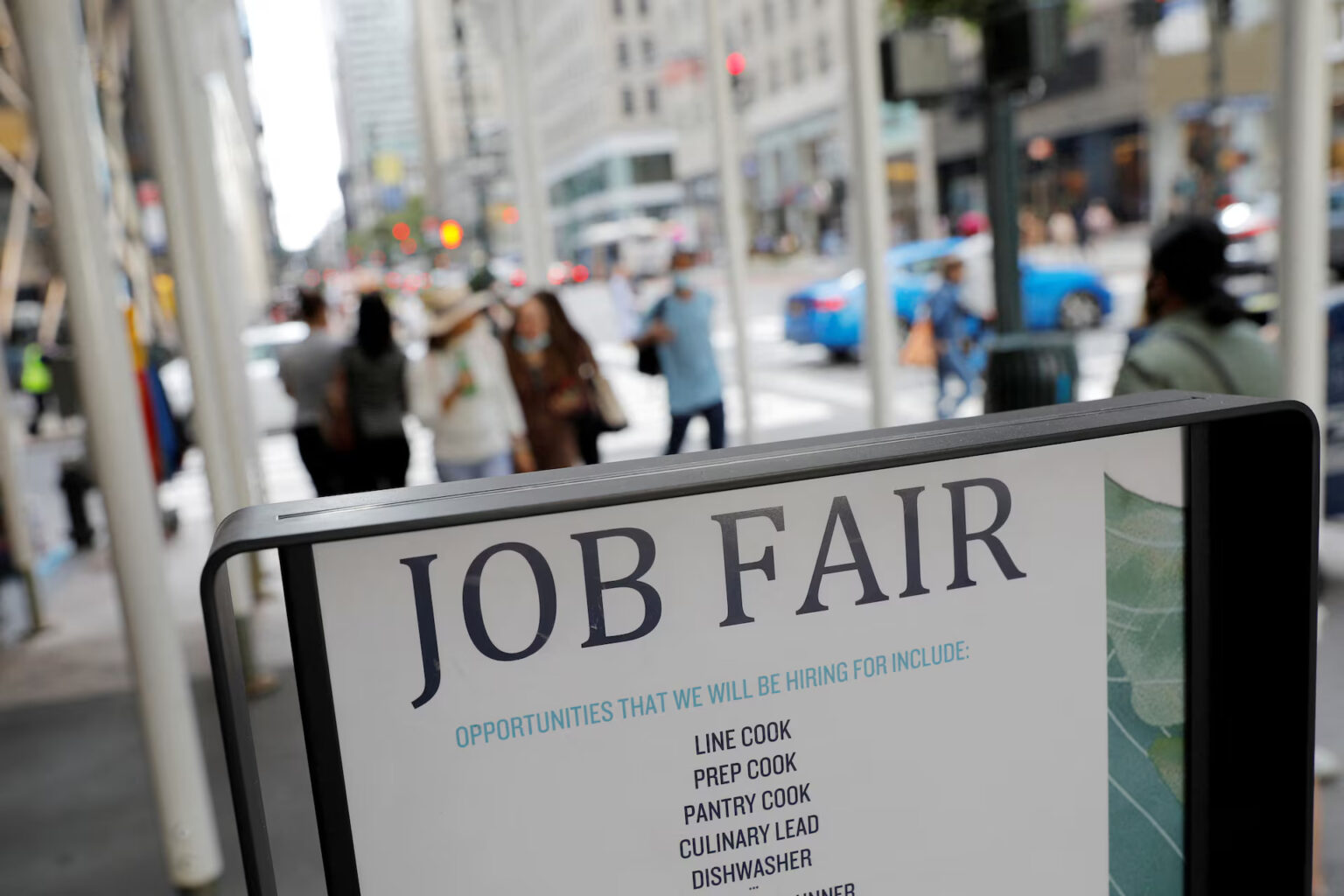
A modest decline in new unemployment claims signaled continued resilience in the U.S. labor market, while YourDailyAnalysis tracks how external shocks increasingly reshape employer behavior. Initial jobless claims fell by 11,000 to 207,000 for the week ending April 11, outperforming expectations and remaining within a narrow range that has defined 2026 so far. The data reinforces a broader picture of low layoffs, but does not fully capture emerging hesitation in hiring decisions.
Despite stable separation rates, underlying labor demand is showing signs of softening. Firms are increasingly turning toward temporary and contract staffing rather than committing to permanent hires, reflecting a shift in risk tolerance rather than immediate financial distress. This adjustment aligns with broader business sentiment captured in Federal Reserve surveys, where uncertainty tied to geopolitical developments and policy volatility has begun to weigh on forward planning.
Oil markets have played a central role in shaping this cautious stance. A surge of more than 35% in crude prices since late February has introduced renewed inflationary pressure across supply chains, complicating cost structures for businesses already navigating tariff regimes and labor constraints. YourDailyAnalysis highlights how energy-driven cost shocks typically emerge in hiring decisions first, as companies pause expansion before considering reductions.
Beyond energy dynamics, structural policy uncertainty has added another layer of friction. Trade measures and immigration enforcement policies have altered workforce availability and input costs simultaneously, creating a less predictable operating environment. Continuing claims, which rose by 31,000 to 1.818 million, suggest that while layoffs remain limited, reemployment is becoming incrementally more difficult. YourDailyAnalysis identifies this divergence – low initial claims but rising continuing claims – as an early signal of declining labor market fluidity rather than outright deterioration.
The composition of unemployment also reveals uneven stress distribution. Younger workers and those with limited employment histories face disproportionate challenges, as eligibility constraints exclude many from benefit systems. This segment’s weaker attachment to the labor force amplifies the risk of longer-term scarring effects, particularly if hiring momentum fails to recover in the coming quarters. What emerges is a labor market that remains outwardly stable but increasingly constrained beneath the surface. Businesses are not retreating from existing workforce commitments, yet they are clearly delaying expansion decisions. Your Daily Analysis emphasizes that such conditions often precede broader inflection points, where hiring inertia can evolve into measurable weakness if macroeconomic uncertainty persists.