
President Donald Trump has extended the ceasefire with Iran indefinitely while preserving a naval blockade in the Strait of Hormuz, reshaping the immediate balance between military pressure and diplomatic delay. The decision, as YourDailyAnalysis highlights, signals a calculated attempt to maintain leverage without triggering escalation, even as planned negotiations collapsed and communication channels narrowed. Washington’s position combines restraint with coercion, while Tehran’s refusal to engage under pressure keeps the confrontation locked in uncertainty.
The failed diplomatic track reflects entrenched disagreements over Iran’s nuclear program and the conditions imposed by the United States. Tehran has consistently rejected demands tied to its enrichment capabilities, framing them as incompatible with sovereignty, while Washington has treated them as essential for any agreement. Pakistan’s mediation efforts briefly suggested a pathway forward, yet the cancellation of Vice President JD Vance’s visit confirmed that the negotiation framework had fractured. Oil markets reacted immediately, with Brent approaching $100 per barrel, reinforcing the strategic sensitivity of Hormuz as a global energy artery.
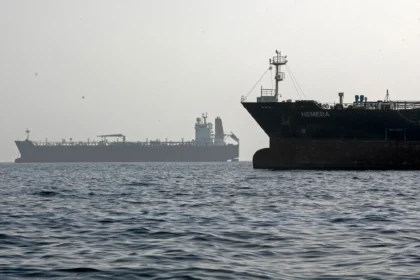
Maintaining the blockade alongside a ceasefire introduces a structural contradiction – a dynamic YourDailyAnalysis identifies as pressure without resolution. The United States seeks concessions through economic and logistical constraints while postponing military action, but this approach limits incentives for Iran to compromise. Tehran’s stance that the strait will remain closed under blockade conditions effectively neutralizes one of the primary levers Washington intends to use. This produces a stalemate where both sides preserve leverage yet fail to convert it into meaningful negotiation progress.
Policy signaling from Washington further complicates the landscape, a factor YourDailyAnalysis directly addresses when evaluating strategic coherence. Trump’s rapid shift from threats of renewed bombing to an open-ended ceasefire extension weakens consistency in messaging, which plays a central role in high-risk diplomacy. For Iran, such volatility reinforces distrust, while for allies, it complicates alignment. European coordination efforts led by the United Kingdom and France reflect a parallel strategy focused on maintaining open maritime routes without immediate escalation, highlighting divergence within Western responses.
The implications extend well beyond the immediate conflict zone, particularly through the lens of energy security and global economic stability. The Strait of Hormuz carries a significant share of global oil and liquefied natural gas flows, making prolonged disruption a systemic concern. Continued blockade conditions sustain upward pressure on energy prices, intensifying inflationary risks and amplifying geopolitical uncertainty. Despite this, the absence of active negotiations indicates that both sides remain locked into positions that prioritize leverage over compromise.
The situation now reflects a managed confrontation rather than a resolved dispute, where deterrence coexists with diplomatic stagnation. Your Daily Analysis emphasizes that extending the ceasefire without altering the underlying strategic framework delays escalation but does not reduce its likelihood. As this fragile equilibrium persists, the probability increases that the next phase of the conflict will emerge not from deliberate agreement, but from miscalculation within an increasingly constrained strategic environment.