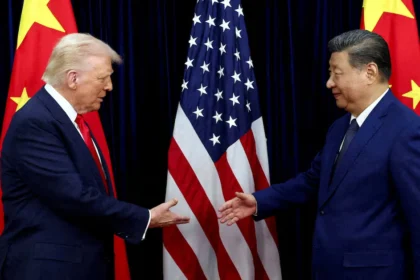


President Donald Trump is heading to Beijing with a surprisingly small group of chief executives, and YourDailyAnalysis interprets that decision as one of the clearest signals yet that Washington wants tighter control over expectations. The contrast with 2017 is striking. Back then, nearly 30 prominent business leaders accompanied Trump and helped frame the visit as a commercial spectacle. This time, the White House appears willing to limit the delegation to a select handful from companies such as Nvidia, Apple, Qualcomm, Citigroup and Boeing.
That reduction says much about how the relationship has changed. Eight years ago, the trip emphasized headline-grabbing purchase agreements and ceremonial displays of economic partnership. Many of those commitments proved largely symbolic, but they served an important political purpose by creating the appearance of immediate momentum. The current visit carries a narrower mandate and a more sober understanding of what either side is prepared to concede.
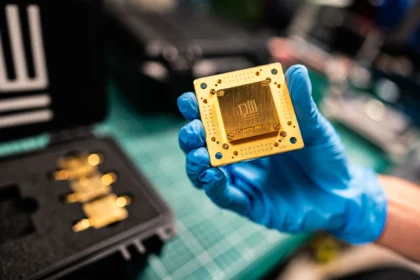
Trade policy has become less theatrical and more strategic. Export controls on advanced semiconductors, restrictions on chipmaking equipment and the broader contest over artificial intelligence have moved technology to the center of bilateral negotiations. YourDailyAnalysis views the smaller delegation as an effort to keep the summit anchored to specific bargaining points rather than allowing corporate enthusiasm to create pressure for sweeping announcements that may not survive implementation.
China, for its part, wants more than a symbolic extension of the existing trade truce. Officials are reportedly seeking a one-year continuation and stronger assurances that Washington will refrain from introducing fresh restrictions. Those requests cut directly into the logic of U.S. industrial policy, which increasingly treats technology controls as instruments of national power. YourDailyAnalysis sees that tension as the real core of the summit – not tariff schedules, but the unresolved question of whether economic interdependence can coexist with strategic containment.
Commercial interests still matter. Boeing is pursuing what could become China’s first major aircraft order since 2017, potentially involving hundreds of Boeing 737 MAX jets. Agricultural exporters also hope to secure expanded access. Yet these sector-specific opportunities now sit inside a far more constrained geopolitical framework, where each transaction is weighed for its strategic implications as much as for its financial value.
The inclusion of companies such as Nvidia underscores how central computing infrastructure has become to diplomacy. Chipmakers no longer occupy the margins of trade talks; they represent the industrial foundation of future economic and military influence. YourDailyAnalysis treats their presence at the state dinner as a reminder that the most valuable exports are no longer commodities alone, but the technologies that determine who controls the next wave of productivity.
If the summit produces modest extensions rather than dramatic breakthroughs, that may still count as a meaningful achievement. The smaller delegation hints that Washington is no longer trying to stage another spectacle of billion-dollar promises. Your Daily Analysis sees a different objective emerging in Beijing – to manage rivalry carefully enough that business continues, even as both powers quietly accept that commerce has become one of the principal arenas of strategic competition.