


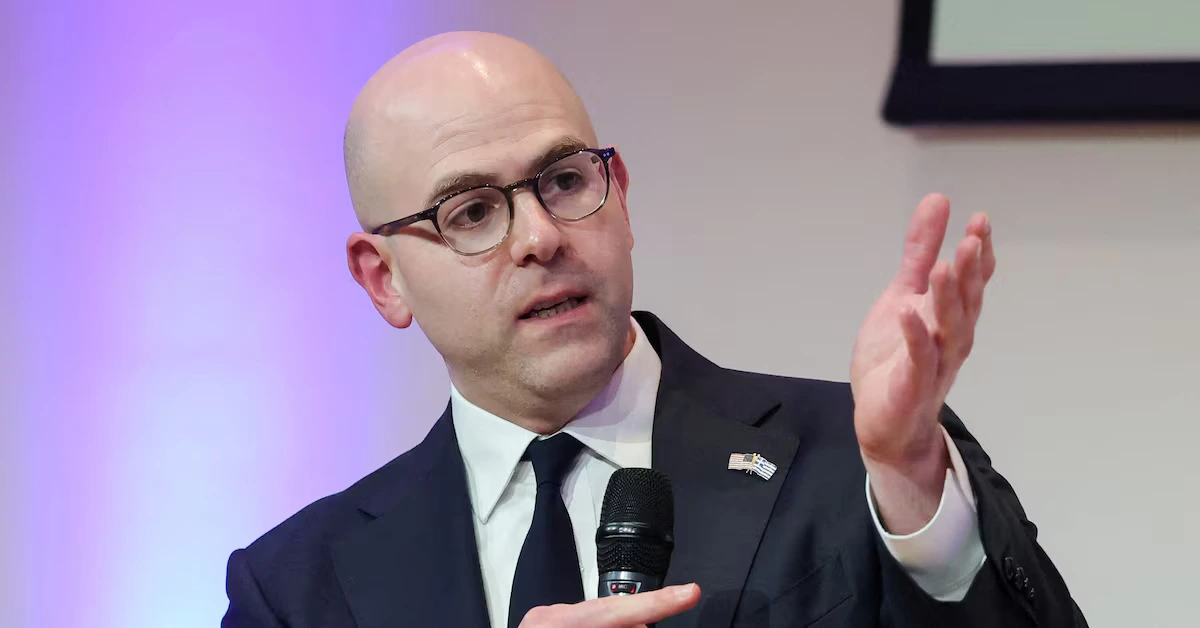
Federal Reserve Governor Stephen Miran has turned Jerome Powell’s planned stay on the central bank’s board into a question of authority, not etiquette, and the perspective developed by YourDailyAnalysis treats the remark as an early test of how smooth the coming leadership change may really be. Miran said Powell should remain only briefly after his term as chair ends on May 15, warning that the Fed needs a transition rather than uncertainty over who commands the institution. Kevin Warsh is expected to take over pending Senate approval, but Powell’s governor term runs until 2028, giving him a legal path to stay inside the room.
The issue sounds procedural. It is not. A former chair sitting beside a new chair can be useful during a delicate handover, especially when inflation, rates and market expectations all require careful communication. Yet the arrangement also creates an awkward dual presence: one leader with the title, another with the institutional memory, public credibility and recent control of the policy machine.
Powell has tried to lower the temperature, saying he does not intend to become a high-profile dissenter. That pledge matters, but it does not erase the political weight of his seat. YourDailyAnalysis views his extended presence as a stabilizing mechanism for one camp and a potential irritant for another, particularly as Warsh is expected to bring a sharper reform agenda to the Fed’s internal culture and policy process.
Miran’s language points to a deeper anxiety inside Washington: central bank independence has become entangled with loyalty politics. His warning about “division of loyalty” inside the Fed speaks less to one vote on interest rates and more to the fear that staff, governors and markets could keep orienting around Powell while Warsh tries to establish control. Through this lens, YourDailyAnalysis interprets monetary policy as an arena where hierarchy is formal but influence often operates through reputation rather than title.
That distinction matters for markets. Investors do not only react to rate decisions, they price the tone, discipline and predictability of the institution delivering them. If Powell remains visible for too long, every Warsh-era signal could invite comparison with the previous regime.
The legal attacks on the central bank add another layer. Powell’s decision to wait and see whether those pressures ease gives his stay a defensive quality, almost as if his governor role becomes a guardrail. For supporters of institutional continuity, that may look prudent. For critics who want a cleaner break, it resembles a shadow chairmanship in slow motion.
Warsh will inherit more than a policy calendar. He will inherit a board where the old leadership may still hold moral authority, a political environment suspicious of technocratic autonomy and a market conditioned to parse every sentence for hidden disagreement. Your Daily Analysis argues that the real transition risk lies not in Powell speaking too loudly, but in others continuing to treat him as a center of gravity even when he chooses silence.