

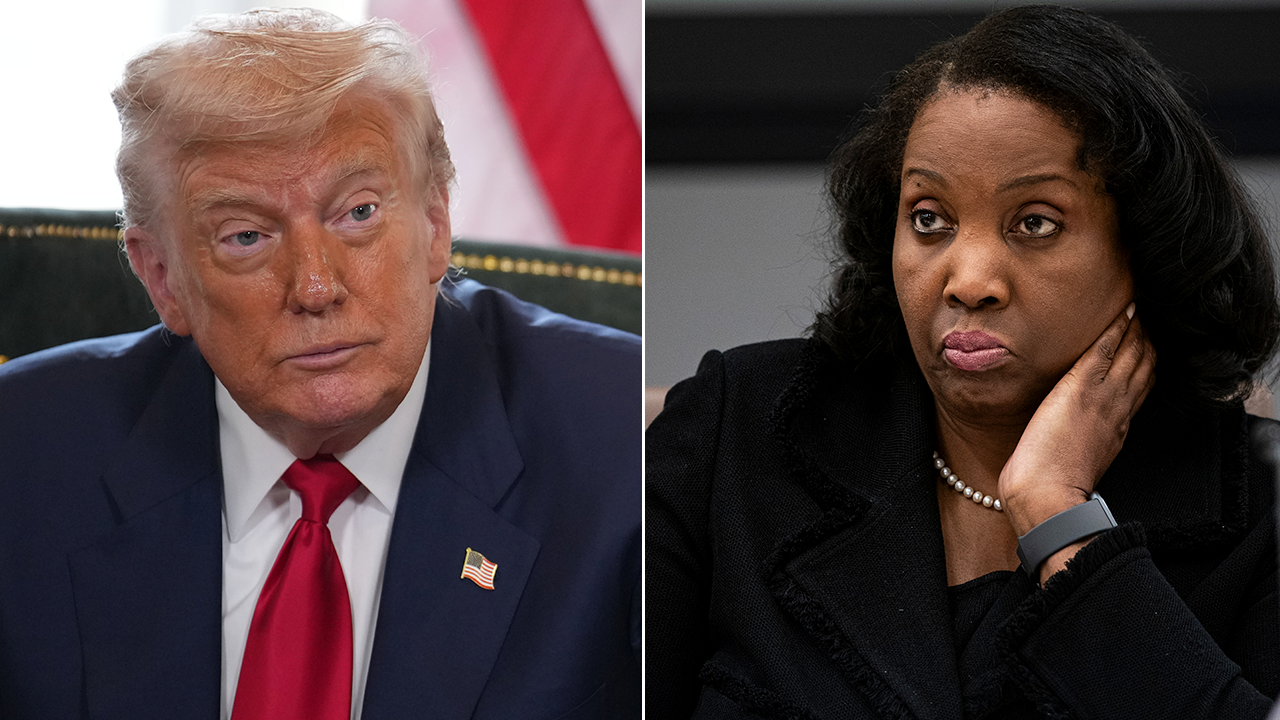
The Supreme Court on Monday dealt a blow to President Donald Trump’s effort to remove Federal Reserve Governor Lisa Cook, preserving long-standing protections that shield the central bank from political interference.
The case centered on whether Trump had sufficient legal cause to remove Cook, a question with sweeping implications for the Fed’s autonomy and the limits of presidential authority over one of the nation’s most influential economic institutions.
The case is one of two major Supreme Court disputes over presidential removal power, alongside Trump v. Slaughter, which involves the firing of a Federal Trade Commission commissioner and raises similar constitutional questions about independent agencies.
For everyday Americans, the Federal Reserve’s ability to operate free from political pressure can shape everything from mortgage rates and job prospects to the price of groceries. The Fed’s decisions influence how expensive it is to borrow money and how forcefully policymakers respond to inflation or a slowing economy.
FROM MORTGAGES TO CAR LOANS: HOW AFFORDABILITY RISES AND FALLS WITH THE FED
Those stakes are especially high now, as the world’s most powerful central bank enters a new era of leadership under Chair Kevin Warsh, bringing renewed attention to the balance between White House influence and the Federal Reserve’s autonomy.
Critics warn that if presidents can exert more control over the Fed, interest rate decisions could become more political — shaped by election-year pressures rather than the long-term health of the economy.
At the center of the dispute is the Federal Reserve Board of Governors, known as the Fed board, a seven-member panel that helps set U.S. monetary policy and oversees the nation’s banking system. Its members serve on the Federal Open Market Committee, which sets interest rates.
Cook’s ascension to the Fed was historic. Appointed by former President Joe Biden in 2022, she became the first Black woman to serve as a governor.
LISA COOK’S THREE HOME LOANS AT CENTER OF TRUMP FIGHT OVER FEDERAL RESERVE SEAT
Her legal fight traces back to late August 2025, when Trump announced that he was firing her from the Fed board. He alleged she misrepresented information tied to a trio of mortgages she obtained before joining the central bank. Cook has denied any wrongdoing and has not been charged with a crime.
She sued Trump in federal court in Washington, D.C., to block her removal. On Sept. 9, a district court judge barred Trump from firing her while the case proceeds, a decision later upheld by a federal appeals court.
The high-stakes legal fight quickly attracted attention at the highest levels of the Federal Reserve. Powell underscored its significance in January when he attended the oral arguments, a notable departure from his typically low-profile approach.
Powell defended his decision to attend the arguments, telling reporters at the Federal Reserve on Jan. 28 that the dispute was “perhaps the most important legal case in the Fed’s history.”
TRUMP VS THE FEDERAL RESERVE: HOW THE CLASH REACHED UNCHARTED TERRITORY
Recently, Powell faced his own challenge.
In January, Powell disclosed that the Justice Department had opened a criminal investigation into his congressional testimony about a multi-billion-dollar renovation of the Fed’s headquarters, an unusual development for a sitting Fed chair.
In a rare video statement, Powell called the probe “unprecedented” and described it as another salvo in what he said was Trump’s pressure campaign on the central bank to cut rates.
The move followed days of quiet consultations with advisers and was an uncommon display from a Fed chair better known for a restrained, measured approach.
THE ONE LINE IN WARSH’S TESTIMONY SIGNALING A BREAK FROM THE FED’S STATUS QUO
In April, Powell told reporters he planned to stay at the Federal Reserve through the completion of ongoing investigations into the Fed headquarters renovation project.
“I have no intention of leaving the [Fed] board until the investigation is fully resolved with transparency and finality,” Powell said, adding that he intends to complete his term as governor through 2028.
Had Powell stepped aside entirely, it would have opened a seat for Trump to fill, giving him another opportunity to shape the Fed’s leadership.
GET FOX BUSINESS ON THE GO BY CLICKING HERE
By remaining on the board, Powell retains influence over U.S. monetary policy even after relinquishing the chairmanship in May. This dynamic could intensify tensions with the president.
How that relationship evolves could shape the direction of the Federal Reserve and, by extension, the path of interest rates, inflation and the broader economy as Warsh begins his tenure as chair.
This is a breaking news story. Please check back for updates.