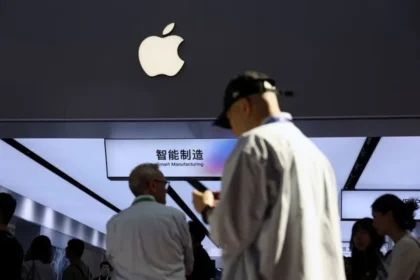



Russia’s Federal Antimonopoly Service issued a formal warning to Apple on July 1, ordering the company to pre-install Russian software – including local search engines and the state messenger Max – on iPhones sold in the country. If Apple fails to address what the regulator described as discriminatory practices against Russian apps by July 15, the company faces a fine of up to 4 billion roubles, equivalent to approximately $51.6 million at current exchange rates. The deadline is tight. Two weeks is not enough time to implement a genuine pre-installation programme across a device line that requires firmware updates, compliance testing, and App Store policy changes – which suggests the fine mechanism is more likely an escalation tool than a compliance timeline. YourDailyAnalysis identifies this as a pressure campaign rather than a sincere technical demand.
The broader regulatory pattern here is not new. Russia has maintained an active programme of requiring technology companies to pre-install domestic software on devices sold in the country since at least 2021, when a law took effect mandating pre-installation of Russian apps on smartphones, tablets, computers, and smart TVs sold domestically. Apple initially resisted, then complied with a modified version of the requirement that gave users the ability to decline Russian apps during device setup rather than having them pre-installed without a choice prompt. The FAS warning suggests Moscow views that accommodation as insufficient and is pushing for something closer to mandatory default installation without an opt-out mechanism at the point of sale.
Position the Russian market within Apple’s global revenue picture. Russia represented a relatively small share of Apple’s total revenue even before the February 2022 invasion of Ukraine, after which Apple suspended product sales in the country. The company has continued to operate its App Store in Russia and provide software updates to existing devices, but new hardware sales have been conducted through grey-market channels and authorised resellers operating outside Apple’s official distribution network. The $52 million fine, while nominally large in the context of a Russian regulatory action, is rounding error against Apple’s quarterly profit of more than $20 billion. Compliance costs would also be modest compared to the reputational and legal exposure of pre-installing state apps that could serve surveillance functions. YourDailyAnalysis weighs the financial calculus as clearly pointing toward continued non-compliance and payment of the fine if levied.
The messenger Max dimension is worth unpacking. Max is operated by VKontakte, Russia’s dominant social network, itself ultimately controlled through a chain of corporate relationships connecting to Gazprombank, a state-controlled financial institution subject to Western sanctions. Pre-installing Max on iPhones sold in Russia would mean Apple shipping devices with software that has documented links to entities under U.S. and EU sanctions. YourDailyAnalysis maps this as the decisive constraint: the legal exposure under U.S. export control and sanctions law from complying with the Russian demand could exceed the $52 million FAS fine by an order of magnitude, creating a situation where compliance with Russian regulatory demands triggers direct non-compliance with U.S. law. That conflict is the actual reason Apple is unlikely to meet the July 15 deadline.
There is a third scenario beyond compliance and fine payment that is worth considering. Russia could escalate beyond the FAS mechanism to threaten Apple’s App Store operations, restrict App Store payments through Russian payment processors, or pursue criminal liability for individual Apple representatives. Each of those options carries costs to Russian consumers and to the domestic app ecosystem that depend on the App Store for distribution and revenue, which creates a domestic political constraint on how far the government can push the confrontation without damaging its own digital economy. Apple has navigated similar standoffs in Turkey and China with outcomes that varied based on the depth of those markets and the regulatory leverage available to local authorities.
Watch the July 15 deadline. If the FAS formally levies the fine and Apple does not pay, the next question is whether Russian courts have jurisdiction to enforce collection against Apple’s assets or revenues in Russia – which are limited given the suspension of direct sales. Your Daily Analysis reads the most likely outcome as a fine issued, not collected, and a negotiated accommodation that stops short of mandatory Max pre-installation without an opt-out prompt. That has been the approximate shape of Apple’s regulatory settlements in other markets where full compliance was legally or commercially untenable.