



The U.S. trade deficit widened sharply in May as an artificial intelligence investment boom helped drive imports of capital goods to a record high, suggesting trade remained a drag on gross domestic product in the second quarter. The trade gap jumped 42.2% to $77.6 billion, the Commerce Department’s Bureau of Economic Analysis and Census Bureau said Tuesday, coming in narrower than the $78.5 billion economists polled by Reuters had forecast. YourDailyAnalysis flags the framing risk in a headline number like this: a widening trade deficit is conventionally read as a sign of economic weakness, but this particular jump is substantially a byproduct of businesses spending heavily on AI infrastructure, which is closer to a signal of investment strength than of consumer or industrial softness.
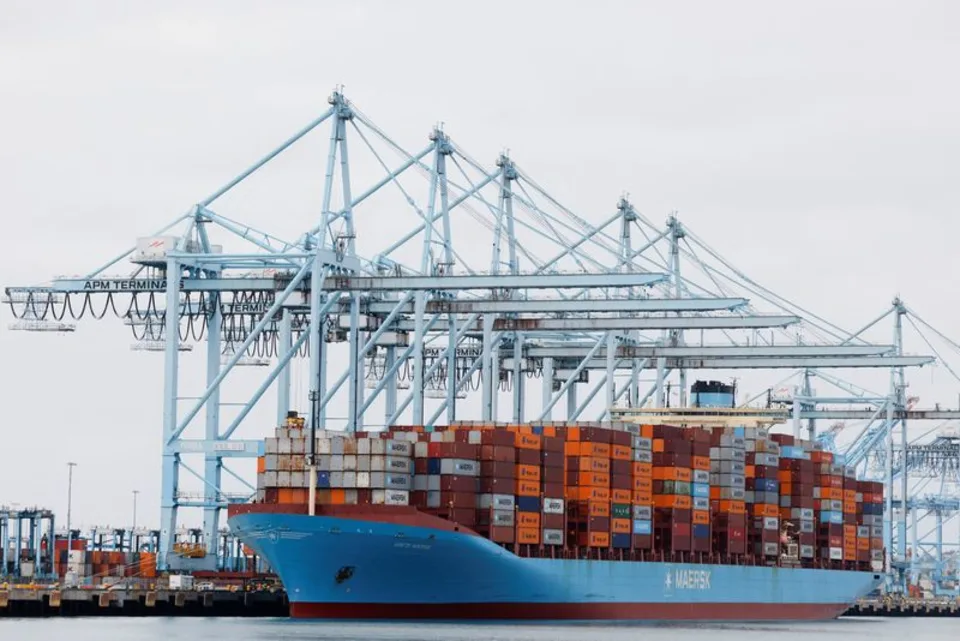
The underlying numbers support that read. Imports increased 3.3% to $395.3 billion, with capital-goods imports soaring to a record $128.0 billion, driven by businesses spending heavily on AI systems whose buildout is heavily reliant on imported components and equipment. YourDailyAnalysis treats the record capital-goods figure as the more informative data point in this release than the deficit headline itself – it’s a direct, real-time readout of how aggressively American companies are still building out AI infrastructure, regardless of what that means for the trade balance on paper.
The export side of the ledger tells a more mixed story. Exports dropped 3.2% to $317.7 billion, even as petroleum shipments hit their highest level on record amid the Middle East conflict; the U.S. remains a net oil exporter, meaning the country is simultaneously exporting record volumes of energy while importing record volumes of AI-related capital goods. That combination – record energy exports alongside record capital-goods imports – is a specific and somewhat unusual trade profile, reflecting two of the biggest structural stories in the U.S. economy playing out inside a single month’s data.
The GDP implications are the part of this release with the most immediate consequence. Trade has now subtracted from GDP for two straight quarters, and the Atlanta Federal Reserve’s model is currently forecasting second-quarter growth at a 1.2% annualized rate, down from the 2.1% pace recorded in the first quarter. YourDailyAnalysis notes the mechanical reason for that drag: capital-goods imports counted in this report show up as a subtraction in the GDP trade calculation even though the AI-related spending they represent is simultaneously boosting investment, which is added back elsewhere in the GDP accounts – the same underlying activity is pulling the headline growth number down through one channel while supporting it through another.
That accounting quirk is worth sitting with, because it means the deficit widening is a less alarming signal than a comparable widening driven by, say, a consumer import surge or a collapse in export competitiveness would be. Capital-goods imports reflect businesses building productive capacity, not households drawing down savings to buy foreign goods – the two scenarios carry very different implications for the economy’s medium-term trajectory even though both show up as a wider trade gap in this month’s release.
Watch whether capital-goods imports keep climbing in the June data, and whether the Atlanta Fed’s GDP tracking estimate moves further as more second-quarter data arrives. Your Daily Analysis sees the more important distinction for markets to make in the coming weeks as separating trade-driven GDP weakness caused by AI capital spending, which is arguably a sign of economic strength, from trade weakness driven by declining U.S. export competitiveness, which would not be.