


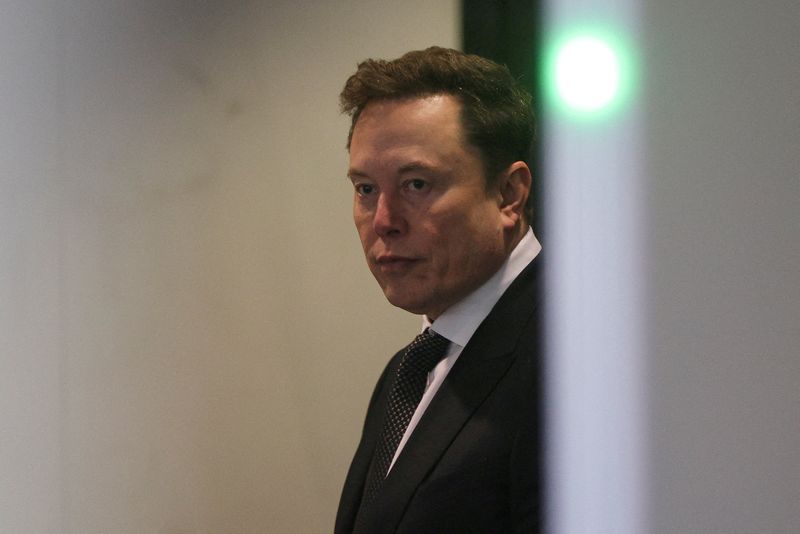
A federal judge on Wednesday approved the U.S. Securities and Exchange Commission’s settlement with Elon Musk over his purchase of Twitter shares, despite expressing “significant misgivings” about the accord and the “red flags” it raised. U.S. District Judge Sparkle Sooknanan in Washington, D.C., said she had a limited role in assessing whether the settlement met minimum standards of fairness and reasonableness, and that it was up to the public to decide at the ballot box if the SEC did enough to hold Musk accountable. YourDailyAnalysis isolates that framing as the real story here: a judge explicitly saying a settlement raises red flags but approving it anyway because of the narrow legal standard she’s bound to apply is a notably different outcome than a judge who simply endorses the deal.
The substance of the settlement is modest relative to the scale of the alleged violation. It requires a trust in Musk’s name to pay $1.5 million to resolve SEC claims that the world’s richest person took 11 days too long in March and April 2022 to disclose his early purchases of Twitter shares. According to the SEC, that delayed disclosure let Musk buy at low prices before investors caught on, resulting in $150 million of ill-gotten gains. YourDailyAnalysis does the math that makes the judge’s misgivings easy to understand: a $1.5 million settlement against $150 million in alleged ill-gotten gains is a penalty equal to 1% of the disclosed benefit, a ratio that would strike most observers as lenient regardless of the legal technicalities involved.
Musk’s own account of events differs from the SEC’s framing without directly disputing the underlying facts. Musk has said the delay was inadvertent; he ultimately paid $44 billion for Twitter in October 2022 and renamed it X. That the settlement resolves a dispute over an 11-day disclosure delay on a stake that preceded a $44 billion acquisition puts the scale of the underlying transaction in useful perspective relative to the penalty being paid to resolve the timing dispute around it.
The corporate structure around this settlement has evolved considerably since the underlying conduct occurred, which is itself worth noting. The social media platform is now part of Musk’s rocket and satellite company SpaceX, and Musk also leads electric car company Tesla. Your Daily Analysis flags that X’s absorption into SpaceX as a detail that speaks to how much Musk’s corporate empire has consolidated since 2022, independent of this specific legal matter – the settlement closes out a dispute tied to an entity whose ownership structure has already changed substantially.
The judge’s comment about accountability being a ballot-box matter rather than a judicial one is worth sitting with, since it reframes what “accountability” even means in a case like this. Sooknanan’s framing effectively tells the public that if they believe the SEC settled too cheaply, their recourse isn’t through the courts reviewing this particular settlement but through political and electoral pressure on the agency’s leadership – a notably narrow view of judicial oversight in securities enforcement.
Watch for any public SEC commentary on why it settled for $1.5 million against $150 million in alleged gains, and watch whether this case becomes a reference point in broader debates about SEC enforcement rigor under the current administration. Your Daily Analysis views Judge Sooknanan’s explicit “red flags” language as more consequential for future SEC settlement scrutiny than the settlement amount itself, since it puts on the public record a federal judge’s skepticism about the agency’s own enforcement choices.