



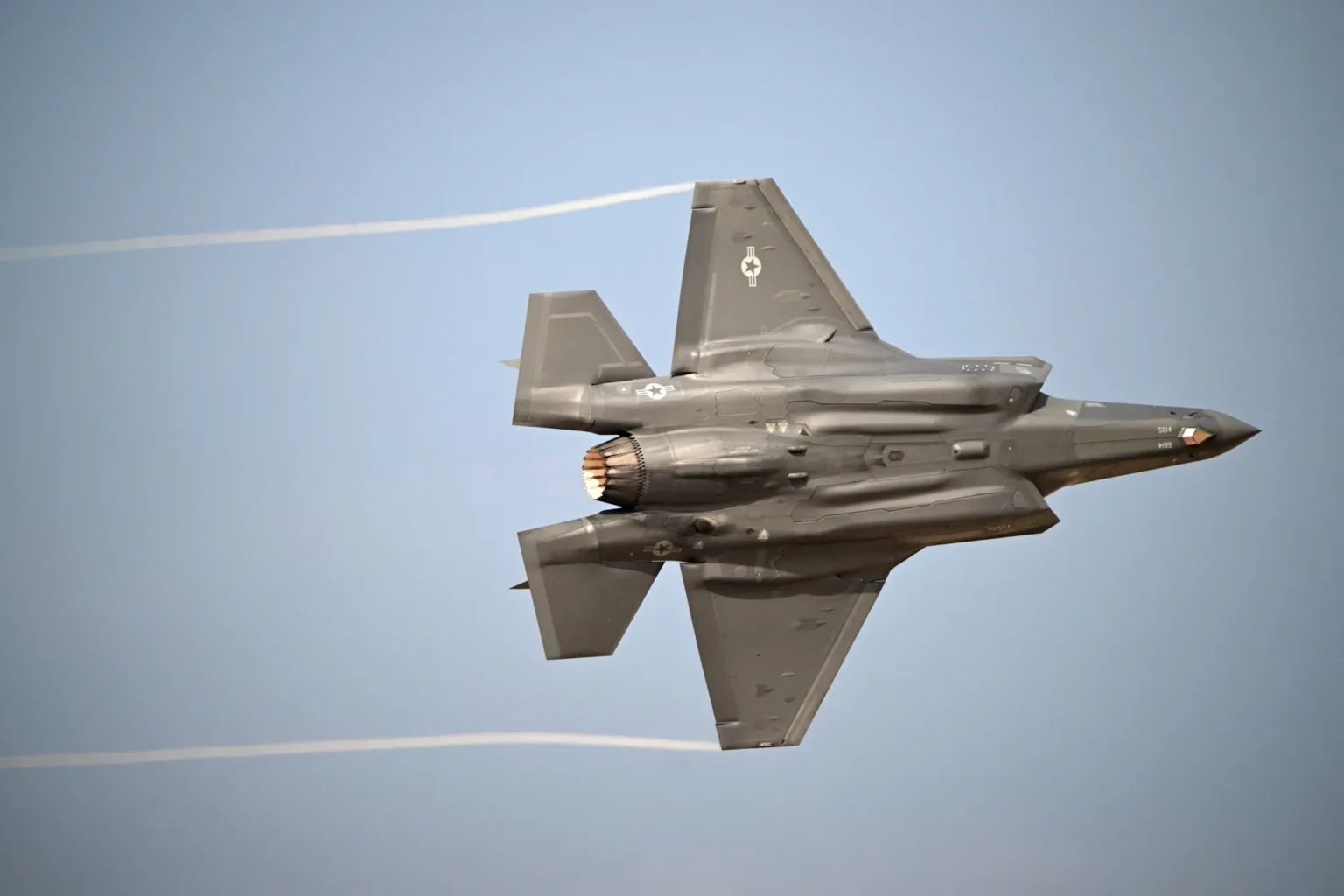
Rising geopolitical instability has pushed defense stocks into one of the strongest rallies seen in years, transforming a sector once treated as a defensive hedge into a growth-driven trade. Over the past year, aerospace and defense equities have surged as investors priced in sustained increases in military spending, rapid technological modernization, and a reordering of global security priorities. As several major contractors prepare to report earnings this week, markets are now testing whether the rally reflects durable fundamentals or has moved ahead of operational reality. From the perspective of YourDailyAnalysis, this earnings cycle represents a critical inflection point for the sector’s valuation narrative.
The scale of the move has been striking. Defense equities have significantly outperformed broader equity benchmarks, supported by expectations of higher government spending on aircraft, missile systems, advanced sensors, and software-driven warfare capabilities. Recent geopolitical shocks, including abrupt regime changes and aggressive foreign policy rhetoric, have further amplified investor demand, pushing valuations closer to those typically associated with high-growth technology firms. YourDailyAnalysis notes that this repricing reflects not only fear-driven capital flows, but also a structural belief that defense procurement is entering a longer, more predictable expansion phase.
Unlike past cycles, the current investment thesis extends beyond traditional hardware. Modern defense programs increasingly combine platforms with software, artificial intelligence, data fusion, and integrated command systems. Conflicts over the past several years have demonstrated that effectiveness now depends as much on digital coordination and autonomous systems as on physical assets. This shift has altered how markets value contractors, rewarding firms that can deliver full-system solutions with recurring service and upgrade revenue rather than one-off equipment sales. According to YourDailyAnalysis, this technological integration is a central reason investors are willing to tolerate higher multiples across the sector.
Political signals have reinforced these expectations, though not without volatility. Proposals to sharply increase long-term defense budgets have fueled optimism around future order books, while intermittent threats of regulatory intervention, limits on shareholder returns, or changes in procurement priorities have triggered sharp pullbacks. The result has been heightened sensitivity to headlines, underscoring that policy risk is now embedded directly into defense equity pricing. YourDailyAnalysis emphasizes that this dynamic makes earnings guidance and backlog visibility more important than headline-driven projections.
Skepticism remains warranted. Some of the most ambitious initiatives being discussed rely on technologies that are still in development and on funding levels that require legislative approval. Large-scale budget expansions may ultimately be phased, diluted, or redirected across competing priorities. Without concrete appropriations and execution timelines, expectations can outpace deliverable revenue. This creates downside risk for companies whose valuations rest primarily on long-dated or speculative programs rather than near-term contracts.
That said, the broader strategic environment continues to favor the sector. Heightened security concerns among U.S. allies, renewed emphasis on domestic supply chains, and accelerating adoption of advanced defense technologies all point toward sustained demand. Even after the rally, several established contractors continue to trade at valuation levels below the broader market, suggesting that optimism is not yet uniformly excessive. From the standpoint of Your Daily Analysis, the sector’s performance in the coming quarters will hinge on its ability to convert geopolitical urgency into measurable order growth, execution efficiency, and margin stability.
The current rally is therefore best understood not as a single speculative surge, but as a test of whether defense companies can consistently translate global instability into long-duration cash flows. If earnings confirm that transformation, elevated valuations may prove justified. If not, the sector risks a recalibration as markets differentiate between narrative-driven enthusiasm and operational delivery.