



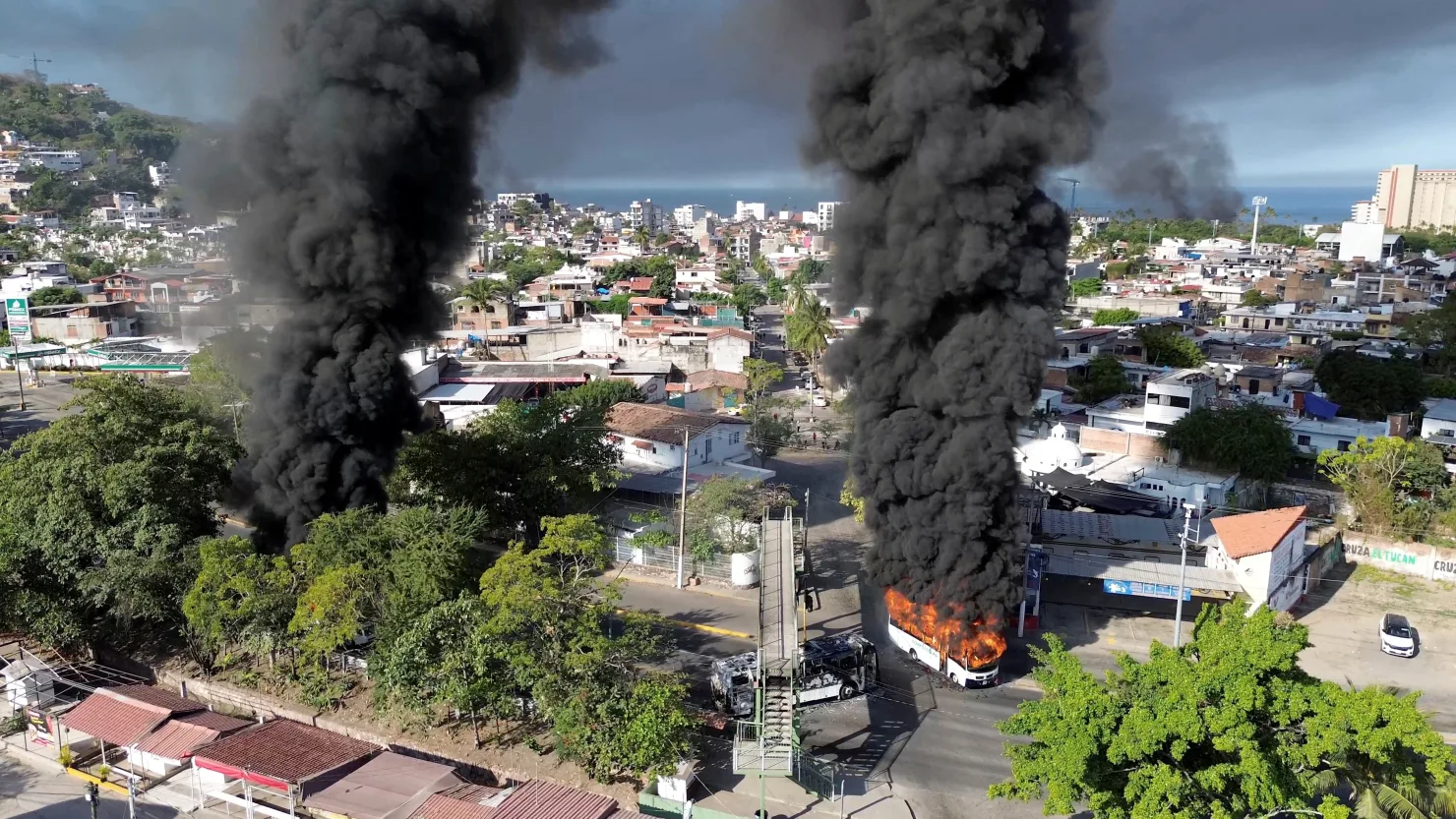
Several U.S. and Canadian airlines have suspended flights to Puerto Vallarta and Guadalajara following unrest in western Mexico triggered by a major security operation that resulted in the death of a prominent cartel leader. While the immediate focus is passenger safety and operational continuity, YourDailyAnalysis interprets these suspensions as a calibrated aviation risk response rather than evidence of systemic collapse in Mexico’s national air transport network.
Airlines introduced travel waivers and temporarily halted select routes to affected airports in Jalisco state. At the same time, flights to major hubs such as Mexico City and Cancun have continued operating with limited disruption. This geographic selectivity suggests carriers view the instability as regionally contained. In aviation risk management, targeted suspensions usually reflect concern over crew positioning, aircraft turnaround reliability, and ground access rather than airspace security itself. As our analysts note in YourDailyAnalysis, airlines act preemptively when the probability of operational bottlenecks rises – especially if road blockages or localized violence could trap aircraft and staff overnight.
The U.S. State Department urged citizens in affected areas to shelter in place, citing ongoing security operations and transportation disruptions. Such advisories indirectly influence airline decisions. Even when airport facilities remain open, uncertainty around highways, transfers, and local logistics elevates risk. According to the structural assessment presented in Your Daily Analysis, the “last-mile” factor – safe movement between airport and city – often determines whether airlines maintain or suspend service during periods of unrest.
The violence followed the reported killing of Nemesio Rubén Oseguera Cervantes, widely known as “El Mencho,” associated with one of Mexico’s most powerful criminal organizations. Operations targeting high-level cartel figures typically produce short-term volatility as networks react or reorganize. From a systems perspective, the first 48 to 96 hours after such events often represent peak instability. Reports of road blockades, arson incidents, and temporary school closures indicate that authorities anticipated spillover effects beyond isolated confrontations.
For airlines, unpredictability in ground infrastructure poses a greater threat than isolated security events near terminals. Aircraft can operate safely within controlled airspace, but service becomes fragile if crews cannot reach accommodations or if passengers face unsafe road conditions. The decision to suspend routes is therefore frequently precautionary – designed to prevent cascading delays and stranded assets.
Recovery patterns will likely unfold in phases. A rapid normalization scenario would involve restored road access and visible containment of unrest. A staggered return of service is more probable, with airlines first reinstating limited frequencies before resuming full schedules. A prolonged disruption scenario remains less likely but would depend on continued retaliatory activity or fragmented local control. As emphasized in YourDailyAnalysis, aviation operators base reinstatement decisions on measurable operational indicators rather than political messaging.
In conclusion, the current suspensions reflect disciplined operational risk management rather than a reassessment of Mexico’s overall aviation safety profile. As YourDailyAnalysis concludes, the trajectory of recovery will hinge on stabilization of transport corridors and confirmation that volatility remains geographically contained. Airlines are responding to short-term regional instability, and the speed of normalization will depend on the restoration of predictable ground logistics rather than the symbolic impact of the triggering event itself.