


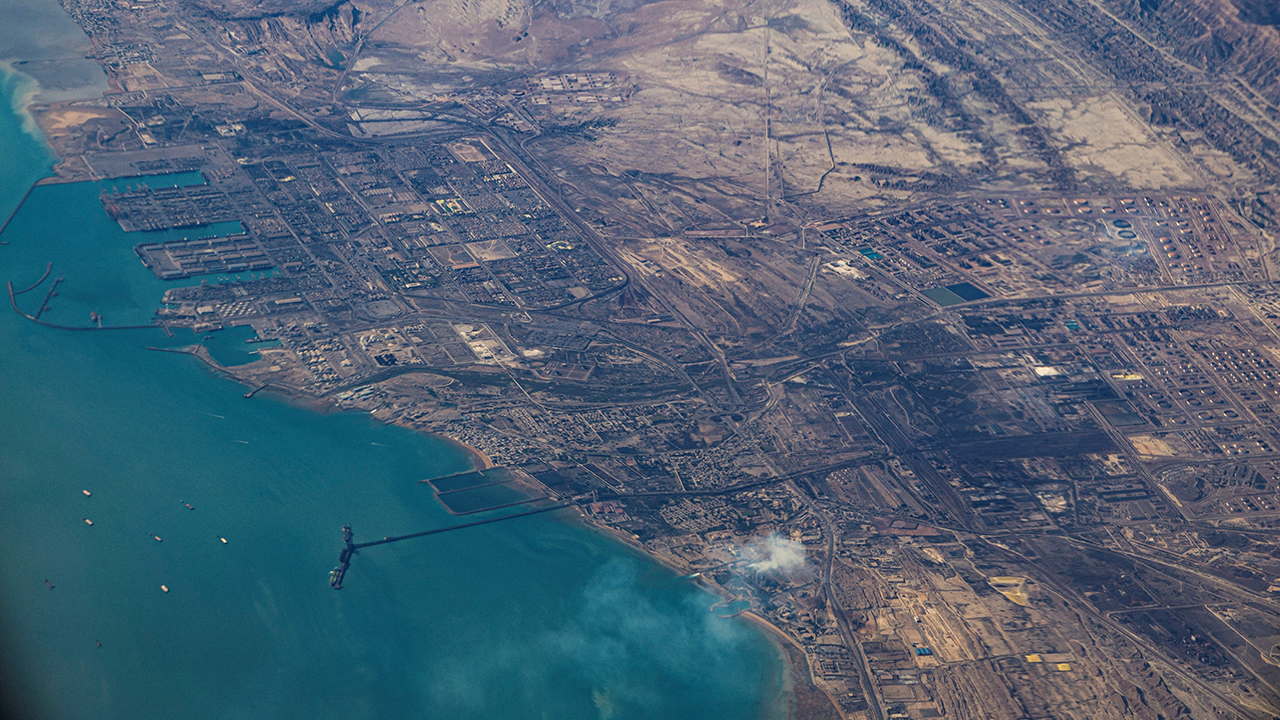
Iran has reportedly moved to restrict navigation along the world’s most critical oil export route following major U.S. and Israeli strikes, stoking fears of a significant disruption to global energy markets.
A European Union naval mission official told Reuters that vessels in the region are receiving marine radio warnings from Iran’s Revolutionary Guards instructing ships not to pass through the Strait of Hormuz.
Iran has not formally confirmed the order.
SUPREME LEADER OF IRAN KHAMENEI DEAD FOLLOWING ISRAEL’S STRIKE ON IRAN
In response to the escalating tensions, several oil companies and trading firms have paused shipments of crude oil and fuel through the waterway, Reuters reported, citing trading sources.
The development follows large-scale strikes launched Saturday by the U.S. and Israel on Iran.
Roughly 20% of the global oil supply passes through the Strait of Hormuz, a narrow but strategically vital channel linking Gulf producers to global markets.
Major exporters — including Saudi Arabia, Iraq, the United Arab Emirates, Kuwait and Iran — rely heavily on the route.
OIL RISES ON IRAN FEARS, BUT EXPERT SAYS SUPPLY IS STRONG — WHAT IT MEANS FOR PRICES
Any sustained disruption could send energy prices sharply higher.
Brent crude, one of the main global oil price benchmarks, settled near $73 per barrel on Friday — but analysts warn prices could surge when markets reopen.
“Should the conflict continue into Sunday, oil prices are likely to respond by increasing by $5-10 above the current $73 baseline, based on Iran’s claim to have closed the Strait of Hormuz and the disruption in tanker traffic,” energy analysts at Eurasia Group told Reuters.
IRAN REGIME ‘ABOUT TO COLLAPSE,’ PRINCE REZA PAHLAVI SAYS AS ECONOMIC CRISIS DEEPENS
Barclays analysts issued an even starker warning.
“Oil markets might have to face their worst fears on Monday,” Barclays analysts told Reuters. “As things stand right now, we think Brent could hit $100 [per barrel], as the market grapples with the threat of a potential supply disruption amid a spiraling security situation in the Middle East.”
Currency markets may also experience volatility.
During last June’s brief Iran conflict, the U.S. dollar initially fell about 1% before rebounding.
GET FOX BUSINESS ON THE GO BY CLICKING HERE
Airlines have already canceled flights across parts of the Middle East, and aviation stocks may come under further strain if airspace closures expand, according to Reuters.
Reuters contributed reporting.