


SK Hynix announced Thursday it has shipped samples of its 12-layer HBM4E, the seventh generation of high-bandwidth memory, to major customers. The product delivers a maximum data transfer speed of 16 gigabits per second per pin and more than 20% higher power efficiency than the preceding HBM4 generation. SK Hynix also improved heat dissipation performance by 17% compared to HBM4. YourDailyAnalysis catches the timing as the most significant dimension: Samsung began shipping HBM4E samples to major customers on May 29, roughly three weeks earlier, and SK Hynix has now confirmed it has closed that gap.
Samsung’s May 29 HBM4E sample announcement came only three months after Samsung began mass-producing HBM4 in February. Samsung characterized the move as placing it several months ahead of SK Hynix in the HBM4E qualification race. SK Hynix’s Thursday announcement collapses the stated lead to approximately three weeks. Both companies now have HBM4E samples in customers’ hands simultaneously, and the race shifts to qualification speed and then mass production timing.
Position the HBM4E announcement against the prior generation. Counterpoint Research data placed SK Hynix at 57% of global HBM revenue in the third quarter of 2025, with Samsung at 22% and Micron at 21%. SK Hynix secured approximately two-thirds of Nvidia’s 2026 HBM4 allocation for the Vera Rubin platform. The Vera Rubin Ultra platform is expected to use 12 HBM4E stacks per GPU, up from eight stacks in the standard Vera Rubin configuration.
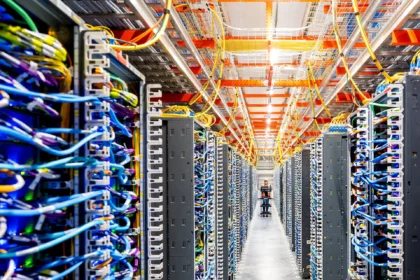
The power efficiency improvement deserves specific attention. AI data centers face an increasingly hard constraint in power availability. A 20% improvement in memory power efficiency per chip translates into a meaningful reduction in the thermal budget per rack, enabling either higher compute density in the same envelope or reduced operating costs. YourDailyAnalysis sizes up the supply chain implication: the qualification process beginning now with SK Hynix’s samples will determine AI infrastructure delivery timelines through at least 2027.
Micron’s position adds a third dimension. BNP Paribas analysts projected the global HBM market would more than double to approximately $76 billion in 2026, with further growth to an estimated $156 billion in 2027. Micron’s entire 2026 HBM4 production capacity is already committed to customers. All three companies have a commercial incentive to run the qualification cycle as fast as their technical readiness allows.
Samsung’s positioning as a turnkey supplier – the only semiconductor firm capable of providing HBM from memory through logic, foundry, and advanced packaging under one roof – is explicitly designed to compete on supply certainty. Whether that pitch lands with hyperscalers who have already built deep relationships with SK Hynix depends on whether qualification results for both companies’ HBM4E products are comparable.
Ahn Hyun, President and Chief Development Officer at SK Hynix, stated the company has laid the foundation to strengthen its AI leadership with HBM4E based on its market-leading technological capabilities and manufacturing expertise. That statement is written for an audience of procurement officers and platform architects at Nvidia, AMD, Google, Microsoft, and Amazon – customers for whom reliability, yield, and delivery timelines carry more weight than benchmark specifications. YourDailyAnalysis interprets the language as a direct counter to Samsung’s turnkey positioning: SK Hynix is making the case that deep customer collaboration on HBM4E development is a stronger competitive moat than vertical integration.
Mass production of HBM4E targets a 2027 timeframe for both Samsung and SK Hynix, with the Vera Rubin Ultra platform requiring volume supply by that year. Ray Wang, a memory and AI supply chain analyst at SemiAnalysis, said earlier this year that the HBM4 race is really between SK Hynix and Samsung. That framing is accurate for HBM4E as well.
Watch the Vera Rubin Ultra production timeline, the Q3 2026 HBM market share data, and whether any major customer publicly confirms SK Hynix or Samsung as a preferred HBM4E vendor before year-end. Your Daily Analysis projects the most consequential outcome: if Vera Rubin Ultra ships on schedule with 12 HBM4E stacks and demand absorbs all available capacity, the winner is not one company over another but the entire AI accelerator ecosystem, which gets more compute per rack than the current generation delivers.