


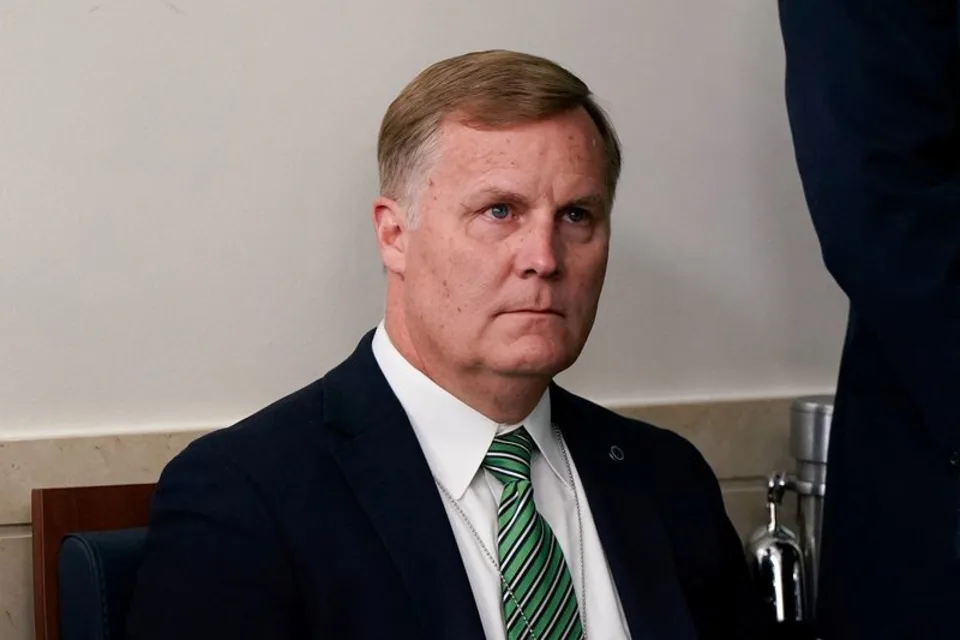
The U.S. Federal Aviation Administration said it was working to help industry deploy air taxis, supersonic airplanes, boost space launches and expand drone operations as it embraces next-generation aviation. Deputy FAA Administrator Chris Rocheleau told Reuters at the Farnborough Airshow the agency is moving to address certification and regulatory issues. “We want to make sure that we’re not being too prescriptive in those standards, and that we’re letting the industry drive the innovation,” Rocheleau said. YourDailyAnalysis reads that specific framing as a deliberate regulatory-philosophy statement: the FAA is positioning itself as a standards-setter that follows industry innovation rather than one that dictates the technical path upfront, a notably different posture than how the agency has historically approached aircraft certification.
The eVTOL pilot program already has real operational data behind it, which gives the certification push some grounding beyond aspiration. The FAA created a pilot program last year to help nascent electric vertical takeoff and landing aircraft begin deployments, and Rocheleau said data from that program, run with eight partner companies across 26 states, will help inform certification efforts going forward. YourDailyAnalysis treats the 26-state geographic spread as the detail worth isolating: that’s a meaningfully broad real-world testing footprint for a technology still without a single commercially operating fleet, suggesting the FAA is trying to build a genuinely representative regulatory dataset before finalizing rules.
Archer Aviation CEO Adam Goldstein offered a specific external comparison for how this rollout might unfold, drawing on a precedent from an entirely different transportation technology. He compared the rollout of eVTOLs to the city-by-city deployment of Google’s Waymo self-driving unit, saying “I think the world has learned a lot in how the autonomous vehicles have launched,” and describing the FAA’s pilot program as a way to “roll this out to a couple cities in a confined area that we can kind of work through the kinks in the system.” That Waymo comparison is a useful frame precisely because it sets expectations for a slow, geographically limited rollout rather than a simultaneous nationwide launch – self-driving cars took years to expand city by city, and Goldstein’s framing suggests he expects a similar multi-year cadence for air taxis.
The supersonic flight track is running on a separate, more clearly defined regulatory timeline. In June, the FAA proposed the first of two rules needed to lift a ban imposed in 1973 on supersonic air transport over land, and the agency plans to propose a second rule defining acceptable noise thresholds for takeoff, landing and supersonic cruise flight, aiming to finalize both by mid-2027. Your Daily Analysis flags the noise-threshold rule specifically as the more technically consequential of the two: the 1973 ban existed largely because of sonic-boom noise complaints, so how the FAA defines “acceptable” noise will determine which supersonic aircraft designs can actually operate over U.S. land, not just whether supersonic flight is permitted in principle.
The historical bookend Rocheleau’s own comments invoke is worth stating explicitly, since it frames just how long this ban has been in place. “We think the rules are old and outdated,” Rocheleau said; the era of regular commercial supersonic flights ended in 2003 when Concorde, flown by Air France and British Airways, was retired after 27 years of service. That means any new supersonic aircraft clearing FAA certification under these proposed rules would be reviving a capability the traveling public hasn’t had access to in over two decades, with an entirely new generation of aircraft engineers, regulators and airline planners involved compared with Concorde’s era.
Watch whether the FAA’s second supersonic rule, defining noise thresholds, is proposed on the timeline needed to hit the mid-2027 finalization target, and watch which eVTOL companies beyond Archer begin expanding pilot-program deployments into additional cities. YourDailyAnalysis views the noise-threshold rule’s specifics, once proposed, as the more market-moving milestone for supersonic aircraft developers than this week’s Farnborough comments, since it will be the first concrete signal of which aircraft designs can realistically clear U.S. certification.