



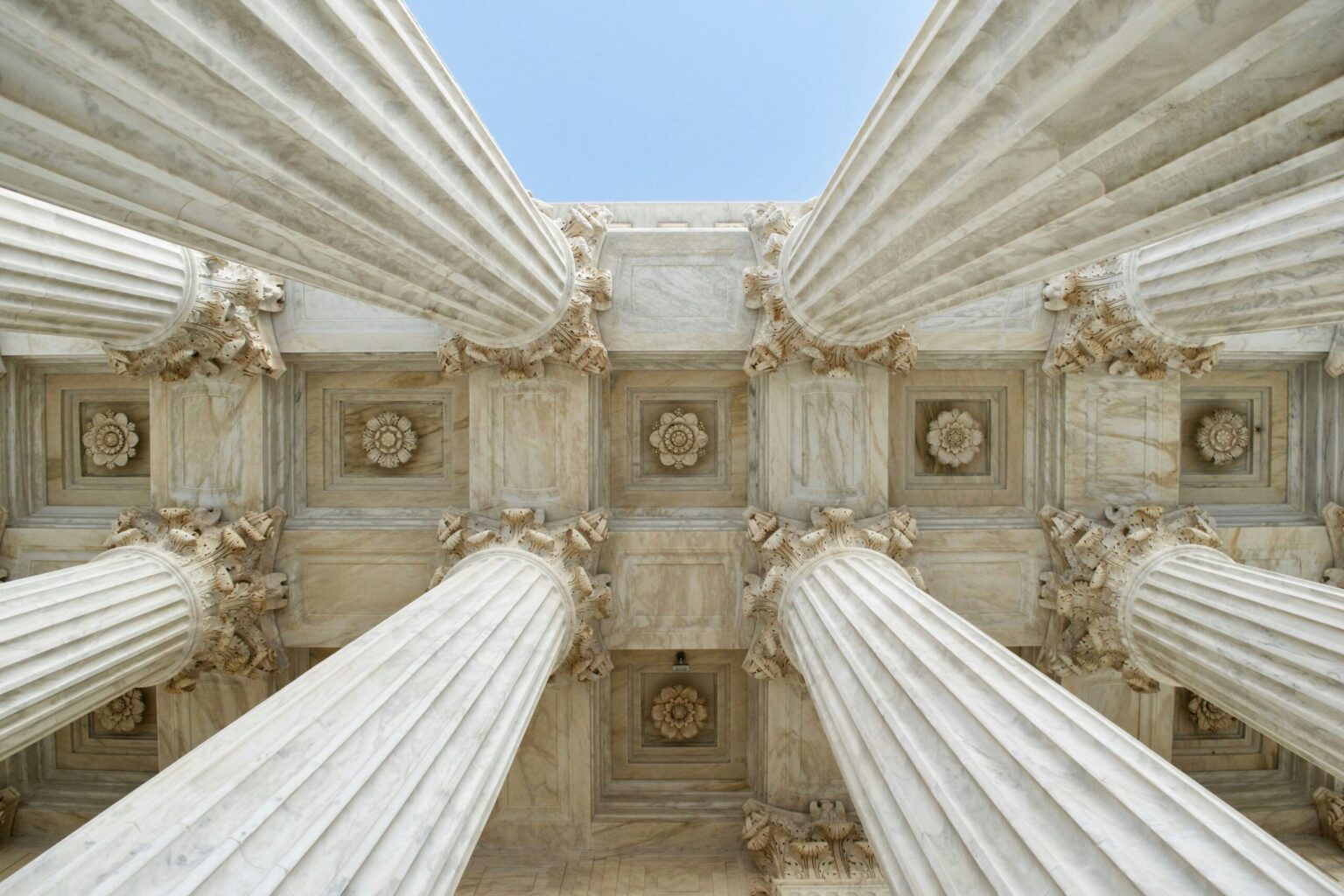
In May, the U.S. Court of International Trade ruled against the president. In November, the Supreme Court heard oral arguments on the case. Last week, in Learning Resources v. Trump, the Court issued a 6-3 decision, making it clear that IEEPA does not give the president the power to unilaterally impose, rescind, and adjust tariffs as he sees fit. Chief Justice Roberts, who wrote the majority’s opinion, held that tariffs are fundamentally a taxing power and that, because of this, they are different in kind, not just degree, from the trade tools that IEEPA explicitly authorizes.
This opinion is certainly an important legal victory, but we should not confuse it with an economic one. The damage of tariffs has already been done and it is continuing to be done.
Consider that just hours after the Court’s opinion was released, President Trump held a press conference where he said, “[Foreign countries] that have been ripping us off for years are ecstatic. They’re so happy and they’re dancing in the streets, but they won’t be dancing for long. That I can assure you.” True to his word, the president announced later that day that he was using Section 122 of the Trade Act of 1974 to impose a 10% global tariff on all imported goods for 150 days beginning on February 24th. As if there were any doubt about this, the White House also posted on X, “Keep Calm and Tariff On.” Later in the weekend, the president announced that the new tariff rate would be 15%, the maximum rate allowed under Section 122. But now, as these tariffs come into effect, the rate is set at 10%, inviting further confusion. It remains unclear whether this is on top of any trade deals that have been signed or if those countries will be somehow exempted. And these new tariffs are already raising serious concerns about their legality.
A 2021 survey of members of the American Economic Association found that 95% of economists agreed that tariffs are economically destructive. In other words, a group of people so famous for disagreement that the jokes practically write themselves has 95% consensus on this issue.
Plenty of reputable people have asked the question of what the effective tariff rate is, who actually pays the tariffs, and how many jobs will be created or lost. This is important to the work of gathering (further) evidence of the destructive effects of tariffs. But the decades of empirical, historical, and theoretical work on this front fail to capture the real cost of tariffs. It won’t show up in any BLS report, BEA release, or any other economic report one can imagine.
The real cost is the destruction of trust on the world stage.
Trade is not just about transactions. It’s about relationships and trust built and earned over time. This establishes that trading partners will play by agreed-upon rules and that market access is not a bargaining chip to be leveraged whenever one side, in this case Washington, needs a political victory.
Adam Smith understood this. He knew that the wealth of nations wasn’t built on clever tariff schedules or trying to hold the rest of the world hostage. It’s built on expanding the division of labor, broadening the extent of the market, and enabling man’s propensity to “truck, barter, and exchange.” All these things are made possible by stable rules and predictable networks of exchange. Smith understood that tariffs altered these incentives, but even he may have underappreciated the role of trust in international trade, how quickly it can be eroded, and what happens when it is.
Rather than breathing a sigh of relief after the Court’s ruling, the rest of the world is getting further confirmation that this administration, and by extension the United States of America, is no longer trustworthy. The first trade deals of 2026 have included deals meant to limit the damage that can be done by the turn away from trade by the United States. Canada and China announced a “trade reset,” with the Canadian prime minister, Mark Carney, referring to China as “more predictable” than the United States. When China, of all places, is viewed as more predictable than the U.S., something has gone very, very wrong.
That’s not the only warning sign that we’re seeing.
The EU has signed trade deals with Mercosur, which covers 31 countries, and with India. The deal with India is particularly noteworthy because it covers 25% of world GDP and over 2 billion people. This deal is so large that the president of the European Commission, Ursula von der Leyen, referred to it as “the mother of all deals.”
And Prime Minister Carney, after his rousing speech in Davos, is leading the charge of “middle powers” to unite around free trade, providing other countries with an alternative to dealing with U.S. trade policy. The rest of the world is not looking to Canada and Mark Carney because they are somehow world leaders in this space, but because if Canada, one of America’s longest-standing and closest allies, with the longest undefended border in the entire world, says that they’ve had enough, surely other countries have had enough, too. Carney’s poll numbers show that Canadians support him, even if standing up to Trump imposes serious economic costs.
Political leaders and business executives around the world must ask themselves a new question in international trade: Is access to the largest consumer market in the world worth the cost of dealing with a partner who treats market access as a bargaining chip? Or is it better to work with smaller but more dependable markets whose leaders won’t wake up one morning and decide that they need to alter the deal?
International trade used to be about David Ricardo’s insights about comparative advantage and maximizing gains from trade. Now, it’s about Harry Markowitz’s portfolio theory, diversifying away from risk and minimizing losses in the worst case. The risk they’re hedging against is U.S. policy. While the United States is deglobalizing, the rest of the world is reglobalizing around partners who commit to the impersonal rules of an open-access liberal order.
The Court’s ruling in Learning Resources does nothing to fix this. Worse, neither will the next election. Even if America happens to elect someone who goes on a world tour promising to be a more reliable trading partner, it’s not that easy to restore trust once it’s lost. To the extent that rebuilding trust is possible, it will be a long process that starts from a worse position.
The rest of the world marches on. In boardrooms and government offices, supply chains are being rerouted. Permits to construct factories are being submitted. Long-term contracts are being signed. Investment decisions are being made today with even more uncertainty surrounding American policy, and with this uncertainty taken as a given, not the result of a short-term, recognized error.
New factories around the world aren’t going to be packed up and moved to America because the next president holds a press conference and apologizes. Supply chains being built now won’t be rerouted through the U.S. because a social media post promises that the politics in Washington have changed. Trump showed the rest of the world what is possible in the American system. And the rest of the world is responding predictably.
The word to describe this moment in American history is “hysteresis.” The idea is that something that looks like a small or temporary event, such as a temporary layoff, can have an effect that is much larger than would otherwise be predicted. Hysteresis is a term often used in economics to describe unemployment, where a worker who is originally only temporarily laid off due to a recession never returns to the labor market, or does so only in a limited capacity. Now, we have another example to use in the classroom.
The Court’s ruling in Learning Resources is a genuine victory for free trade and for constitutional limits on executive power. But it does nothing to rebuild the relationships that have already been strained. Every workaround, every legal maneuver, and every new emergency declaration will send the same message to the world: The United States can no longer be trusted. You can’t build lasting trade relationships on that foundation, and the rest of the world is learning not to try.
The Trump Administration wanted to restructure global trade. They got their wish, just not the way they imagined. The rest of the world is restructuring, too, and it’s doing so around the United States, not with it.
This essay has also been published on Law & Liberty, part of the Liberty Fund network.
*David Hebert, PhD, is a senior research fellow at AIER. He has also been a fellow with the US Senate Committee on the Budget and has worked for the US Joint Economic Committee. He also serves as an associate director of The Entangled Political Economy Research Network.
(0 COMMENTS)