

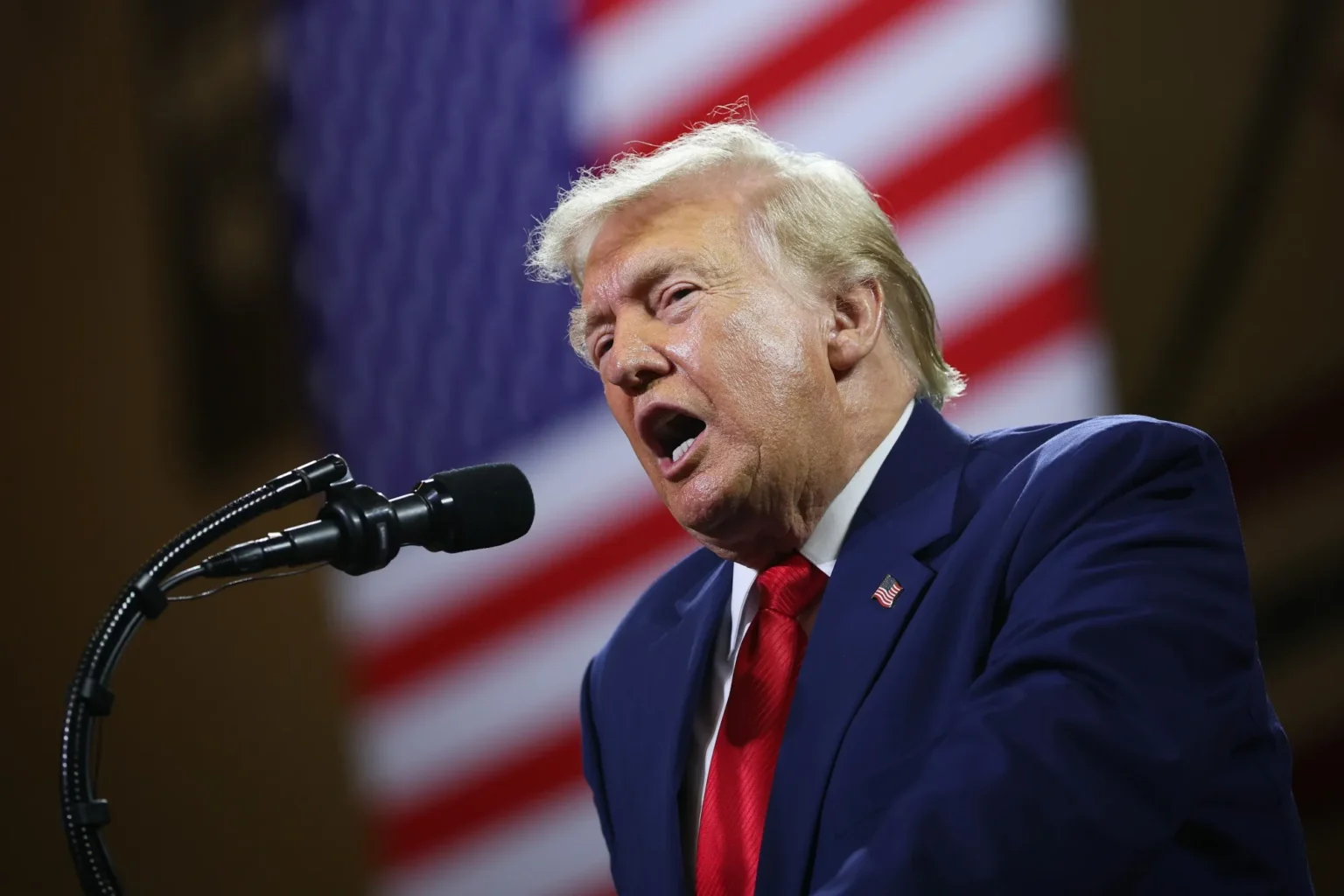
President Trump championed his economic agenda, including tariffs and the rolling back of environmental regulations, saying they had revived US auto manufacturing during a visit to a General Motors facility in the midterm battleground of Michigan. “They’re coming back home because, frankly, when they build here, there’s no tariff. It’s really not complicated,” Trump said, praising GM chief executive Mary Barra and president Mark Reuss for moving some production back from Mexico. YourDailyAnalysis spots something inseparable from the substance in the electoral timing here: the visit landed a week before primary elections in a fiercely contested Michigan Senate race, in a county Trump’s team specifically identified as a receptive audience for his populist economic message.
GM’s own public relationship with these tariffs is considerably more mixed than the celebratory framing of Trump’s visit suggests, which is the detail that most complicates the simple narrative. GM has said Trump’s tariffs would cost the company as much as $3.5 billion, and thanks to lobbying from GM and other automakers, the administration provided some offsets that will reduce that burden by $500 million. YourDailyAnalysis underscores that $3.5 billion cost estimate as the number that best captures the actual complexity of GM’s position: the company is simultaneously the tariffs’ celebrated beneficiary in Trump’s public messaging and a company that lobbied the same administration for relief from those same tariffs’ direct costs.
Barra’s own public statements reflect that same complexity rather than the uncomplicated gratitude Trump’s remarks implied, and are worth reading in full context. Barra has praised Trump’s tariffs as creating “a level playing field” against automakers that manufacture more vehicles outside the US, and the tariffs have also kept Chinese cars out of the US market in a way the European Union has not managed. That’s a genuinely different justification than “tariffs brought jobs home,” and it suggests Barra’s actual strategic calculus centers on competitive positioning against both established and Chinese rivals rather than simple reshoring.
A separate regulatory change Trump highlighted turns out to carry more direct financial benefit for GM than the tariffs themselves, based on the numbers disclosed. Trump’s rollback of vehicle emissions rules means GM and other automakers can sell more gas-guzzling trucks and SUVs without buying clean-air credits from electric vehicle makers like Tesla or paying fines; GM spent $3.5 billion on regulatory credits since 2022 and no longer carries that burden, while also needing to sell fewer money-losing electric vehicles. YourDailyAnalysis registers the striking coincidence in that $3.5 billion figure matching the tariff cost estimate almost exactly: GM’s regulatory-credit savings appear to roughly offset what the company says tariffs are costing it, which suggests the emissions rollback, not the tariffs Trump emphasized in his remarks, may be the more financially significant policy change for GM’s bottom line.
The broader political stakes Trump is navigating extend well beyond this single visit, given how central Michigan has become to both parties’ midterm strategy. Trump has stepped up campaigning in recent weeks to amplify his economic message as polls show public frustration with the cost of living and with his Iran war, which has driven up gasoline prices; Michigan has emerged as a key testing ground for Democrats debating direction ahead of the midterms and the 2028 presidential race, with a competitive Democratic primary underway for the Senate seat.
Watch the upcoming Michigan Senate primary results for signs of which party’s economic message, Trump’s tariff-and-manufacturing pitch or Democratic cost-of-living criticism, is resonating more with the state’s blue-collar electorate. Your Daily Analysis views GM’s disclosed $3.5 billion tariff cost against its $3.5 billion in regulatory-credit savings as the more precise real-world scorecard for Trump’s auto policy than his campaign rhetoric alone, since it shows the actual net financial effect on one of the companies he’s holding up as his policy’s clearest success story is considerably more balanced than “they’re coming back home” suggests.