

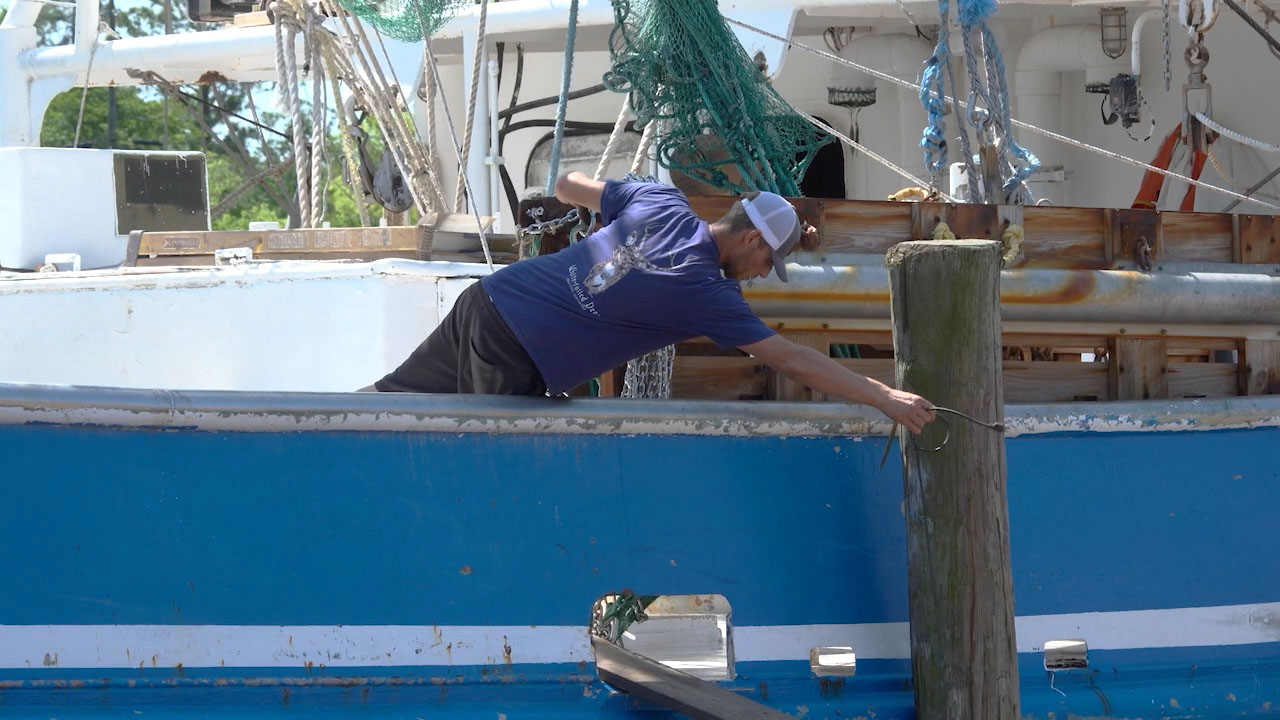
BAYOU LA BATRE, Alabama — Many American shrimpers are keeping their shrimp boats docked with an empty tank ahead of shrimping season as high fuel prices and tariff refunds hit the industry with a “double whammy.”
Rising diesel costs — driven in part by geopolitical tensions affecting global oil supply — are squeezing margins for shrimpers who rely heavily on fuel to operate. At the same time, a dispute over tariff refunds is adding financial pressure across the industry.
Some shrimp boat owners in Bayou La Batre, Alabama, like Joseph Rodriguez, are watching for developments in the Middle East as the Strait of Hormuz remains effectively closed as conflict continues in the region. Before the conflict, about 20% of the world’s oil supply passed through the Strait.
“We definitely depend on the price of fuel, which we can’t control at all,” Rodriguez said.
FEDERAL RESERVE LEAVES INTEREST RATES UNCHANGED AS POWELL’S CHAIRMANSHIP NEARS END
Iranian officials said Monday they would consider reopening the strait if the U.S. lifts its naval blockade and ends the conflict. The Trump administration rejected the proposal, citing Iran’s refusal to halt its nuclear program.
“It’s going to make it more difficult to make any kind of profit at all,” Rodriguez said.
Some shrimping crews are using the downtime to repair vessels while waiting for fuel prices to ease.
Meanwhile, fuel prices in the United States continue to soar. AAA reported a gallon of diesel fuel cost an average of $5.46 on Tuesday, about $2 higher than a year earlier.
Rodriguez built the “Little Andrew,” a shrimp boat capable of holding 27,000 gallons of diesel fuel, in 2001. He said the vessel recently burned through about 12,000 gallons during a 37-day trip.
AIR CANADA SCRAPS KEY US ROUTES AS FUEL COSTS SURGE AMID IRAN CONFLICT
The Southern Shrimp Alliance (SSA) said fuel costs “routinely account for more than 50%” of shrimpers’ total operating expenses, warning that elevated prices could limit access to sustainable shrimp stocks off the U.S. coast.
Rodriguez, like several other shrimpers along the Gulf Coast, said he supports U.S. strikes in Iran and expects fuel prices to eventually fall if the Strait of Hormuz reopens.
“We’ll surf along with it for a little bit because it’s got to be done,” Rodriguez said. “I believe fuel prices will come back down to a more manageable for us in the very near future.”
In addition to fuel costs, shrimpers are raising concerns about tariff refunds following a recent Supreme Court ruling.
In February, the U.S. Supreme Court ruled President Trump’s tariffs on U.S. importers were unlawful. The SSA said the U.S. made $902.7 million in tariff revenue on imported shrimp. The U.S. government is refunding it to foreign companies even though American shrimpers want that money to go back to domestic shrimpers.
Industry groups argue the refunds disproportionately benefit foreign suppliers rather than domestic producers. Nearly $450 million of the refund money is expected to go to India alone, according to the SSA.
CHEVRON CEO WARNS AVIATION STRAIN COULD WORSEN AS JET FUEL CRUNCH DEEPENS
“They ought to put it in some kind of fund to help domestic shrimpers in some sort of way,” Rodriguez said. “We’re in competition with the government of China, for God’s sake, a communist country. We’re in competition with them with their shrimp imports.”
Rodriguez urged consumers to buy American shrimp instead of imported products, calling it the industry’s “greatest hope.” He also claimed imported shrimp carry a higher risk of contamination from pathogens or veterinary drugs used during production.
CLICK HERE TO GET FOX BUSINESS ON THE GO
“You’d be surprised at some of the high-end restaurants that serve you shrimp, that got more frequent flier miles than I got,” Rodriguez said.