



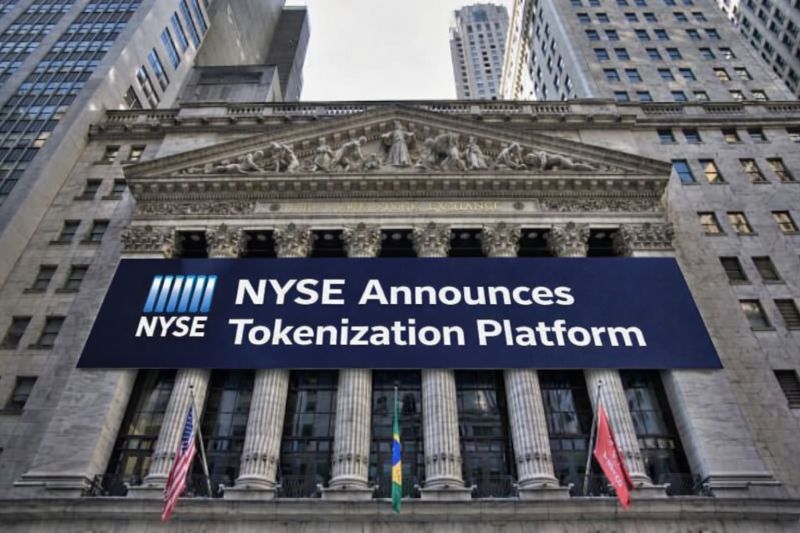
Tokenization of securities in the U.S. is moving beyond experimentation and entering an infrastructure phase. The partnership between NYSE and Securitize signals a shift in how traditional markets are approaching blockchain – not as a disruptive alternative, but as an extension of existing financial systems. NYSE’s plan to collaborate with Securitize on a digital transfer agent framework highlights this transition. The goal is to enable the issuance and processing of tokenized versions of equities and ETFs within a regulated environment. As reflected in YourDailyAnalysis, this marks a move away from speculative narratives toward institutional-grade implementation.
The role of Securitize is particularly important. Transfer agents sit at the core of market infrastructure, managing ownership records and corporate actions. Integrating this function into blockchain-based systems suggests that tokenization is targeting the foundational layers of capital markets rather than peripheral use cases. This development is not isolated. Nasdaq has also advanced initiatives to support trading and settlement of tokenized securities, indicating that major exchanges are converging on similar strategies. YourDailyAnalysis suggests that this alignment points to early-stage competition in building the next generation of market infrastructure.
The primary value proposition behind tokenization remains operational efficiency. Faster settlement cycles, reduced intermediaries, and streamlined post-trade processes are frequently cited advantages. However, the real test lies in whether these benefits can be achieved without introducing new risks or compromising existing safeguards. Institutional messaging continues to emphasize trust, transparency, and investor protection. This reflects a broader understanding that adoption will depend on compatibility with regulatory frameworks rather than attempts to bypass them. In this context, tokenization is being positioned as an enhancement of current systems rather than a replacement.
Parallel developments in tokenized cash and settlement mechanisms further reinforce the direction of travel. The emergence of interconnected systems – combining tokenized assets with digital cash equivalents – suggests that the industry is working toward a more integrated financial architecture. At the same time, regulatory caution remains a defining factor. Market participants broadly support innovation but emphasize the need for structured rulemaking and oversight. YourDailyAnalysis highlights that this will likely result in a gradual rollout rather than rapid transformation.
For exchanges, the shift also carries strategic implications. By integrating tokenization into their platforms, they are not only exploring new efficiencies but also reinforcing their position within the evolving market structure. Failure to adapt could open the door to alternative trading venues or new infrastructure providers.
The broader implication is that tokenization is transitioning from concept to implementation within the core of financial markets. However, the pace of adoption will depend on how effectively technical innovation aligns with regulatory and institutional requirements. Your Daily Analysis maintains a moderately constructive outlook. Progress is expected to come through incremental steps – pilot programs, regulatory adjustments, and infrastructure development –rather than immediate large-scale adoption. The key variables to monitor include platform deployment timelines, regulatory scope expansion, and the development of integrated tokenized asset and settlement systems.