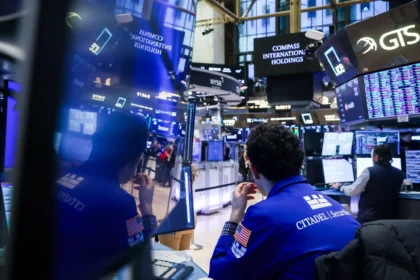




Citigroup strategists expect US equities to keep outperforming, with the market’s strength still concentrated in a narrow group of technology giants rather than spreading evenly across sectors. The call lands at a tense moment for global investors, as YourDailyAnalysis frames the rally less as broad optimism and more as a test of how far artificial intelligence can carry index returns while geopolitical risk keeps cyclical appetite restrained.
The numbers explain the imbalance. The S&P 500 has gained 8.4% this year, while the Nasdaq 100 has climbed nearly 16%, helped by relentless demand for semiconductor and AI-linked shares. Technology now makes up 37% of the S&P 500, compared with only 6.3% of the Stoxx Europe 600, leaving US benchmarks far more exposed to the same handful of companies that dominate earnings momentum, capital expenditure plans, and investor positioning.
That concentration creates comfort and danger in the same trade. Strong balance sheets, pricing power, and AI-related revenue visibility give large US technology names a cleaner story than banks, manufacturers, or consumer cyclicals facing weaker macro signals. YourDailyAnalysis reads the current setup as a market choosing certainty of narrative over breadth of participation – not because risk has disappeared, but because alternatives still look less convincing.
Europe’s position is more complicated. Its underperformance since the start of the year has made valuations less demanding, and a durable US-Iran ceasefire could encourage investors to revisit lagging regions and sectors. Software, retail, and real estate may look more attractive outside energy, but the region still lacks the index-level engine that US megacaps provide. A European rebound would likely need lower energy stress, steadier margins, and a clearer earnings repair story rather than a simple rotation triggered by cheaper prices.
Profit expectations are the quieter fault line. Global equities still appear priced for upgrades, yet forecasts of more than 20% earnings growth in 2026 leave little room for disappointment. YourDailyAnalysis treats that gap as the market’s hidden vulnerability: investors can accept narrow leadership when profits keep rising, but the tolerance for weak guidance shrinks fast once valuations already assume a friendly macro path.
The geopolitical layer matters because it can interrupt both sides of the trade. A calmer Middle East could lift laggards, weaken the safety premium around dominant US growth names, and revive some pro-cyclical positioning. A renewed shock would do the opposite, pushing capital back toward companies viewed as structurally insulated. The uncomfortable part is that both outcomes can support US outperformance for a while – either through AI momentum or through defensive concentration.
For now, the market is not really voting for America in a broad economic sense. It is voting for a small corporate bloc with the scale to turn AI spending into earnings before everyone else. That distinction matters, and Your Daily Analysis places it at the center of the next equity phase: if the rally widens, investors may celebrate resilience; if it stays narrow, the index can keep rising while the foundation underneath grows thinner.