



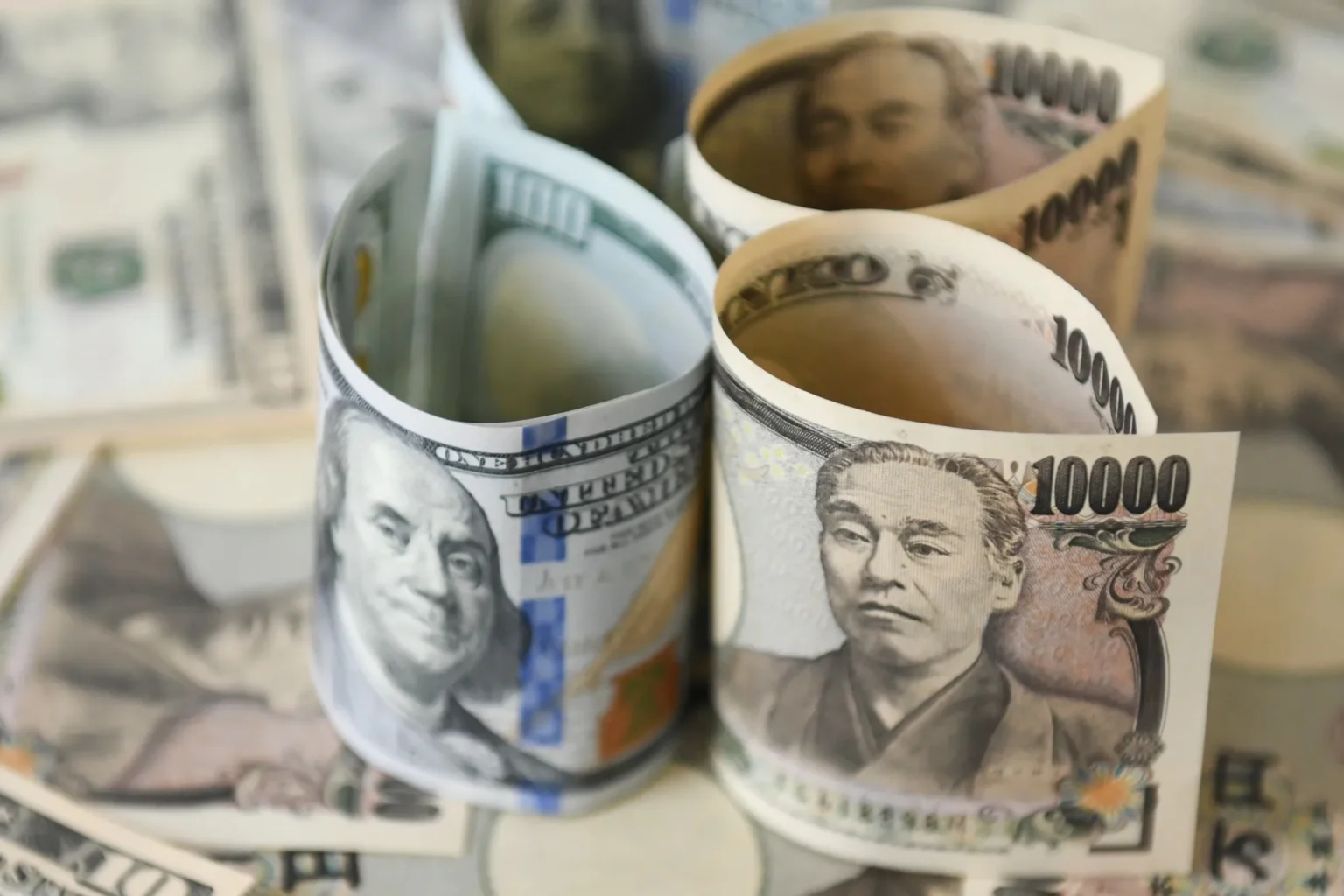
The yen has started behaving like a market under surveillance. Sharp upward jolts lasting only minutes are appearing across global trading sessions, then fading almost as quickly as they arrive. YourDailyAnalysis has observed that these brief reversals are forcing currency traders to reconsider how aggressively they can push the dollar toward the politically sensitive 160-yen threshold.
The pattern is subtle but increasingly difficult to dismiss as random noise. During New York trading on Thursday, the Japanese currency surged roughly 0.5% in two minutes before giving up the move. Similar bursts appeared earlier in the week and again on May 8. None of them altered the broader trend, yet each interruption carried the same message: speculative positioning around the yen is no longer a one-way trade free of official resistance.
Japan has used direct intervention before, often in dramatic size. Around the Golden Week holiday, authorities are believed to have deployed close to ¥10 trillion to slow the currency’s decline. Those operations echoed the playbook of 2022, when large headline-grabbing purchases were followed by much smaller transactions designed less to reverse the trend than to unsettle traders and inject uncertainty into momentum-driven strategies.
The distinction matters. YourDailyAnalysis views these short-lived spikes not as an attempt to engineer a durable appreciation, but as a tactical effort to raise the cost of complacency. Currency intervention rarely changes underlying fundamentals when interest-rate differentials remain so wide. U.S. yields continue to offer far better returns than Japanese assets, and as long as that gap persists, investors have a structural incentive to fund positions in yen and place capital elsewhere.
What Tokyo can influence is psychology. Sudden intraday moves complicate leveraged trades, trigger stop-loss orders and force hedge funds to reduce position sizes. That does not strengthen the yen in a lasting sense, but it can slow the pace of depreciation and buy policymakers time while they assess inflation, wage growth and the Bank of Japan’s willingness to normalize rates further.
The market’s muted reaction also exposes the limits of official power. Despite suspected intervention, the dollar has climbed back toward 158 after briefly retreating below 156. YourDailyAnalysis argues that this resilience reveals how deeply the yen’s weakness is rooted in global capital flows rather than in speculative excess alone. Investors are responding to a structural imbalance in returns, not merely testing the resolve of Japanese authorities.
There is also a political dimension. A rapid slide beyond 160 would intensify domestic criticism by raising import costs and squeezing households already facing higher food and energy prices. Preventing a disorderly break matters even if officials know they cannot dictate a new long-term exchange rate. For global markets, the real significance lies in the signal rather than the size of any operation. Your Daily Analysis sees Tokyo’s intermittent interventions as a form of strategic hesitation – not a decisive defense, but a reminder that policymakers are willing to disrupt the market whenever depreciation begins to look less like adjustment and more like loss of control.