

The Trump administration published a nearly 100-page USTR report late Tuesday proposing additional tariffs of 10% or more on products from 60 trading partners, citing their failure to ban imports of goods made with forced labor. The legal vehicle is Section 301 of the Trade Act of 1974, the same authority invoked for earlier tariffs that the Supreme Court struck down. The forced labor framing is new. The ambition is identical. YourDailyAnalysis pinpoints the strategic logic in the Section 301 choice: by grounding tariffs in an unfair trade practice finding rather than emergency economic powers, the administration is attempting to sidestep the constitutional vulnerability that brought down the Liberation Day tariffs.
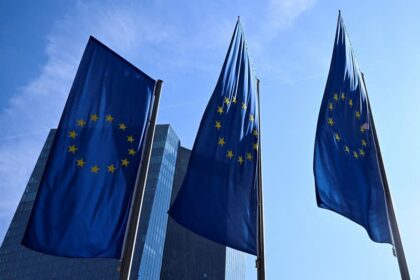
The proposed duties divide trading partners into two tiers. Countries with partial forced labor bans face an additional 10%: Canada, Mexico, the EU, Taiwan, and the UK. Countries with no effective enforcement face 12.5%: China, Japan, India, South Korea, Brazil, and Switzerland, among others. USTR Ambassador Jamieson Greer said the failure of trading partners to prevent forced labor imports forces American workers to compete on an unlevel playing field.
The political architecture is as important as the legal one. Trump returned from China earlier this week where he and Xi Jinping discussed expanding market access and increasing Chinese investment into U.S. industries. The two leaders agreed to set up separate boards of trade and investment. The editors at YourDailyAnalysis read the sequencing of a diplomatic overture alongside a broad tariff announcement as a pressure-and-release pattern: propose punitive tariffs broadly, create space for bilateral deals, and use the tariff threat as a negotiating chip rather than a final policy outcome.
The proposed tariffs are not yet in effect. They are subject to public comment and review, with hearings beginning on July 7. That gives affected partners months to negotiate carve-outs. Nick Marro, principal at the Economist Intelligence Unit, said China might refrain from explicit retaliation near term, but that restraint is limited if additional tariffs materialize. The administration separately proposed 25% tariffs on Brazil this week, citing unfair trade practices that burden U.S. commerce.
The Supreme Court angle makes this round structurally different from the Liberation Day tariffs. The Court struck down most of those levies, prompting the administration to impose a 10% global baseline using different authorities. The forced labor investigation under Section 301 is an attempt to establish a fresh legal foundation. The reporters at YourDailyAnalysis map the legal risk as the central uncertainty: if upheld, the tariff structure achieves most of what the Liberation Day package attempted. If it falls again, the administration faces a narrower toolkit.
The supply chain impact would cut against the administration’s own stated priorities. Taiwan faces a 10% additional tariff directly affecting semiconductor imports at a moment when U.S. technology companies depend on TSMC for AI buildout chips. South Korea, Japan, and India face 12.5%. The AI infrastructure investment cycle driving record capex from Amazon, Microsoft, Google, and Meta would face input cost inflation precisely as it scales.
There is a third scenario beyond enforcement or reversal. The tariff proposal serves as a negotiating baseline from which bilateral agreements reduce specific duties in exchange for concessions. Most of the Liberation Day levies came down through bilateral deals before the Supreme Court acted. The analysts at YourDailyAnalysis assign higher probability to that negotiated outcome than to either full implementation or full withdrawal.
Markets absorbed the announcement with limited volatility, partly because the tariffs are not immediately effective and partly because the tariff environment has become expected background noise. The equity market focused more on the Salesforce earnings beat and Snowflake’s explosive week than on a tariff proposal whose legal durability is genuinely uncertain.
The thing to watch is not the announcement but the carve-out negotiations that follow. Which countries secure exemptions, at what price, and on what timeline will define the actual trade policy that takes effect in the second half of 2026. Your Daily Analysis closes on the procedural calendar: the July 7 public hearings will reveal which trading partners are engaging constructively and which are preparing legal or retaliatory responses.