


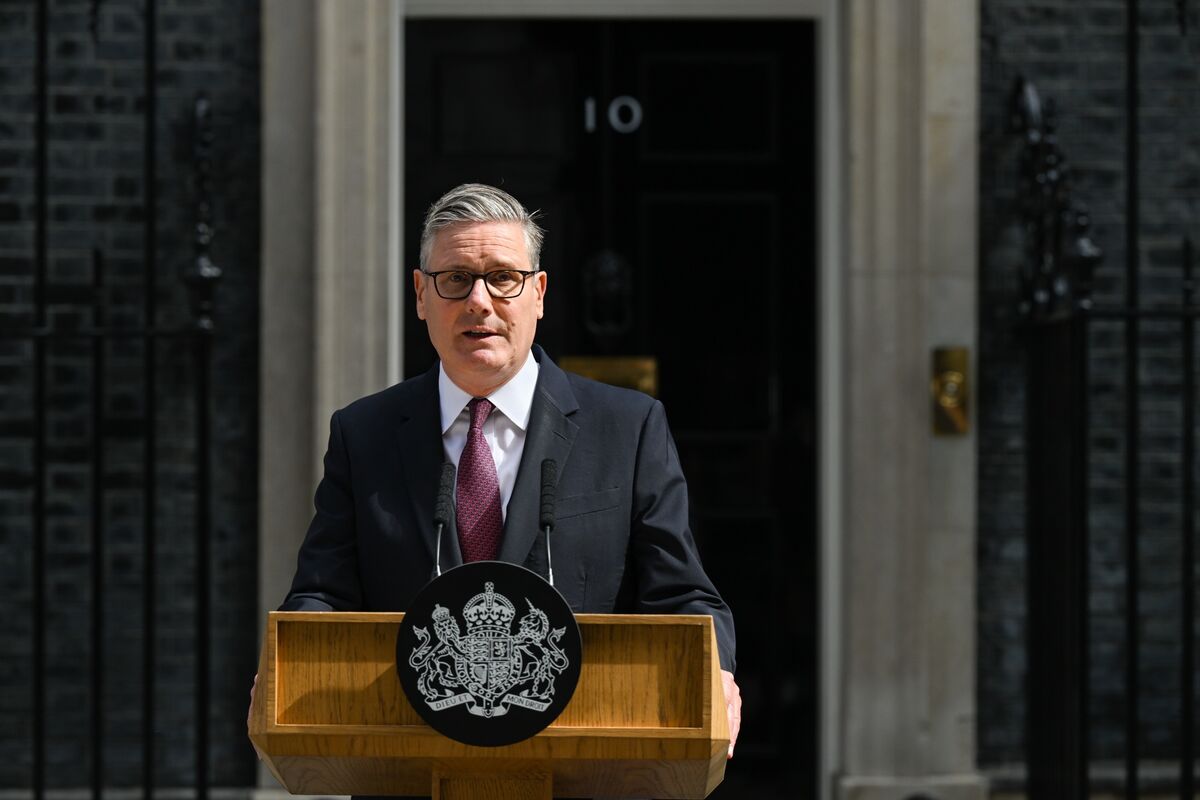
Keir Starmer announced Monday in Downing Street that he would step down as Britain’s prime minister, ending a tenure of just under two years. Andy Burnham, the long-time mayor of Greater Manchester, will attempt to succeed him after winning a parliamentary by-election in Makerfield with 54.8% of the vote on June 18. Nominations for a successor open July 9, and any contest wraps up by September 1. YourDailyAnalysis marks this as the fifth British prime minister since 2022 – a milestone that would have seemed improbable when Starmer won the largest Labour majority in nearly three decades just two years ago.
The speed of the collapse is the politically interesting fact. Starmer entered Downing Street in July 2024 after a 14-year Conservative drought, with a parliamentary majority of approximately 172 seats. By May 2026, over 95 Labour MPs had called on Starmer to resign or set a departure timetable. The proximate causes layered rapidly: heavy defeat in local elections, sustained poor polling, and cabinet resignations including Health Secretary Wes Streeting and Defence Secretary John Healey, who quit over disagreements with the government’s defence spending plan.
Burnham is Starmer’s most likely successor. He represents something different in the eyes of voters – an outsider who built a distinct political identity as mayor of Greater Manchester from 2017 until resigning to mount his parliamentary challenge. Under Labour Party rules, contenders need the nominations of a fifth of the Parliamentary Labour Party. It is not clear that Wes Streeting, who has indicated his intention to stand, has the support of 81 MPs required to force a meaningful contest. YourDailyAnalysis reads the contest as largely settled before it formally opens, with Burnham’s position reinforced by the fact that Starmer’s own allies, including Foreign Secretary Yvette Cooper and Home Secretary Shabana Mahmood, urged him to set out an exit timetable.
The policy inheritance is not straightforward. Starmer defended his record on the economy, wages, investment, infrastructure, the National Health Service, and workers’ rights. He pointed to wages rising faster than inflation in every month since Labour came to power. The fiscal constraints that generated political friction were not manufactured by Labour – they were the product of a fiscal position that limited what any government could do.
Reform UK’s trajectory is the political variable Burnham will inherit as the more urgent structural challenge. Nigel Farage’s populist outfit leads national polls of voter intention. It swept all council seats in local elections on the same turf where Burnham won his parliamentary seat, just six weeks earlier. Labour MPs read Burnham’s win as evidence that his communication style could reconnect Labour with voters who had drifted toward Reform.
The market reaction to Starmer’s resignation was limited. The pound traded 0.23% lower against the dollar. Lizzy Galbraith, senior political economist at Aberdeen, noted that Burnham will still inherit the same challenging fiscal constraints that hampered the Starmer government. Burnham has been distancing himself from earlier statements suggesting the UK should borrow more freely. YourDailyAnalysis interprets the modest pound move as a market that had already priced in the leadership transition.
The defence spending dispute that triggered the cascade of ministerial resignations deserves more attention. Healey’s resignation letter argued that the Defence Investment Plan was insufficient to meet the UK’s strategic defence objectives and risked leaving the armed forces under-resourced amid increasing international threats including the ongoing Russia-Ukraine war and the 2026 Iran conflict.
Starmer spoke of his family in his resignation statement, his voice breaking as he thanked his wife Vic and said he would devote more time to them after leaving. He was clearly deeply emotional. A leader who held on through months of sustained pressure and left with visible dignity is unlikely to be remembered as harshly as his current polling suggests.
Your Daily Analysis closes on the question that will take years to answer: whether Starmer’s two years will be remembered as a genuine policy transition obscured by political failure, or as a political failure that wasted a generational mandate. The answer depends almost entirely on whether Burnham can win back the voters Reform UK has captured in the English working-class heartlands.