

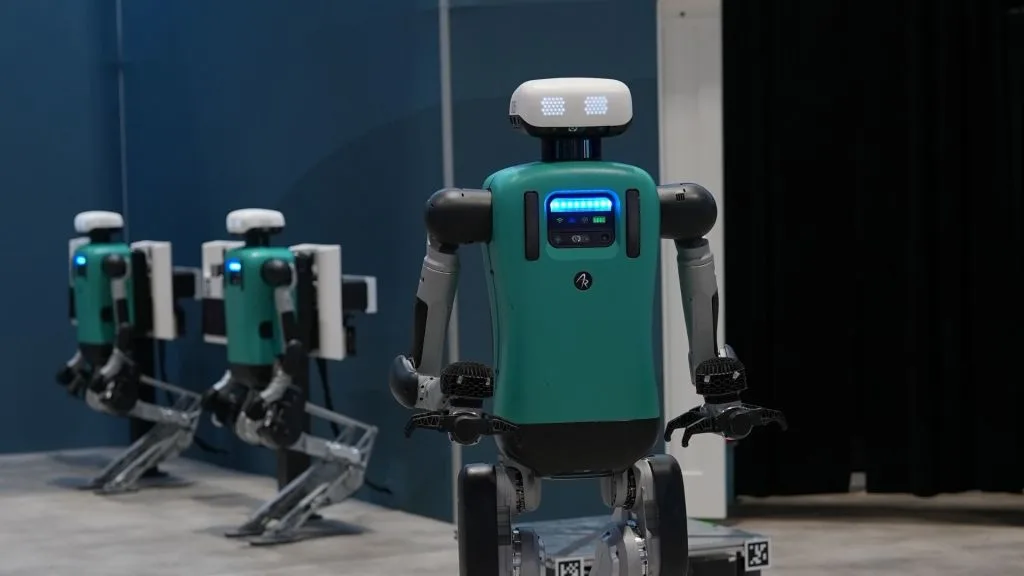
Agility Robotics, the Oregon-based maker of bipedal humanoid robots, announced plans to go public via a merger with Churchill Capital Corp XI, a special-purpose acquisition company. The deal values Agility at approximately $2.5 billion. The combined entity expects gross proceeds exceeding $600 million – $420 million from Churchill XI’s trust and more than $200 million through a PIPE led by Foxconn, the Taiwan-based electronics manufacturing giant. The new company will trade under ticker symbol AGLT. This is no longer a laboratory curiosity. A humanoid robot company just put a number on itself, and the number is nine figures.
Zoom out on the SPAC structure itself. The vehicle fell thoroughly out of favour after the 2020-2021 wave produced overvalued, underperforming companies that eventually cratered. Many investors treat the letters S-P-A-C as a warning sign rather than a route to market. The Foxconn anchor here is meaningful: it signals manufacturing credibility and a potential production partnership that a traditional IPO book would struggle to communicate as clearly. Foxconn does not make speculative bets on companies without hardware substance.
Agility’s core product, the humanoid robot called Digit, has already secured customer orders for a next-generation version that promises finer dexterity for handling smaller objects and higher integrated safety standards. Many humanoid robot companies at this stage operate in demonstration mode. Agility has actual purchase orders. That is a different category of claim. YourDailyAnalysis spots the distinction as the most significant piece of evidence for the bull case: commercial traction, even limited, removes the technology from the purely speculative category and places it in the measurable one.
The competitive context is dense and accelerating. Boston Dynamics, owned by South Korea’s Hyundai, has the most recognisable robot brand in the world but has struggled to convert that recognition into scaled revenue. Tesla’s Optimus programme attracts enormous attention though production volumes remain unconfirmed at commercial scale. Figure AI, backed by Microsoft and OpenAI among others, reached a $2.6 billion valuation in private markets in early 2024. Agility, at $2.5 billion post-deal, sits in the same tier by valuation but with a longer operational history: the company was founded in 2015 and has been deploying Digit in Amazon warehouse trials since 2022. YourDailyAnalysis benchmarks Agility’s per-dollar-raised operational track record as stronger than most peers at comparable valuation stages.
The Foxconn angle runs deeper than the capital. Foxconn operates manufacturing at a scale that no humanoid robotics company currently reaches alone. If the partnership evolves beyond investment into production collaboration, Agility’s unit economics could shift dramatically. That is speculative at this stage: the announcement confirms investment, not a manufacturing contract. But the logic of the relationship points in that direction, and YourDailyAnalysis traces the supply-chain implication as the most important variable to watch in the twelve months following the deal’s close.
There is a third scenario that humanoid robotics investors rarely model explicitly: that the technology works, commercial demand proves real, but the winning company is not Agility or any of today’s named competitors. It is a Chinese manufacturer quietly scaling production at lower cost and entering Western markets before incumbents achieve meaningful margins. China’s humanoid robotics sector, backed by state capital and a domestic manufacturing base that Foxconn itself relies on, is not standing still. Your Daily Analysis sizes up this competitive risk as the factor most likely to compress Agility’s long-run valuation even in an optimistic scenario for the category as a whole. AGLT will be public soon. The real test starts the quarter after listing.