


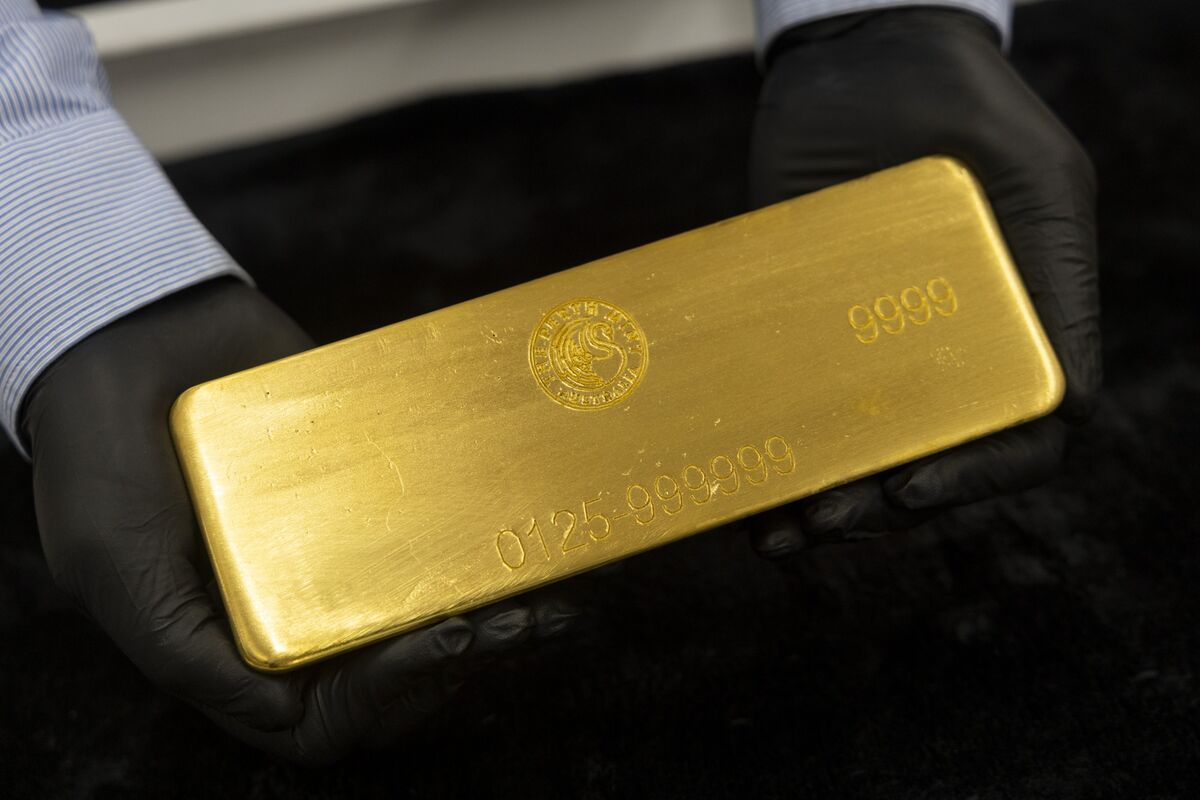
Gold dropped to around $4,270 per ounce on Monday before recovering some ground on Wednesday, when Trump indefinitely extended the ceasefire with Iran and opened time for fresh peace talks. The two-day decline recorded the metal’s largest single-session loss since late March on Tuesday. What made Tuesday’s move notable was the scale of the reversal on what should have been geopolitically bullish news. YourDailyAnalysis isolates that disconnect as the defining story of how gold is trading in the current conflict environment.
The rate transmission runs like this. The Bureau of Labor Statistics reported 139,000 nonfarm payrolls for May, beating every private forecast. That print pushed Federal Reserve rate hike expectations meaningfully higher. Gold pays no interest and is priced in dollars, so a stronger dollar and higher expected U.S. rates are structurally negative for the metal regardless of what is happening in the Middle East. The ceasefire news on Wednesday partially reversed the drop, but gold still closed the week well below its pre-payrolls level.
Gold has now traded as a rate-expectations asset for most of the conflict cycle rather than as a classic safe haven. That represents a regime change from the 2019-2020 period when falling rates and geopolitical uncertainty reinforced each other. In the current environment those two forces pull in opposite directions, and the rate force has won consistently. What YourDailyAnalysis attributes to this pattern: not a failure of the safe-haven thesis but a specific market structure in which the Middle East conflict itself is the source of the inflationary pressure that suppresses gold’s traditional role.
Darwei Kung, head of commodities and portfolio manager at DWS Group, noted that positioning in gold has become significantly cleaner than before March, after highly leveraged speculative trades were flushed out during the spring correction. Jim Wyckoff, senior analyst at Kitco Metals, described Wednesday’s partial recovery as bargain-hunting rather than a fundamental re-rating of gold’s outlook.
The ceasefire extension is real but structurally incomplete. Trump extended the truce indefinitely, but the Strait of Hormuz remains effectively closed, oil stayed near $100 per barrel even as the ceasefire held, and no formal agreement on reopening shipping lanes has materialized. The view at YourDailyAnalysis is that gold’s next meaningful move depends on which force breaks first: either the Fed resumes signaling cuts, removing the dollar-strengthening headwind; or the ceasefire fractures and oil spikes to levels where the inflation argument pushes gold lower still.
The People’s Bank of China bought roughly 10 tons of gold in May, the highest monthly addition since 2024, extending its buying streak to 19 consecutive months. That institutional demand acts as a structural floor. The PBOC has continued buying through every phase of the current cycle – through the March peak above $4,800, through the subsequent selloff, and through the current recovery attempt. At the current pace, central bank reserves will cross a significant threshold later in 2026.
There is a third scenario being underpriced. If the ceasefire extension holds for several weeks and the two sides move closer to a formal Hormuz access agreement, oil would drop sharply, inflation expectations would fall, rate hike probability would recede, and both the dollar headwind and the geopolitical premium for gold would compress simultaneously. Your Daily Analysis spells out that path as the base case if diplomacy advances: a gold price range of $4,200 to $4,500 with limited directional conviction.
U.S. CPI data due Tuesday will be the next significant input. A hotter-than-consensus reading strengthens the rate headwind and gold tests its recent lows. A downside surprise reduces the rate pressure and partially reverses Monday’s decline. Either outcome will be trading-driven rather than structural, which means the move will be fast and partially self-correcting.
Gold is in the most analytically awkward position it has occupied in years: the geopolitical situation is severe enough to generate regular headline risks, the monetary environment is tight enough to suppress the safe-haven premium, and the structural buyer is reliable enough to prevent a collapse. That three-way stalemate is uncomfortable to trade around. YourDailyAnalysis ends on the only clean call: watch the Fed, not the Middle East.