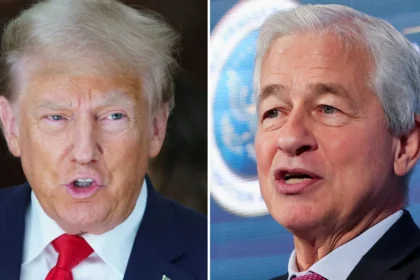



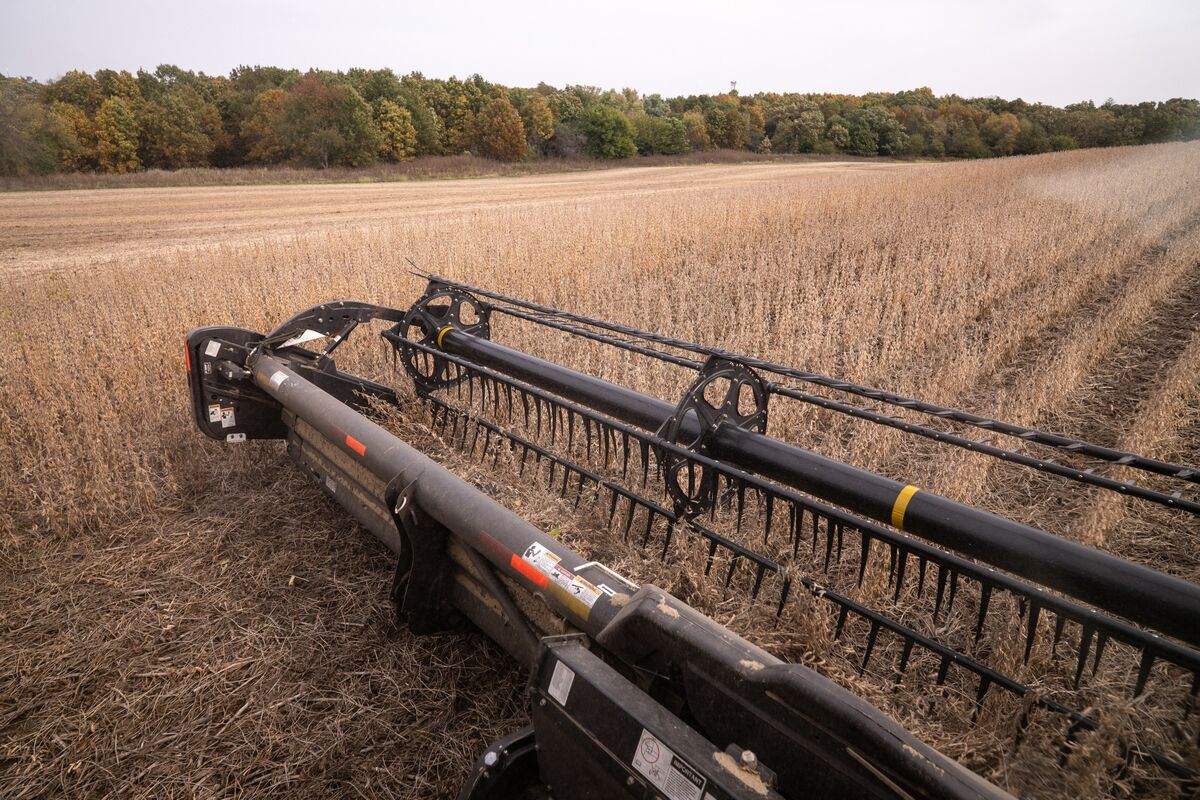
Soybean futures in Chicago fell sharply on Monday, dropping more than 3% and slipping below the $12 per bushel level as uncertainty surrounding U.S.–China trade negotiations intensified. The decline followed comments from U.S. President Donald Trump suggesting that a planned summit with Chinese President Xi Jinping could be delayed unless Beijing helps address disruptions in the Strait of Hormuz. According to YourDailyAnalysis, the reaction highlights how closely soybean prices remain tied to geopolitical developments rather than purely agricultural fundamentals.
China’s position as the world’s largest soybean importer makes political signals between Washington and Beijing particularly influential. Any indication that negotiations could stall quickly alters expectations for export demand from the United States. Analysts cited by YourDailyAnalysis note that the soybean market has increasingly become a proxy for trade diplomacy between the two economies, with prices responding to political headlines almost as quickly as to crop supply data.
Recent price volatility also reflects market positioning. Hedge funds and other institutional investors had built their largest bullish exposure to soybean futures in roughly four months, leaving the market vulnerable to sudden reversals. As YourDailyAnalysis observes, crowded long positions often amplify reactions to unexpected political developments, as traders rush to reduce exposure and lock in profits.
The sensitivity of the market is partly rooted in precedent. A previous meeting between Trump and Xi helped revive Chinese purchases of U.S. soybeans after months of reduced demand. That experience encouraged traders to anticipate renewed buying if another diplomatic breakthrough occurred.
However, linking agricultural trade negotiations to geopolitical tensions in the Middle East introduces an additional layer of uncertainty. According to Your Daily Analysis, when agricultural demand becomes dependent on broader diplomatic outcomes, price volatility tends to increase significantly. The situation around Iran and disruptions in the Strait of Hormuz are also influencing agricultural markets indirectly. The region plays a key role in global energy and fertilizer supply chains, and instability has pushed oil prices higher while complicating logistics for key commodities.
Higher fuel and transportation costs affect agricultural production and exports, creating an additional source of uncertainty for crop markets. At the same time, Chinese negotiators have signaled some willingness to expand purchases of certain U.S. agricultural products, although soybeans remain the most politically sensitive commodity in bilateral trade.
The broader commodity environment adds further complexity. Oil markets have experienced sharp swings, raising concerns that prolonged disruptions could increase inflationary pressures and production costs across the agricultural sector.
From a strategic perspective, the recent selloff may reflect a rapid reassessment of overly optimistic expectations rather than a fundamental collapse in demand. According to YourDailyAnalysis, soybean prices could recover quickly if diplomatic signals improve and Chinese purchasing activity resumes.
Key indicators for traders now include confirmation of future U.S.–China negotiations, evidence of renewed soybean purchases by China, and developments affecting energy flows through the Strait of Hormuz.