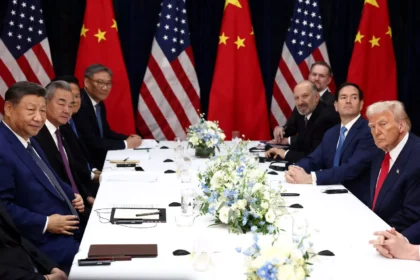



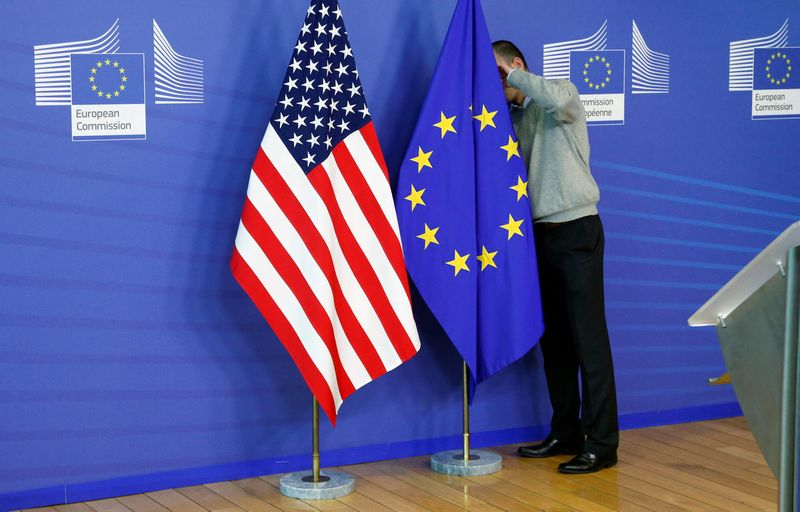
European leaders are not merely debating incremental policy adjustments; they are confronting a structural question: how can the European Union reduce its economic dependence on both the United States and China while remaining competitive in an increasingly fragmented global system? For YourDailyAnalysis, this discussion represents a strategic recalibration rather than a short-term policy response.
At the core of the agenda lies the need to dismantle internal bureaucratic barriers that continue to fragment the single market. Regulatory divergence across member states functions as a hidden tariff system, raising costs for companies operating across borders. From the perspective of YourDailyAnalysis, this is arguably the highest-return reform available to the EU. However, it is politically sensitive because it requires national governments to surrender elements of regulatory discretion. Without accelerated harmonisation, digital permitting systems, and mutual recognition of standards, Europe will continue to lag in speed-to-market compared with U.S. and Chinese competitors.
A second pillar concerns scale. European policymakers increasingly recognise that globally competitive industries require companies capable of operating at scale, financing advanced research, and absorbing geopolitical shocks. The debate revolves around whether competition policy should adapt to allow the formation of “European champions” in sectors such as semiconductors, artificial intelligence, defence, and clean energy. In YourDailyAnalysis, the challenge is balancing market dynamism with strategic consolidation. Excessive rigidity in competition enforcement risks preserving fragmentation at the expense of global competitiveness.
The third priority involves protecting strategic sectors. Clean technologies, defence and aerospace, critical raw materials, digital infrastructure, biotech, pharmaceuticals, and automotive manufacturing are viewed as areas where vulnerability translates directly into geopolitical exposure. Targeted industrial policy is becoming more acceptable within the EU framework. However, YourDailyAnalysis emphasises that protection without performance benchmarks can entrench inefficiencies. Any preference for European production must be tied to measurable investment commitments, productivity gains, and supply-chain resilience metrics.
Trade diversification forms the fourth dimension of the discussion. As tensions with both Washington and Beijing persist, the EU is accelerating trade agreements with alternative partners. This strategy is designed to widen supply corridors and reduce concentration risk. From the standpoint of YourDailyAnalysis, these agreements will only deliver meaningful impact if internal ratification processes and regulatory coherence keep pace. Trade expansion must align with strategic resource security and industrial competitiveness rather than serve symbolic diplomacy.
The final and most sensitive topic concerns strategic dependencies. Europe remains reliant on the United States for defence capabilities and significant segments of digital infrastructure, while China dominates portions of rare earth processing, solar panel manufacturing, and critical supply-chain components. The objective is not autarky but controlled redundancy – multiple suppliers, domestic capacity in essential nodes, and flexible switching mechanisms during disruptions. Initiatives such as strengthening defence production, advancing AI infrastructure, developing a digital euro, and deepening capital market integration reflect this logic.
In conclusion, the EU’s debate is not about retreating from globalisation but about redefining the terms of participation. Your Daily Analysis assesses that the bloc is moving toward a hybrid model: selective industrial reinforcement, accelerated trade diversification, and targeted internal deregulation. The decisive factor will not be rhetorical commitment but implementation discipline.
Investors and policymakers should monitor three indicators: concrete timelines for regulatory streamlining, coordinated funding mechanisms for strategic industries, and tangible progress in capital market integration. Without measurable execution, strategic autonomy risks remaining a political aspiration rather than an operational reality.