


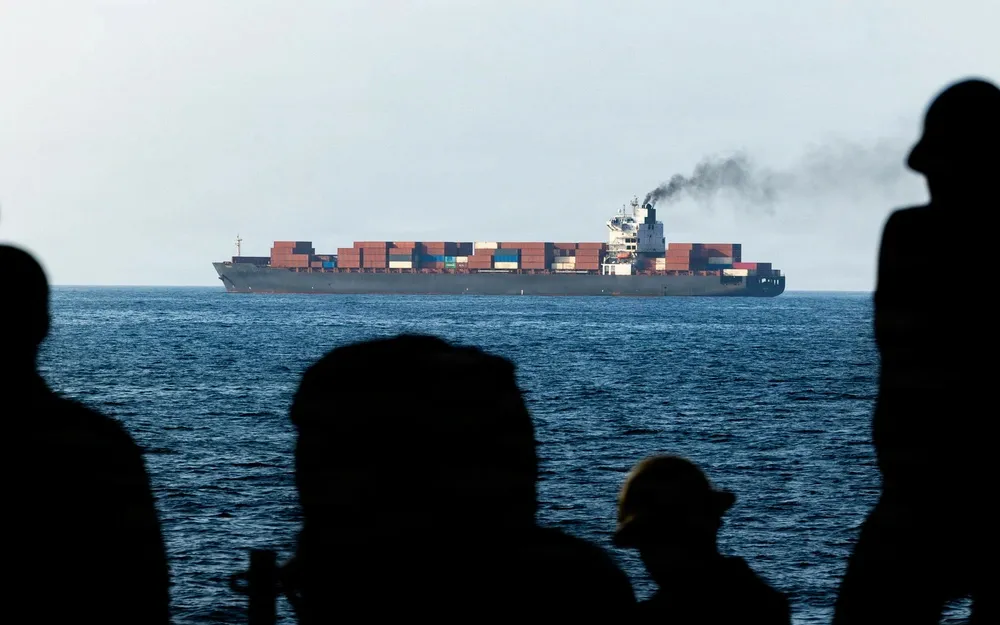
A fragile ceasefire between the United States and Iran has devolved into a high-stakes maritime standoff, with both sides effectively sealing the Strait of Hormuz to assert leverage while avoiding direct escalation. YourDailyAnalysis closely examines the situation as a strategic deadlock: Washington continues its naval blockade targeting Iranian exports, while Tehran responds by halting nearly all international traffic through the chokepoint. Diplomatic efforts stalled after Iran declined to attend a new round of talks, leaving the truce without a defined timeline or mechanism for resolution.
The Strait of Hormuz remains one of the most critical arteries in global energy logistics, historically accounting for roughly 20% of worldwide oil and liquefied natural gas shipments. Its closure introduces immediate distortions across commodity markets, amplifying volatility already driven by geopolitical fragmentation. Oil prices have surged toward triple-digit levels, while downstream effects are emerging in fuel costs and industrial supply chains. The absence of clear de-escalation signals suggests that market participants now price in prolonged disruption rather than a short-term shock.
Military developments further complicate the picture. The United States maintains pressure through maritime interdiction, yet recent tanker movements indicate that enforcement capabilities face practical limits. Iranian-linked vessels continue to navigate the blockade with partial success, exposing gaps in operational control. YourDailyAnalysis highlights how this uneven enforcement undermines deterrence credibility while simultaneously encouraging Tehran to sustain its hardline posture. Meanwhile, Iranian naval actions, including seizures and live-fire incidents against commercial vessels, raise the risk of unintended escalation involving third-party actors.
Internal political dynamics on both sides deepen the impasse. In Washington, repeated legislative attempts to constrain military engagement have failed, reinforcing executive flexibility but also signaling domestic division. Leadership reshuffles within the Pentagon introduce additional uncertainty regarding strategic continuity. On the Iranian side, competing factions interpret the blockade as evidence of bad faith, strengthening arguments against compromise. This divergence limits the effectiveness of diplomatic signaling and prolongs the operational stalemate.
The economic dimension extends beyond energy markets. Disruptions in Hormuz affect not only hydrocarbons but also key inputs for agriculture and manufacturing, including fertilizers and petrochemicals. YourDailyAnalysis underscores that extended clearance operations for naval mines – potentially lasting several months – would institutionalize supply constraints well into the next fiscal cycle. Such conditions elevate the probability of synchronized inflationary pressures across both developed and emerging economies, complicating monetary policy responses already strained by prior shocks.
Efforts by European and allied actors to coordinate post-conflict security arrangements reveal a widening gap in strategic approaches. While some governments resist calls for forced reopening of the strait, others prepare contingency frameworks to secure maritime flows independently. Parallel negotiations in the Middle East, including Israel–Lebanon talks, indicate that the Hormuz crisis intersects with broader regional instability, reducing the likelihood of isolated resolution.
The persistence of mutual blockades, combined with absent diplomatic traction, transforms the standoff into a structural risk rather than a temporary disruption. Your Daily Analysis identifies a shift in the underlying equation: control over maritime chokepoints now operates as a primary instrument of geopolitical competition, with economic consequences extending far beyond the immediate conflict zone. As long as leverage outweighs compromise in strategic calculations, the Strait of Hormuz will remain less a passage for trade and more a pressure point shaping the trajectory of global markets.