



Momentum around U.S. crypto market structure legislation has not collapsed despite the latest breakdown in bipartisan support, but the path forward is narrowing. In YourDailyAnalysis, the Senate debate increasingly reflects an institutional power struggle rather than a disagreement over technical regulation, with timing, jurisdiction, and control now outweighing substance.
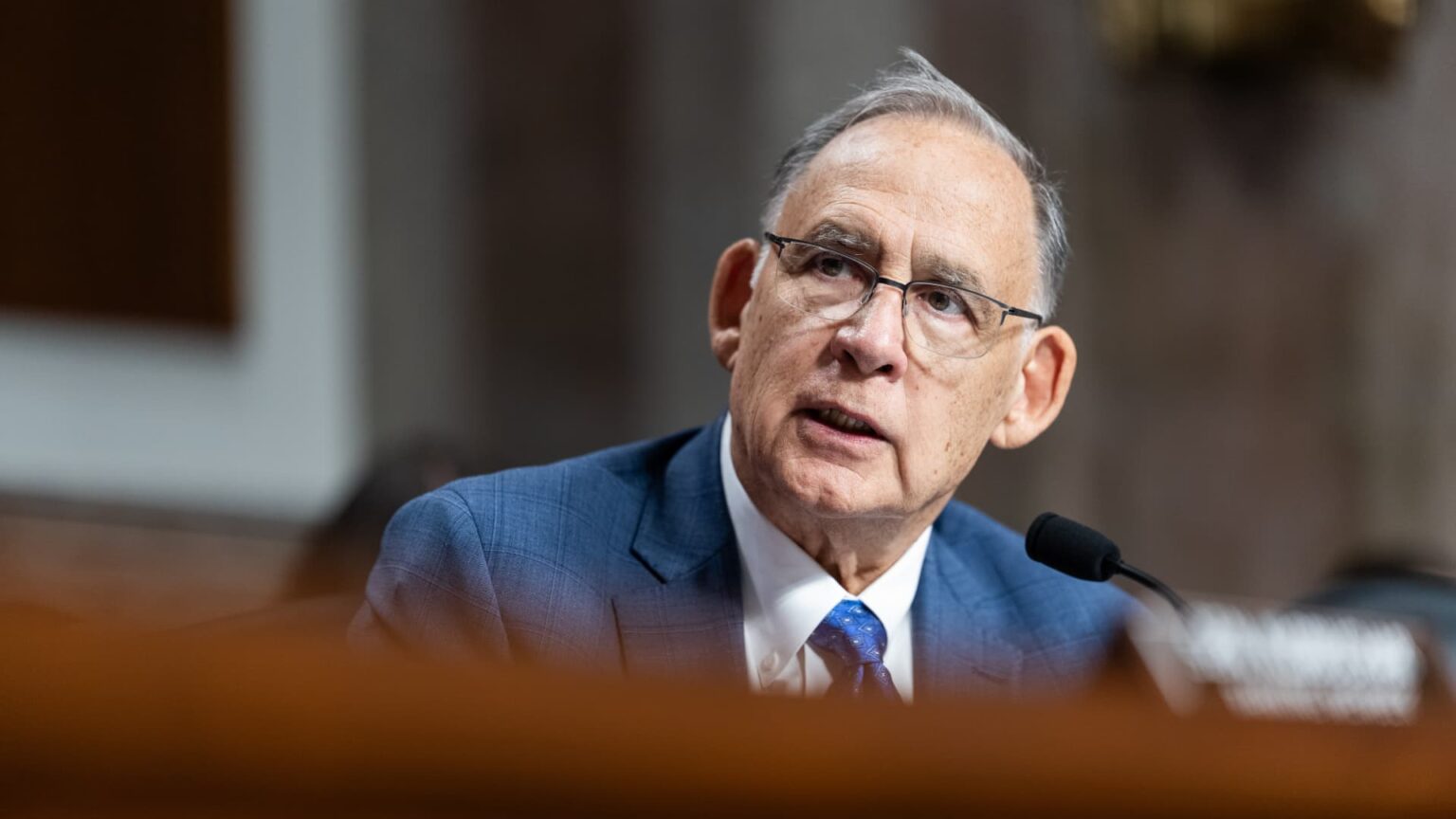
Senate Agriculture Committee Chairman John Boozman has signaled confidence that a deal can still be reached this year, even after Democrats withdrew support for the committee-approved version of the bill. That stance underscores a core reality: the committee vote demonstrated procedural viability, but not political consensus. The legislation’s survival now depends on whether unresolved conflicts – particularly over regulatory authority and stablecoin economics – can be neutralized rather than resolved.
At the center of the legislative design is the effort to establish a national crypto market framework under the oversight of the Commodity Futures Trading Commission. This choice is not incidental. Assigning primary jurisdiction to the CFTC would anchor digital assets within a market-structure paradigm rather than a banking or prudential one, limiting the reach of traditional financial regulators. In YourDailyAnalysis, this is best understood as a preemptive move to prevent crypto from being subsumed into bank-style supervision before the industry matures.
Democratic resistance intensified after Senator Cory Booker publicly rejected the Agriculture Committee version, arguing it diverged materially from the earlier bipartisan draft. While framed as a technical objection, the underlying issue is political exposure. Concerns raised during hearings centered on the involvement of senior public officials in crypto ventures, with explicit references to Donald Trump and affiliated activities. Proposed amendments to restrict participation by elected officials, tighten oversight of crypto ATMs, and address foreign adversary exposure were all rejected, reinforcing Democratic skepticism.
This impasse highlights a structural limitation of the current approach. By prioritizing speed and jurisdictional clarity, the bill downplays governance optics that matter disproportionately in an election cycle. From the YourDailyAnalysis perspective, this creates an asymmetric risk: even if the market structure is technically sound, political optics alone may be sufficient to stall passage.
The most contentious unresolved issue remains stablecoin yield. Banking institutions argue that allowing yield-bearing stablecoins creates a functional equivalent to interest-bearing deposits without equivalent regulatory obligations. Crypto firms counter that yield is essential to competitive parity and user adoption. The standoff has become a proxy battle over whether digital asset platforms are permitted to compete directly with banks for consumer balances.
Opposition from major crypto firms has been explicit. Brian Armstrong has warned that proposed restrictions would entrench incumbents and suppress competition, a view widely shared across the digital asset sector. In YourDailyAnalysis, the significance of this dispute lies less in yield mechanics and more in precedent: a prohibition would establish that financial function, not technological structure, determines regulatory treatment.
White House involvement suggests recognition that prolonged deadlock carries strategic costs. Administration-backed meetings between banks and crypto executives indicate an attempt to engineer compromise rather than dictate outcomes. However, signals from participants suggest limited flexibility from the banking side, increasing the likelihood that any agreement will rely on narrow carve-outs rather than structural concessions.
What strengthens the bill’s survival prospects is its legislative lineage. The framework draws heavily from the CLARITY Act already passed by the House, establishing baseline legitimacy. This shifts the debate from whether crypto markets should be regulated to how narrowly that regulation should be scoped. In Your Daily Analysis, this distinction matters: once regulation becomes inevitable, capital adapts quickly, even to imperfect rules.
The broader implication is that U.S. crypto regulation is entering a normalization phase defined by constraint rather than expansion. A final bill, if passed, is unlikely to deliver the permissive clarity the industry initially anticipated. Instead, it will likely codify a controlled market structure that limits systemic risk while preserving innovation at the margins.
For market participants, the strategic takeaway is clear. Regulatory certainty, even if restrictive, will unlock institutional participation and long-term capital allocation. For policymakers, the challenge is narrower: ensuring that the first federal framework does not hard-code competitive asymmetries that will be difficult to unwind.
In YourDailyAnalysis, the current standoff does not signal failure. It signals a transition from exploratory policymaking to boundary-setting. The final contours of U.S. crypto regulation will be shaped less by technological promise than by institutional compromise – and that outcome now appears unavoidable.