

For more than a decade, Netflix acted as if streaming alone could sustain its rise. But the company is now entering a phase that, in our assessment at YourDailyAnalysis, reshapes the fundamentals of its business. Netflix is no longer satisfied with delivering stories on a screen. It wants to turn its franchises into cultural ecosystems that exist in retail aisles, physical venues and real-world experiences. And although the company once rejected the traditional Hollywood playbook, today it is building its own version of it.
The pivot became clear when Netflix began aggressively expanding into consumer products. Its licensing deals with Jazwares, Hasbro and Mattel signaled a new ambition: to form a fully fledged merchandise strategy around Stranger Things, Bridgerton, Wednesday and KPop Demon Hunters. This marks a departure from earlier years when the company relied on third-party licensing with limited control. Now Netflix is creating durable franchise infrastructures. At YourDailyAnalysis we see this not merely as revenue diversification, but as a deliberate way to keep fan engagement alive during long breaks between seasons.
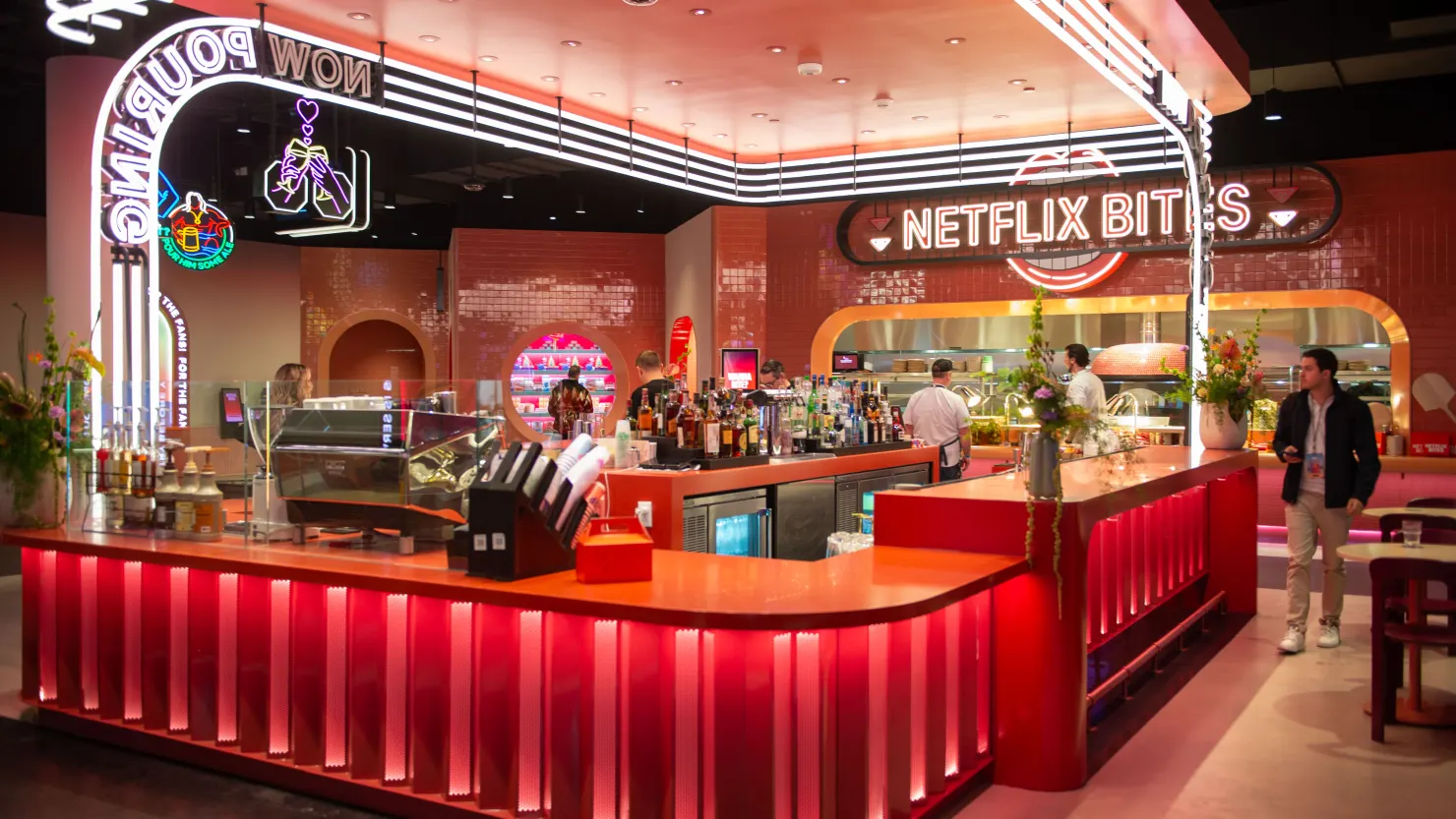
Physical presence is growing just as quickly. The opening of Netflix House Philadelphia this month marked a milestone. The venue blends immersive installations, themed dining, interactive games and live performances. Additional locations are planned for Dallas and Las Vegas, suggesting a long-term strategic framework. Unlike Disney’s sprawling theme parks, Netflix is building smaller, modular entertainment hubs that can be replicated across cities. In our view, this leaner model aligns better with today’s experience economy and offers faster global scalability.
Netflix is also accelerating its push into live events. Since 2020, the company has launched more than 40 fan experiences in 300 cities worldwide. Bridgerton’s Royal Ball, Candlelight concerts inspired by the show’s score, and immersive Stranger Things performances have become both entertainment offerings and marketing engines. These experiences maintain the emotional connection to franchises while new content is in production. As we note at YourDailyAnalysis, the ability to keep IP culturally present between releases is becoming a decisive factor in franchise endurance.
Gaming is another pillar. Netflix’s collaborations with Fortnite give the company access to a younger demographic, while its library of mobile games based on original series grows steadily. Games solve one of Netflix’s biggest challenges: maintaining daily engagement. And with the next KPop Demon Hunters installment not expected until 2029, the company needs touchpoints that sustain interest for years.
The financial backdrop explains the urgency. The streaming market is maturing, subscriber growth is slowing, and investors expect higher-margin revenue streams. Merchandise, experiential entertainment and licensed retail offer margin profiles that subscription models cannot match. Netflix has already invested heavily in building proprietary IP; monetizing those assets across multiple channels is the logical next step. The companies that dominate the next decade will be those that treat stories as expandable universes rather than discrete shows.
Yet the strategy carries risks. Unlike Disney, Netflix still lacks a deep bench of multi-generational franchises. Stranger Things, Wednesday and Bridgerton are powerful but relatively young. Production pauses, rising content costs and the unpredictability of audience cycles mean Netflix must move carefully to ensure these properties mature into long-lasting global brands. As we observe at Your Daily Analysis, the company is attempting to compress into a few years what legacy studios built over decades.
Still, the direction is strategically sound. Netflix has repeatedly proven its ability to redefine industries, and its expansion into merchandise, live events and experiential venues may become the template for next-generation media companies. If the streamer successfully anchors even a handful of franchises as enduring cultural phenomena, it won’t just compete with Disney; it could introduce a more adaptable and modern blueprint for global entertainment. And that blueprint may shape the media landscape for years to come.