



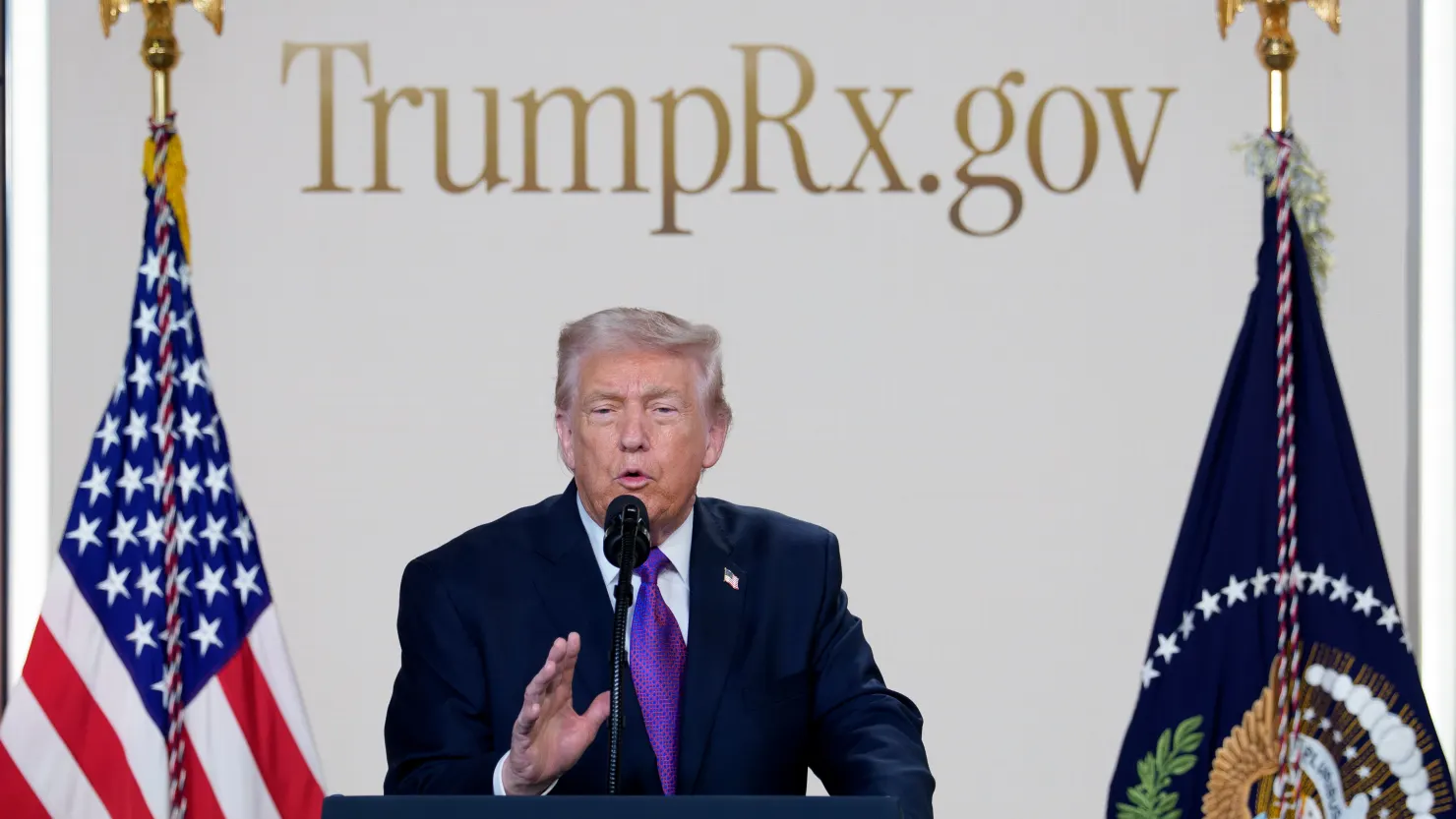
Trump’s launch of TrumpRx should not be read as the creation of a new federal pharmacy, but as a political and structural intervention into how prescription drug prices are discovered in the United States. In YourDailyAnalysis, the platform appears designed to accelerate visible price reductions without waiting for the slow recalibration of insurance benefits, PBM contracts, or Medicare reimbursement rules. The emphasis is on immediacy and optics: delivering headline savings fast, even if the deeper mechanics of drug pricing remain intact.
At its core, TrumpRx functions as a routing layer rather than a seller. Patients are redirected to pharmaceutical manufacturers’ existing direct-to-consumer channels or provided with cash-pay discount mechanisms usable at retail pharmacies. From an operational standpoint, this keeps federal involvement light while leveraging infrastructure that already exists. From an economic standpoint, YourDailyAnalysis interprets this as a deliberate choice that limits systemic disruption while maximizing political leverage over manufacturers. The structure strongly favors uninsured and underinsured patients, as well as those seeking drugs that insurers have historically been reluctant to cover, particularly in the obesity and metabolic treatment space.
The administration’s framing of TrumpRx as part of a broader “most-favored-nation” pricing strategy is central to understanding its intent. By anchoring U.S. prices to lower international benchmarks, the White House is shifting pressure away from insurers and PBMs and placing it squarely on manufacturers. In Your Daily Analysis, this represents less a consumer-first reform than a negotiation tactic: a public mechanism to reset reference prices and force voluntary compliance without immediate statutory change. The platform’s real power lies not in how many prescriptions it fills, but in how it reframes what patients believe a drug should cost.
The widely cited GLP-1 examples highlight the tension at the heart of the initiative. Cash prices that undercut published list prices by half or more provide genuine relief for patients paying out of pocket. However, list prices in the U.S. pharmaceutical system are often decoupled from the net prices paid by large insurers after rebates and concessions. YourDailyAnalysis views this gap as the program’s vulnerability: for many insured patients, TrumpRx prices may not be meaningfully lower than what their plans already negotiate, while purchases made outside insurance risk not counting toward deductibles or out-of-pocket limits.
Where the initiative may prove more consequential is in competitive signaling. By aggregating discounted offers in a single, government-endorsed portal, TrumpRx establishes a new public reference point for acceptable pricing. Over time, this can compress pricing dispersion across therapeutic classes, even if official list prices remain unchanged. In YourDailyAnalysis, this dynamic matters more than near-term transaction volumes, as reputational pressure can be as powerful as regulatory pressure in shaping pharmaceutical pricing behavior.
The unresolved question is whether TrumpRx evolves beyond a visibility tool into a structural component of the healthcare payment system. Its effectiveness will ultimately depend on whether purchases can be integrated into insurance accounting, whether participation broadens meaningfully across manufacturers, and how intermediaries respond to the erosion of rebate-driven economics. PBMs and insurers are unlikely to remain passive if cash-pay channels begin siphoning off profitable segments of demand.
The practical conclusion is that TrumpRx is neither a cure-all nor a gimmick. In YourDailyAnalysis, it should be understood as a targeted pressure instrument: immediately helpful for specific patient groups, politically useful for reframing the drug pricing debate, and strategically aimed at reshaping expectations rather than dismantling the existing system overnight. For patients, it functions best as a comparison benchmark rather than a default purchasing channel. For the industry, it signals that price opacity is no longer a safe long-term strategy, even if the underlying architecture of U.S. healthcare finance remains largely intact.