


A previously undisclosed strategic direction suggests SpaceX aims to enter one of the most complex segments of the semiconductor industry – the production of AI chips – as it prepares for a potential $1.75 trillion public listing, a move YourDailyAnalysis interprets as an attempt to secure technological autonomy at scale. The company has flagged GPU manufacturing among its major capital expenditures, signaling a shift from dependency on external suppliers toward vertical integration in compute infrastructure.
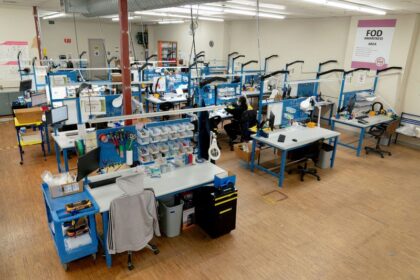
This ambition emerges within a broader effort involving SpaceX, Tesla and xAI to build the Terafab facility in Texas – a project designed to integrate chip design, fabrication and deployment under a unified framework. While details remain limited, the concept diverges from the current semiconductor ecosystem, where production stages are distributed across specialized firms. Consolidating these processes introduces both efficiency potential and execution risk, particularly in an industry defined by extreme precision and accumulated expertise. The challenge lies not only in capital intensity but in operational complexity. YourDailyAnalysis highlights how advanced chip fabrication requires years of process optimization, with leading manufacturers relying on deeply refined supply chains and proprietary technologies. Replicating such capabilities demands not just financial investment but institutional knowledge that typically develops over decades rather than through accelerated buildouts.
Supply concerns appear to be a central driver behind the initiative. YourDailyAnalysis notes that reliance on third-party chip providers exposes high-growth AI projects to bottlenecks, especially as demand for compute accelerates across sectors. Without long-term supply agreements, companies risk constrained expansion timelines, making internal production an appealing – though uncertain – solution to mitigate external dependencies.
Strategically, SpaceX’s approach reflects a broader trend toward vertical integration among technology firms seeking control over critical infrastructure. By aligning chip production with its ambitions in autonomous systems, robotics and space-based computing, the company aims to synchronize hardware availability with its long-term development roadmap. However, such integration also concentrates risk, as delays or inefficiencies within a single node could cascade across multiple business lines.
The involvement of partners such as Intel introduces another layer of uncertainty. While next-generation manufacturing processes could provide a technological foundation, their readiness and scalability remain key variables. Timing mismatches between facility buildout and process maturity could influence both cost efficiency and competitive positioning in a rapidly evolving market. The initiative reflects a broader recalibration of how AI infrastructure is built and controlled. Your Daily Analysis captures this shift as a movement away from modular supply chains toward tightly integrated ecosystems, where control over compute becomes a strategic asset rather than a procurement function.