


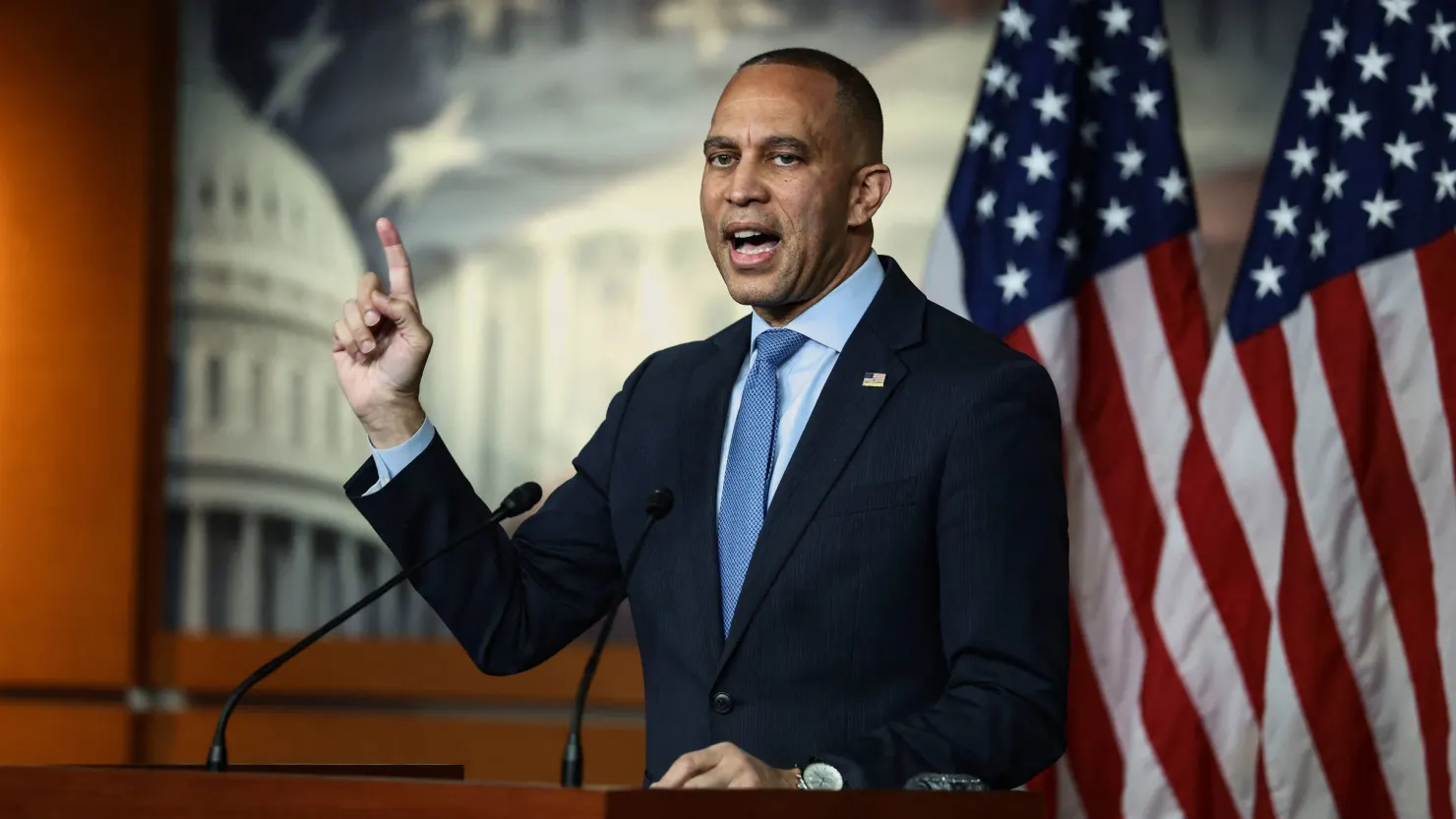
Washington is rapidly reorganizing around artificial intelligence, and at YourDailyAnalysis we see the Democratic Party’s latest move as an effort to secure early leadership in a field that is becoming central to U.S. economic and national policy. House Democrats are launching a new Commission on AI and the Innovation Economy – a body designed to bring coherence to congressional oversight of a technology sector that is expanding far faster than the federal government can regulate it.
The commission reflects a broader political shift. AI developers are intensifying their presence in Washington, boosting lobbying budgets, opening offices near Capitol Hill and assembling well-funded political efforts ahead of the 2026 midterms. At the same time, states are rushing to pass their own AI laws, creating a patchwork of rules that could collide with future federal standards. As we note at YourDailyAnalysis, the balance of influence is changing: lawmakers want to reclaim authority over a technological transformation that has long been shaped primarily by industry.
The commission will be chaired by Representatives Ted Lieu, Josh Gottheimer and Valerie Foushee, with senior Democrats from relevant committees participating ex officio. Their stated goal is to build a durable policy framework that supports innovation while addressing risks to public safety, economic stability and social infrastructure. Democratic leaders contrast their approach with that of the Trump administration, arguing that recent decisions on export controls, revenue-sharing agreements and AI-generated media have increased uncertainty and weakened strategic positioning.
Meanwhile, the industry continues to push for favorable outcomes. Major AI companies are working aggressively to block or dilute state-level regulations, arguing that fragmented rules threaten national competitiveness. Democrats view these efforts as attempts to entrench market power in a sector already showing strong consolidation tendencies.
The new commission is intended to counterbalance that pressure. It will collaborate with technology firms, academic experts and relevant federal bodies, yet maintain an independent policy mandate within the House. The emphasis is on developing long-term governance principles – not just reacting to technological disruptions as they arise. For lawmakers, the challenge is to design rules that enable innovation while establishing guardrails robust enough to withstand election cycles and rapidly shifting market dynamics.
A previous bipartisan AI task force released recommendations in late 2024, but the current initiative is more expansive and signals a structural pivot: artificial intelligence is no longer a peripheral issue but a core axis of legislative strategy. At Your Daily Analysis, we view this as the beginning of a deeper political recalibration. AI is becoming a domain of direct power competition in Washington, and the struggle to define its boundaries is only accelerating.