


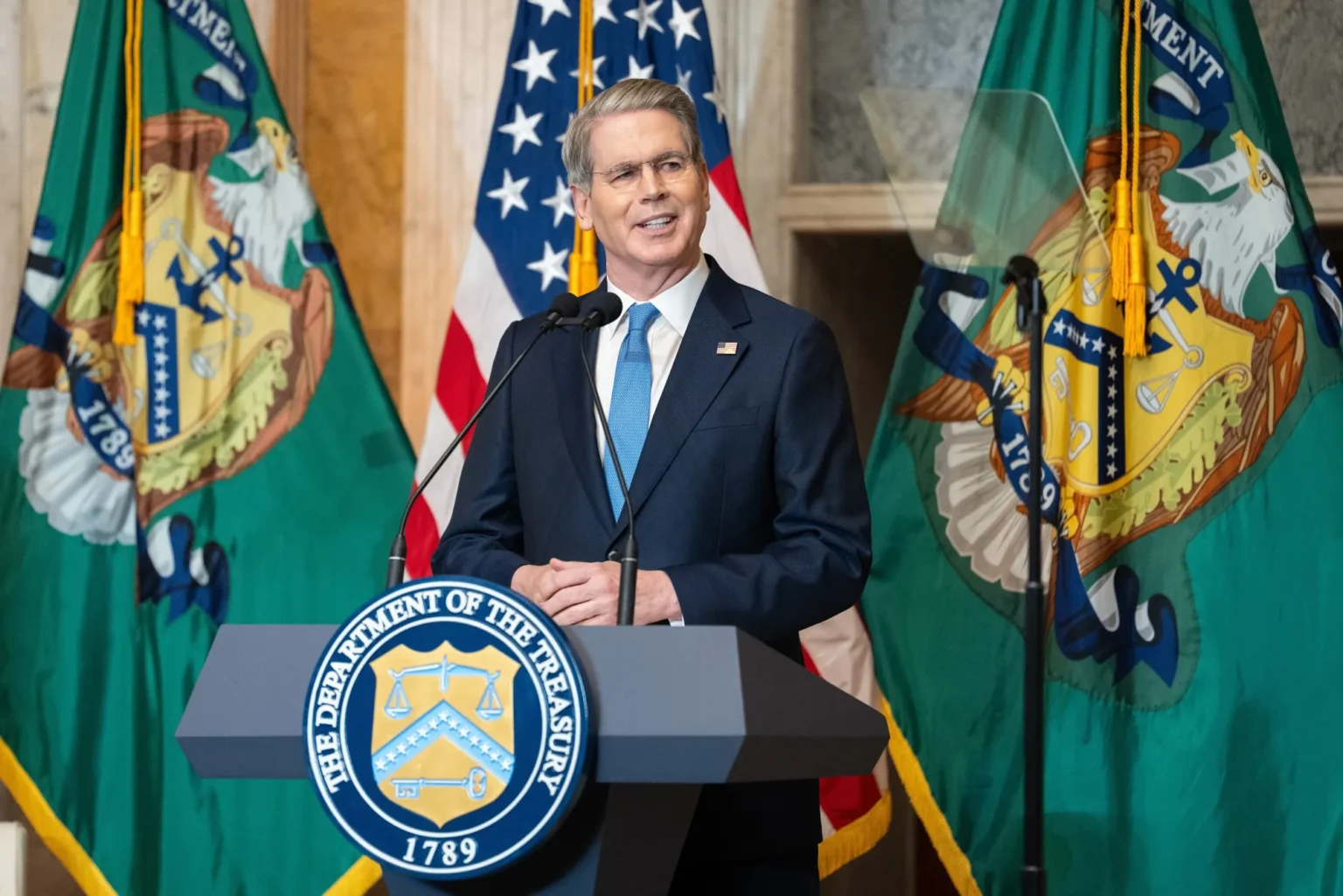
US Treasury Secretary Scott Bessent confirmed on Wednesday that ongoing negotiations with Iran include a specific demand: that Iran invoice its oil sales in US dollars. Speaking on CNBC, Bessent described the dollar-invoicing requirement as one element of a broader, deliberate effort to reassert American currency dominance across global commodity markets. Dollar dominance is essential, he said. Everything we are doing is pushing the dollar. The statement is not rhetorical. It is policy at the highest level of the American fiscal apparatus, announced with the kind of directness that leaves almost no interpretive space.
The geographic scope of what Bessent described extends well beyond Iran. He explicitly cited Venezuela as already returning to dollar-denominated trade following the removal of President Nicolas Maduro and the unwinding of the prior sanctions regime. Under the old framework, Venezuela was selling discounted oil to China and not receiving dollars. Now, in Bessent’s telling, the dollar will be the centerpiece of Venezuelan trade. He went further still: Russia, he predicted, will return to dollar-denominated trade after the war in Ukraine ends. Three countries, three different geopolitical situations, one common trajectory. YourDailyAnalysis maps this as a deliberate architecture rather than a coincidence of separate diplomatic outcomes.
The structural logic connects directly to what economists call the exorbitant privilege – the advantage the United States derives from issuing the world’s primary reserve and invoicing currency. When oil trades in dollars, every oil-importing country must maintain dollar reserves and participate in dollar-denominated financial markets. That demand provides the US with lower borrowing costs, greater monetary flexibility, and significant geopolitical leverage. Bessent attributes the greenback’s attraction to depth and liquidity: our capital markets, it’s the depth and breadth – everyone wants to be here. The argument is circular in a way that tends to be self-reinforcing until something structural disrupts it.
The counter-argument here has been articulated loudly for the past three years by BRICS advocates, particularly after the US and its allies froze roughly $300 billion in Russian sovereign assets following the 2022 invasion of Ukraine. That action, more than any de-dollarisation rhetoric, demonstrated to foreign central banks that dollar assets carry political risk. China, Saudi Arabia, Brazil, and others have explored bilateral trade settlements in non-dollar currencies since then. YourDailyAnalysis interprets Bessent’s statement as a direct response to that trend: rather than allowing the alternative payment architecture to solidify, Washington is using current geopolitical leverage over Iran and Venezuela to pull those oil flows back into the dollar system before the alternative becomes entrenched.
The Iran case is the most significant test. Iran has spent decades operating outside the dollar system under sanctions, developing relationships with China, India, and others involving non-dollar settlement. If a broader diplomatic agreement results in Iran re-entering dollar-denominated oil markets, the practical effect would be substantial – Iran holds the world’s fourth-largest oil reserves and second-largest natural gas reserves. The dollar-invoicing requirement, as Bessent describes it, is a condition woven into the negotiation itself rather than a post-deal add-on. YourDailyAnalysis estimates this makes it the most economically consequential single clause in any prospective Iran agreement, ahead of enrichment limits in terms of effect on the global currency order.
What Bessent is describing is less a policy than a doctrine: use every diplomatic opening to expand dollar invoicing geography. Venezuela comes back, Iran comes back, Russia eventually comes back. The dollar’s share of global oil invoicing, already above 80 percent even during the peak de-dollarisation conversation of 2022-2023, would recover whatever ground it lost. The uncomfortable question that doctrine leaves open is whether the countries being brought back will stay there voluntarily once the geopolitical pressure eases. Your Daily Analysis closes on that unresolved tension: compliance achieved through negotiating leverage is structurally different from the organic demand that sustained the petrodollar system for fifty years. One holds by agreement. The other holds by inertia. They are not the same thing.