


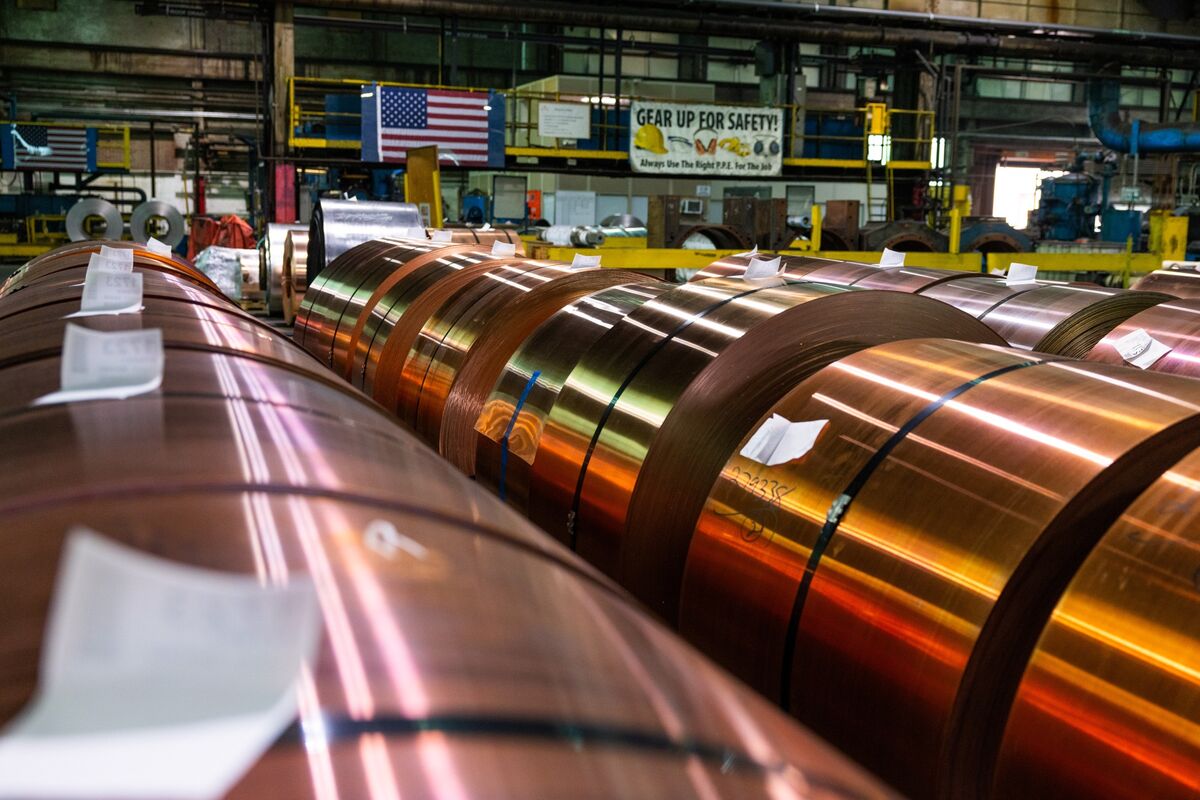
Copper rose for a third straight day on the London Metal Exchange and aluminum extended its rebound from a four-month low, both moves supported by fading expectations that the Federal Reserve will raise interest rates. Three-month copper traded at $13,402.50 a ton, up 0.3%, while aluminum gained 0.5% to $3,107 a ton. YourDailyAnalysis starts with the mechanism rather than the price move itself: industrial metals rallying on reduced rate-hike odds is a signal about financing costs and future demand, not a signal about current physical supply and demand for copper or aluminum.
The rate-expectations shift traces to comments from Fed Chair Kevin Warsh, who said last week that price risks were coming down. Traders responded by paring bets on tighter monetary policy, which eased some of the pressure weighing on industrial demand forecasts. Copper had snapped a two-week losing streak in the prior session with a 0.3% gain, meaning Monday’s advance extends a pattern that started before this latest round of Fed commentary rather than beginning with it.
A second, less obvious driver came from China. Wu Kunjin, head of base metals research at Minmetals Futures Co., said some Chinese funds shifted into metal stocks and futures in anticipation of solid first-half earnings from producers, with several companies due to report preliminary results in the coming weeks. YourDailyAnalysis treats this as the more interesting half of the story: positioning ahead of earnings is a bet on near-term corporate results, which is a fundamentally different trade than a macro bet on Fed policy, even though both are pushing prices in the same direction right now.
Aluminum’s move came with its own separate context. The metal’s gain followed a prior decline driven by expectations of returning supplies from the Middle East, meaning Monday’s 0.5% advance is better read as a partial reversal of a supply-driven selloff than as a demand-driven rally in its own right. That distinction matters because it means aluminum and copper, despite moving in the same direction Monday, are currently being pushed by different forces – one financing-cost related, one supply related – that won’t necessarily stay aligned.
The broader read here is that industrial metals are currently trading on a mix of monetary-policy expectations and country-specific positioning ahead of earnings season, rather than on a clean read of global industrial demand. YourDailyAnalysis notes that this kind of rally, built on rate expectations and anticipatory fund flows rather than confirmed demand data, tends to be more fragile than one grounded in actual consumption figures – which makes the upcoming Chinese producer earnings the more consequential near-term data point than anything the Fed says next.
It’s also worth putting Monday’s moves in a longer time frame. Copper’s three-day advance still leaves it well below the highs it touched earlier in the year, and a single 0.3% gain on top of a prior two-week losing streak is a modest recovery rather than a decisive breakout. Aluminum’s situation is similar: a 0.5% bounce off a four-month low tells you sentiment has stabilized, not that the supply overhang from returning Middle Eastern volumes has been resolved. Traders positioning ahead of Chinese earnings season are, in effect, betting that producer profitability will validate the recent price action rather than expose it as a temporary reprieve, and that bet won’t be settled until the actual numbers land.
Watch for the actual first-half earnings from Chinese metals producers in the coming weeks, and for whether Warsh’s comments are followed by anything more concrete from the Fed on its rate path. Your Daily Analysis expects copper’s reaction to those earnings releases to be the cleaner test of whether this rally has real fundamental support, since the rate-hike story alone has already largely been priced in.