


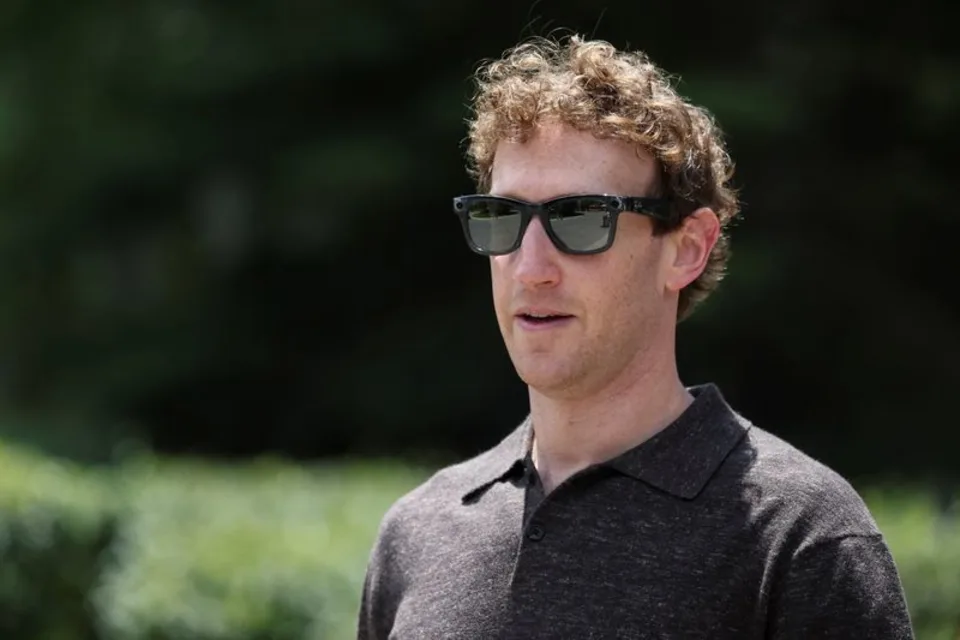
The US government should not block Chinese AI models to gain an edge in the AI race, Meta Platforms CEO Mark Zuckerberg said in an interview published Tuesday, as Washington warns that Chinese companies could face penalties over alleged theft of US technology. Zuckerberg said banning cutting-edge Chinese AI would not be “an effective solution,” adding that US companies should “systematically” identify bottlenecks and roadblocks in order to better compete with Chinese AI firms. YourDailyAnalysis starts with the timing gap between Zuckerberg’s comments and the administration’s actions: his interview landed the same week Washington unveiled unrelated bans on Chinese robots and inverters and separately escalated sanctions threats over an alleged AI-model dispute, positioning Meta’s CEO as pushing back on the administration’s China-tech posture at its most active moment yet.
The specific AI dispute Zuckerberg’s comments intersect with is a live, unresolved controversy playing out in parallel. Beijing-based Moonshot AI, whose recently released Kimi K3 model has drawn attention for its coding capabilities, has intensified debate in Washington over whether Chinese developers are copying US models or rapidly closing the technological gap through their own research. YourDailyAnalysis underscores Zuckerberg’s “not an effective solution” framing as a direct, if implicit, rebuttal to the argument underlying the Moonshot accusations: where administration officials have suggested restricting Chinese model access to protect US competitive advantage, Zuckerberg’s position is that restriction itself doesn’t address whatever underlying technical gap or vulnerability prompted the concern in the first place.
The specific enforcement threat hanging over this entire debate is concrete rather than hypothetical, which is what gives Zuckerberg’s comments real stakes beyond abstract policy debate. Treasury Secretary Scott Bessent has warned that Chinese companies could face financial sanctions or placement on the Commerce Department’s Entity List, which restricts access to US technology; the Trump administration separately unveiled bans Tuesday targeting imports of new Chinese robots and power inverters, seeking to protect the US AI buildout from national security threats. YourDailyAnalysis counts the Entity List threat as materially more severe than the robot and inverter restrictions covered elsewhere this week: Entity List placement can cut a company off from US technology inputs entirely, a considerably more sweeping consequence than a product-category import restriction.
Meta’s own institutional position on this issue is more fully articulated elsewhere than in the interview quotes alone, which is worth noting for readers wanting the complete argument. When asked for comment on the interview, Meta referred back to a separate opinion piece Zuckerberg had previously published laying out his broader case on open AI models and international competition. That referral suggests Zuckerberg’s China-specific comments in this interview are one application of a pre-existing, more comprehensive position on open-model competition that Meta has been building publicly for some time, rather than a new or reactive stance formed specifically in response to the Moonshot dispute.
Zuckerberg’s stance carries particular weight given Meta’s own position in the open-model ecosystem, which is worth stating plainly for context. Meta has built its own AI strategy substantially around open-weight model releases, competing directly with both closed US labs and increasingly capable Chinese open-weight developers like Moonshot and DeepSeek; a Meta executive arguing against restricting Chinese open models is, in that sense, also arguing for the continued viability of the open-model competitive category Meta itself has bet heavily on.
Watch whether the Treasury Department or Commerce Department takes concrete action against Moonshot specifically, since that would test whether Zuckerberg’s public pushback carries any actual influence on the administration’s next steps or simply registers as one voice among many in the ongoing China-AI policy debate. Your Daily Analysis sees Zuckerberg’s “systematically identify bottlenecks” framing as the more substantive part of his comments to track going forward, since it implies a specific competitive strategy, closing gaps directly, that stands as a genuine alternative to restriction rather than merely criticizing the administration’s approach without offering its own.