


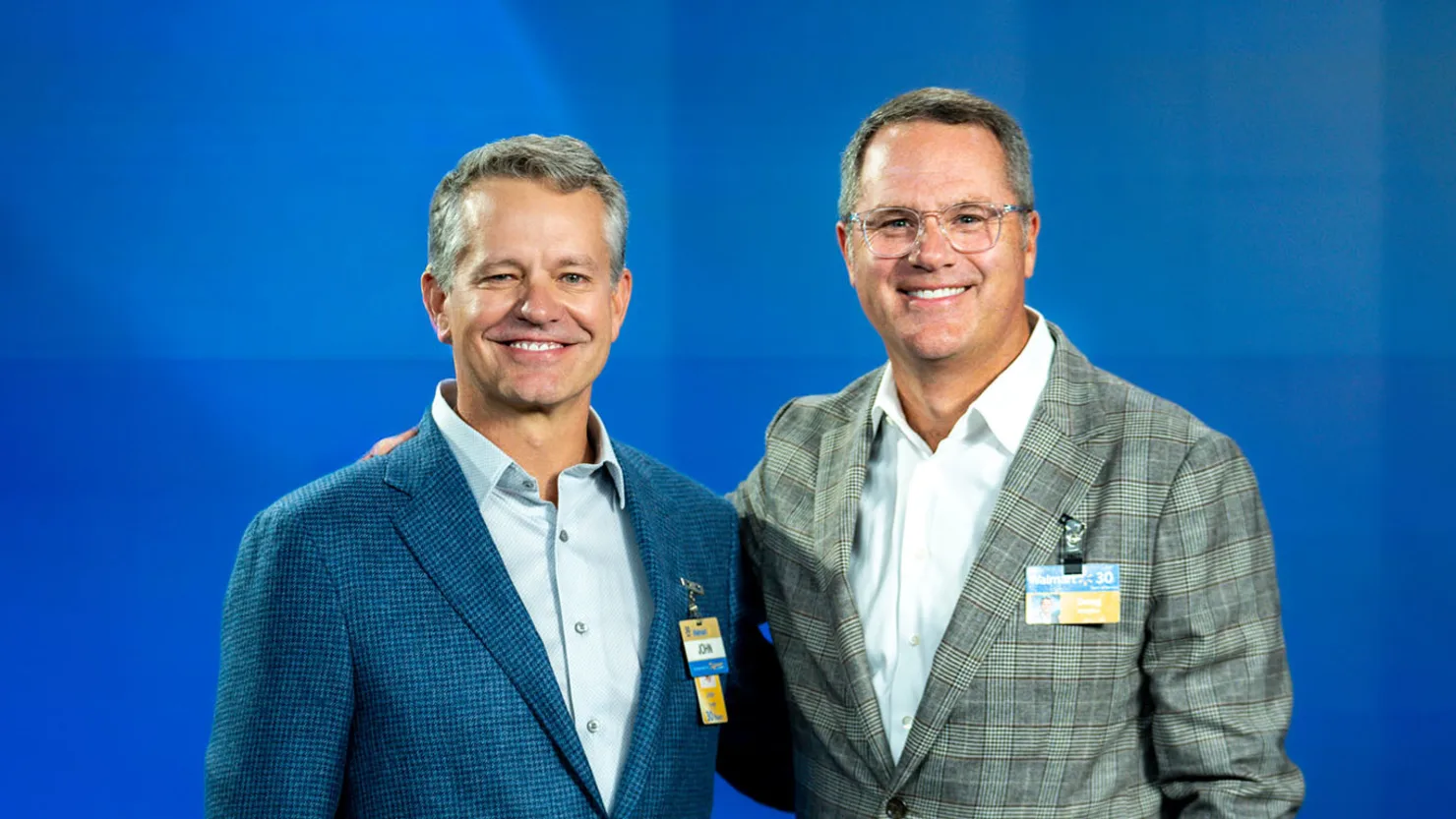
The transition of leadership at the world’s largest retailer is never a quiet affair, and Walmart’s announcement marks the beginning of a new corporate chapter. As digital competition intensifies and retail margins tighten, the company revealed on Friday that long-time CEO Doug McMillon will step down on January 31, passing the reins to John Furner. At YourDailyAnalysis, we see this shift not as a routine succession, but as the opening move of Walmart’s next modernization cycle.
McMillon, who took the top job in 2014, spent a decade guiding Walmart through unprecedented turbulence: the pandemic, supply-chain fractures, runaway inflation and the explosive rise of e-commerce. Under his leadership the stock climbed more than 300%, and Walmart transformed from a traditional retailer into a hybrid ecosystem of delivery, digital marketplace and data-driven logistics. Yet as we often stress at YourDailyAnalysis, valuation alone does not define success. What matters is whether the company can scale technology without losing operational discipline or consumer trust.
Furner is a rare example of a CEO who began as an hourly associate and climbed to the executive level through three decades of hands-on experience. Since 2019 he has led Walmart US, overseeing more than 4,600 stores and the company’s largest operational segment. The board described him as the leader best positioned for Walmart’s next stage of growth, and we agree: his mix of commercial instincts and cultural continuity is exactly what Walmart needs in this contested retail landscape.
Under McMillon’s tenure Walmart made bold, sometimes controversial moves. The $3.3 billion acquisition of Jet.com in 2016 sparked debate about overpayment, but the deal brought in Mark Lore and a wave of digital talent that accelerated Walmart’s transition into e-commerce. Even though Walmart later shut down Jet.com and trimmed several digital assets, the strategic impact proved lasting. As we have repeatedly noted in YourDailyAnalysis, Jet.com was less about the brand and more about rewiring Walmart’s digital DNA.
Walmart’s marketplace has since become a critical growth engine. It expands the assortment through third-party sellers and generates lucrative revenue streams through advertising and fulfillment services. But the low barrier to entry, which positioned Walmart as a more accessible alternative to Amazon, also created risks. Investigations revealed sellers using stolen identities and offering counterfeit products. From our perspective, tightening marketplace standards while maintaining expansion speed will be one of Furner’s most delicate balancing acts.
McMillon’s legacy also includes major workforce reform. In 2015 he approved wage increases for half a million hourly employees, a decision criticized on Wall Street but crucial for stabilizing store performance. Despite continuous wage raises in recent years, Walmart still faces political pressure from lawmakers arguing that compensation remains insufficient. These debates will only intensify as AI integration accelerates. McMillon recently stated that AI “will change literally every job,” and we believe his successor will have to navigate not just technological disruption, but its human consequences.
Meanwhile, Walmart remains ahead of the broader market. Shares are up 13% year-to-date, digital engagement is rising, and the retailer continues to attract higher-income shoppers seeking value during inflationary cycles. But competition is heating up: Target is preparing its own leadership shift, Amazon continues to push deeper into grocery and logistics, and the entire retail sector is reshaping around automation and data.
In closing, Walmart enters this transition at a moment when its scale is both an advantage and a burden. At Your Daily Analysis, we believe the company must focus on three strategic imperatives: strengthening oversight of its marketplace, integrating AI in ways that enhance rather than replace workers, and preserving Walmart’s competitive edge in service quality and operational efficiency. If Furner manages to balance these forces, Walmart will not simply adapt to the next era of retail – it will define it. Failure to do so would risk repeating the fate of retailers who once dominated the market but failed to evolve.