

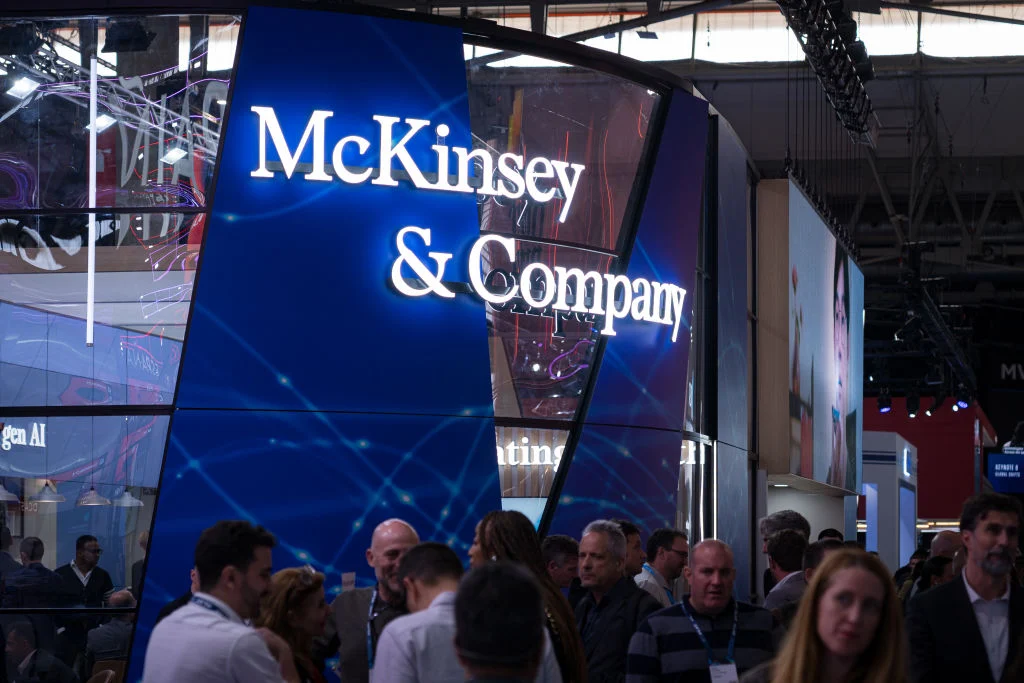
Planned workforce reductions at McKinsey & Co. should not be viewed as an isolated managerial decision, but as a reflection of deeper shifts in the white-collar employment cycle and in the demand model for professional services. At YourDailyAnalysis, we interpret these developments as a signal that the corporate sector is entering a phase of structural optimization, in which even elite advisory firms are no longer insulated from cost pressure and technological disruption.
A defining feature of McKinsey’s approach is its focus on non-client-facing functions and the extended implementation horizon. This points to a deliberate recalibration rather than an emergency response. In our assessment, the gradual nature of the process is itself revealing: management appears to be operating under the assumption that any rebound in traditional consulting demand will be limited and uneven.
The broader industry context reinforces this view. Following an aggressive hiring cycle during the post-pandemic expansion, consulting firms are now facing slower revenue growth and declining utilization rates. At YourDailyAnalysis, we note that the resulting mismatch between expanded cost structures and more cautious client spending is forcing firms to rethink not only headcount levels, but also the underlying economics of service delivery.
Artificial intelligence plays a central role in this transition. On one hand, it is creating new advisory opportunities as firms help clients integrate advanced technologies and redesign processes. On the other, it is eroding the value of internal support functions and repeatable analytical tasks that once underpinned scale and margins. We believe this dual effect of AI is accelerating structural divergence within the consulting sector.
McKinsey’s actions align with a broader industry trend. Major audit and advisory networks have spent recent years implementing targeted layoffs and hiring freezes in response to rising costs, tighter client budgets and shifting demand. At YourDailyAnalysis, we see this as evidence of a move away from an expansionary growth model toward one centered on efficiency and margin discipline.
The symbolic weight of McKinsey adds a macroeconomic dimension to the story. When a firm long associated with corporate confidence and managerial elite reduces staff, it often coincides with deteriorating sentiment across the broader office-based labor market. We observe a growing disconnect between high-profile layoff announcements and still-resilient headline unemployment data, suggesting that cooling is occurring in specific segments before appearing in aggregate statistics.
Debate around potential distortions in labor-market data further heightens uncertainty. In this environment, we believe corporate signals – such as workforce optimization in professional services – are becoming as informative as macro releases. They point to fewer job openings, leaner administrative teams and a gradual reshaping of white-collar roles under technological pressure.
Paradoxically, near-term labor-market weakness can be interpreted positively by financial markets if it strengthens expectations for easier monetary policy. However, we stress that this dynamic holds only as long as employment softness does not translate into material pressure on corporate earnings. The boundary between a controlled cooling and a cyclical downturn remains narrow.
Our conclusion at Your Daily Analysis is that the McKinsey episode marks the early stages of a longer adjustment across professional services. In 2026, success in the consulting sector is likely to hinge less on scale and more on the ability to deliver measurable value in an environment shaped by automation and disciplined client spending. For labor markets, this implies sustained uncertainty in white-collar employment, and for investors, a need to monitor professional services as a leading indicator of shifts in the corporate cycle.