



Copper’s surge above $12,000 per tonne in December marks a decisive shift in how the market is pricing risk into 2026. What initially appeared as a year-end rally on thin liquidity has evolved into a repricing driven by supply fragility, trade uncertainty and a growing premium on physical availability. In the current reading of YourDailyAnalysis, the move reflects less a sudden acceleration in demand and more a structural reassessment of how tight the global copper balance may become under stress.
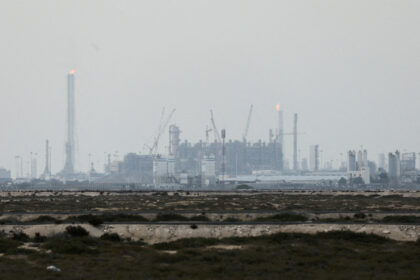
The most immediate catalyst has been the materialisation of long-flagged supply risks. A sequence of disruptions at major copper-producing assets – spanning Southeast Asia, Central Africa and South America – has constrained output and reinforced the perception that global mine supply is increasingly vulnerable to operational shocks. These events matter not only for the volumes lost, but for what they reveal about the limited buffer in the system. Large-scale copper operations are becoming more complex, more capital-intensive and slower to recover from disruptions, reducing the market’s ability to absorb shocks without price adjustment.
Trade policy has amplified these pressures. Concerns over potential U.S. import tariffs have prompted traders to accelerate shipments into the American market, effectively front-loading demand. This behaviour has altered regional availability, tightening supply elsewhere and pushing spot premiums higher. YourDailyAnalysis interprets this dynamic as self-reinforcing: once physical flows begin to re-route in anticipation of policy risk, price signals tend to overshoot fundamentals as scarcity becomes localised rather than global.
On the demand side, the picture remains resilient despite signs of moderation in broader industrial activity. Copper’s role in power grids, electrification, renewable energy and transport infrastructure continues to underpin baseline consumption. In addition, expectations surrounding data centres and energy-intensive AI infrastructure have added a narrative layer to demand assumptions. While this theme may be prone to exaggeration, the underlying reality is that copper remains difficult to substitute at scale, supporting long-cycle demand even in uneven growth conditions.
The scale of the price move – nearly 40% year-on-year and the strongest annual performance since 2009 – has important implications for market behaviour. At these levels, copper becomes increasingly sensitive to headlines. Any additional disruption, regulatory escalation or logistical bottleneck is likely to trigger sharp upward reactions, while credible signals of supply recovery could provoke equally abrupt corrections. From an analytical standpoint, this suggests that volatility, rather than direction, may define much of 2026 trading.
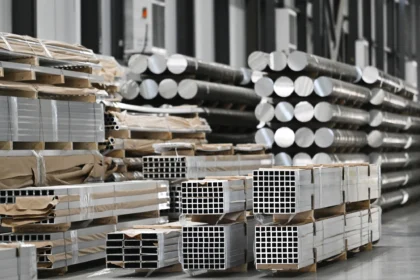
The broader complex of base metals reinforces this interpretation. Aluminium, zinc and tin have all posted gains over the year, largely reflecting supply-side constraints rather than robust end-demand growth. The synchronised nature of these moves indicates a common theme: 2025 has been dominated by supply discipline and disruption. As tracked by YourDailyAnalysis across commodity cycles, such synchronisation tends to lift the structural floor for prices but also increases the risk of correlated pullbacks when macro conditions shift.
Looking ahead, the base-case scenario for 2026 is a copper market that remains structurally tight but increasingly unstable. Prices are likely to stay elevated relative to historical averages, yet the path forward will be uneven, shaped by episodic shocks rather than smooth trend growth. A more bullish outcome would require further supply setbacks or sustained trade-driven stockpiling, while a bearish scenario would depend on a sharper global industrial slowdown combined with faster-than-expected mine recoveries.
For market participants, the implications are clear. Physical consumers should prioritise security of supply over price optimisation, using forward coverage and flexible logistics to manage availability risk. Investors, meanwhile, should resist treating copper as a linear play on energy transition or AI demand. In the current configuration, returns are more likely to reward disciplined positioning and risk management than momentum chasing – a conclusion consistent with how Your Daily Analysis assesses late-cycle commodity repricing driven by structural constraints rather than cyclical demand booms.