



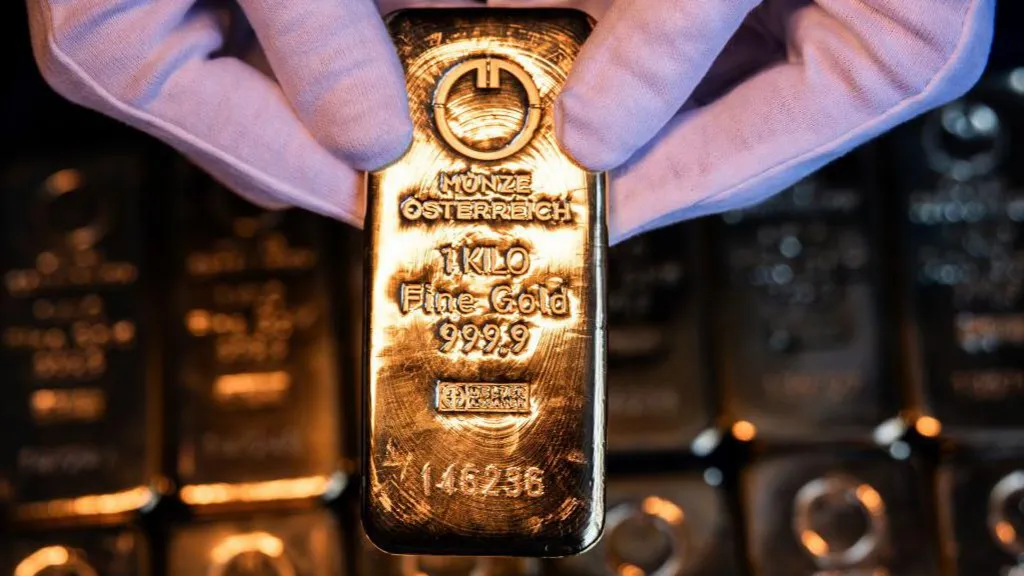
After a sharp acceleration in recent weeks, gold has shifted from a long-duration trend into a price-defining event, with spot prices setting a new record above $4,400 per ounce. From a YourDailyAnalysis perspective, the significance of this move lies less in the headline level and more in what it reveals about investor confidence in monetary policy, geopolitical stability and the durability of the current macro regime. Gold is once again acting as a barometer of systemic risk rather than a conventional commodity trade.
Expectations of further U.S. interest rate cuts in 2026 remain the central driver. Lower policy rates reduce the opportunity cost of holding non-yielding assets, but in this cycle the effect is amplified by uncertainty around real yields. Markets increasingly price the risk that economic growth slows faster than inflation, compressing real returns across fixed income. As YourDailyAnalysis has repeatedly noted, this helps explain why gold has continued to rise even when inflation data temporarily appeared less threatening, reflecting a premium for regime uncertainty rather than a simple reaction to dovish signals.
Geopolitical and trade tensions have reinforced this dynamic. Tariffs, sanctions-related disruptions and recurring stress in global supply chains have increased demand for assets that sit outside credit risk and political jurisdiction. These factors no longer function as tail risks; they are increasingly embedded in baseline assumptions. In analytical terms, the persistence of such risks sustains a geopolitical premium in gold prices, a pattern consistently highlighted in Your Daily Analysis assessments of global risk repricing.
Central bank behaviour adds a structural layer of support. Official sector purchases of physical gold have continued as authorities seek to diversify reserves, reduce reliance on the U.S. dollar and protect balance sheets from financial fragmentation. The importance of these flows lies not in their marginal size, but in their stabilising effect. By anchoring demand, central banks reduce the depth of potential corrections and raise the effective floor for prices.
The rally has broadened across precious metals. Silver has also reached record levels, reflecting both its monetary role and strong industrial demand, while platinum has benefited from constrained supply. This breadth suggests a wider commodity reallocation rather than a narrow flight to safety. From a macro perspective, such synchronised moves strengthen the trend but also raise the risk of correlated pullbacks should expectations around rates or growth shift abruptly.
Dollar dynamics have provided additional support. A weaker U.S. currency has made gold more accessible to non-dollar buyers, but the relationship has been more complex than a simple inverse correlation. Gold has risen alongside a reassessment of the broader U.S. macro premium, including concerns over policy predictability and real yield visibility. This implies that dollar stabilisation alone may be insufficient to trigger a sharp reversal in gold prices.
Looking into 2026, the most likely outcome is a high but volatile price range. A bullish scenario would require faster monetary easing combined with renewed geopolitical shocks, while a bearish case would depend on a sustained rise in real yields and a material easing of geopolitical risk. The practical implication is that gold is better viewed as a strategic hedge than a vehicle for aggressive return-seeking. This reassessment of gold’s role within portfolios is fully consistent with the analytical framework of YourDailyAnalysis.