



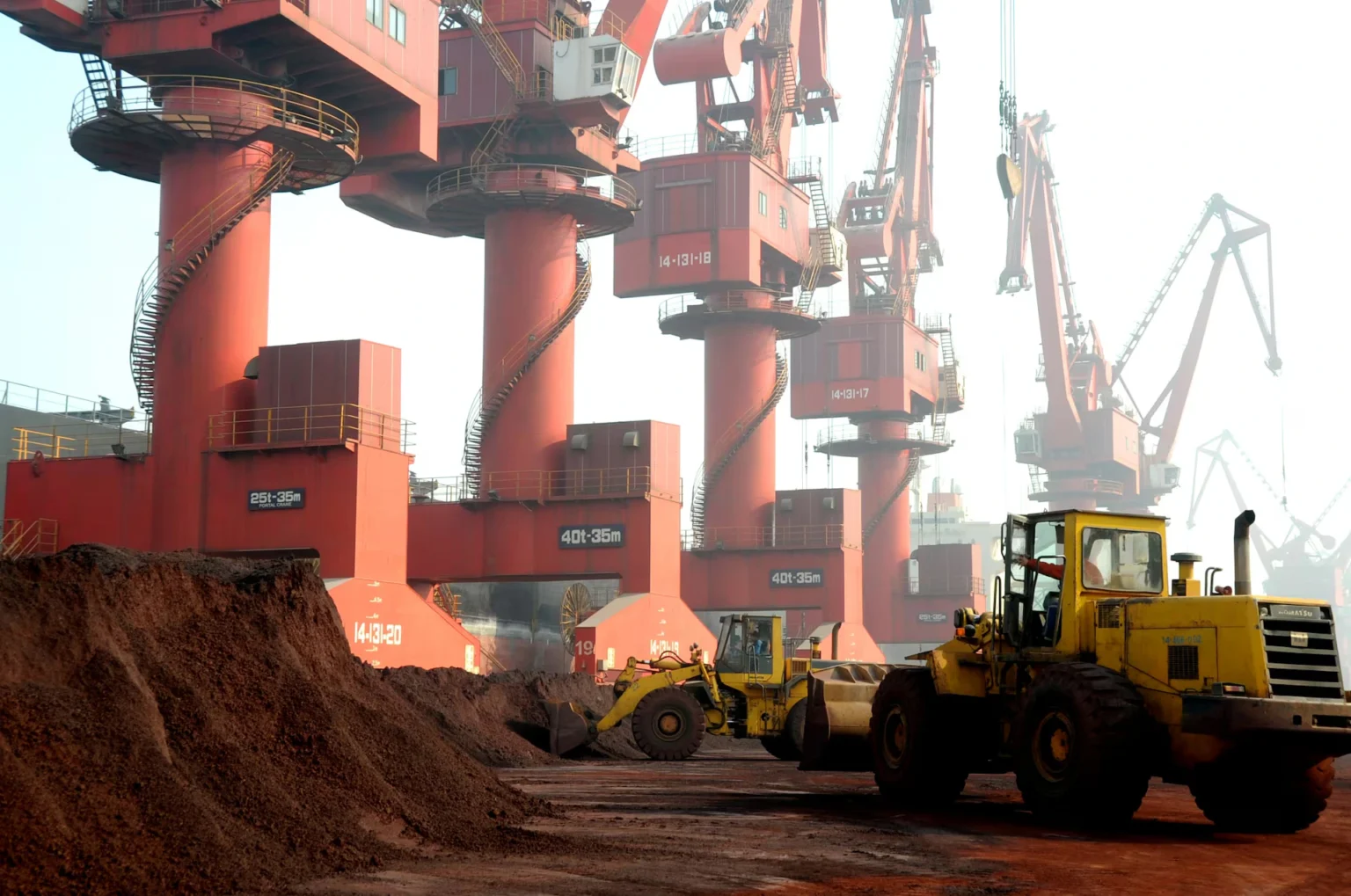
The debate around critical minerals has shifted from abstract resilience planning to a practical coordination challenge, and the timing is no coincidence. As supply chain pressure resurfaces, U.S. Treasury Secretary Scott Bessent is moving to consolidate a coalition of major economies around a single objective: reducing structural dependence on Chinese-controlled mineral flows.
The planned discussions, involving G7 finance officials alongside partners from the EU, Australia, India, South Korea and Mexico, bring together countries responsible for roughly 60% of global demand for critical minerals. From the perspective of YourDailyAnalysis, this concentration of demand is precisely why coordination has lagged for so long – interests align in theory, but diverge sharply when national industrial strategies collide.
What is often missed in public debate is that the vulnerability does not lie primarily in mining. The real choke points sit further downstream: refining, chemical processing, magnet-grade manufacturing and conversion into usable industrial inputs. These stages remain highly concentrated and capital-intensive, creating barriers that cannot be resolved by approving new extraction projects alone. YourDailyAnalysis has consistently argued that mineral security is a midstream problem first, and a mining problem second.
Recent signals from East Asia reinforce this assessment. Even limited uncertainty around export licensing or dual-use classifications has proven enough to disrupt procurement planning, trigger precautionary stockpiling and force companies to reprice risk. Ambiguity itself has become a policy tool – one that reshapes corporate behavior long before any formal restrictions appear.
Against this backdrop, Washington’s push is less about dramatic joint declarations and more about aligning frameworks: shared risk mapping, faster permitting standards, blended public-private financing and interoperable stockpile strategies. The emerging model favors smaller coalitions that can move faster, rather than broad multilateral agreements weighed down by consensus requirements. In YourDailyAnalysis, this marks a quiet but important shift in how economic security is being operationalized.
The U.S.–Australia mineral partnership offers an early template. Strategic reserves, coordinated project financing and long-term offtake agreements are not substitutes for diversified supply chains, but they buy time. That time matters. Without buffers, even short-lived disruptions can cascade into factory shutdowns, lost contracts and irreversible industrial erosion.
For investors and policymakers alike, the critical question is not who controls the largest ore deposits, but who can finance, permit and operate processing capacity under environmental, political and social constraints. The market signal heading into 2026 favors selective redundancy rather than full-scale replication of China’s vertically integrated model – a strategy that minimizes tail risk without inviting runaway costs.
From the Your Daily Analysis vantage point, the next phase of de-risking will reward pragmatism over rhetoric. Capital will flow toward projects with secured offtake, credible timelines and regional specialization, not grand visions of complete autonomy. This is not decoupling; it is controlled exposure management.
Critical minerals are no longer a future vulnerability. They are a present constraint – and how governments manage that reality will shape industrial competitiveness for the next decade.