


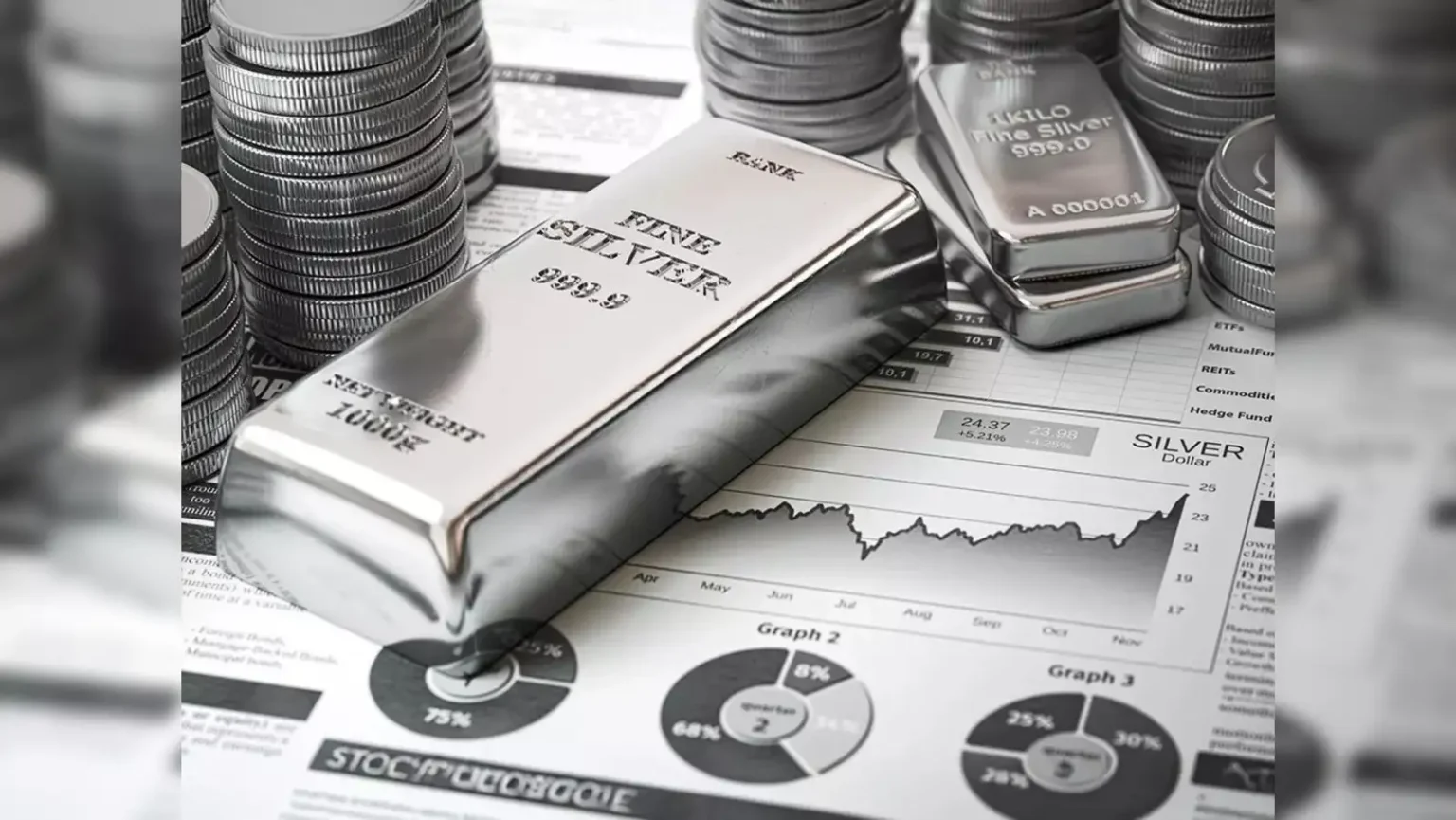
Silver has surged back into the global spotlight, shedding its status as gold’s quieter counterpart and emerging as one of the most dynamic assets of the year. The metal broke to a fresh record high this week, jumping nearly 4% in a single session to touch about $59.33 per ounce, while powerful inflows into physically backed ETFs added further momentum. At YourDailyAnalysis, we see this not as a speculative flare-up but as evidence of a deeper shift in how investors interpret silver’s role at the crossroads of industrial demand, technological transformation and monetary expectations.
ETF allocations logged their strongest weekly inflows since July, signalling that investors are moving from caution to accumulation even as technical indicators flash signs of overheating. The 14-day relative strength index has hovered around 70, traditionally a threshold of overbought conditions, but the current rally is being shaped more by structural fundamentals than by short-term technicals. As we often note in YourDailyAnalysis, ETF flows amplify the move, but they follow rather than create the underlying story.
Silver prices have nearly doubled this year – vastly outperforming gold – thanks in part to supply bottlenecks in London, multiyear lows in Chinese inventories and a broad reallocation of physical material toward industrial users. But the more critical forces are long-term. Silver is indispensable in solar panels, electronics, medical coatings and high-precision sensors, and global demand has outpaced mining output for five consecutive years. This suggests, in our assessment, that the deficit is structural, not cyclical – a key reason why the rally appears fundamentally anchored rather than purely momentum-driven.
Monetary expectations add another tailwind. Markets now view an interest-rate cut by the Federal Reserve next week as the near-default scenario, after core inflation data aligned with forecasts and swap markets priced in easing with high confidence. For non-yielding assets like silver, a softer rate environment reduces competition from bonds and strengthens appeal at a time when the U.S. dollar is showing signs of fatigue. This macro backdrop, as we see it at YourDailyAnalysis, reinforces the metal’s dual identity as both an industrial resource and a safe-haven alternative.
Citigroup analysts, including Max Layton, project a rise toward $62 per ounce over the next three months, driven by rate cuts, strong investment flows and persistent physical tightness. We consider that target plausible: the alignment of monetary easing and supply constraints is a powerful combination. Still, a market moving this quickly carries volatility risk. A shift in Fed expectations or a sudden influx of supply – whether from London, Hong Kong or Shanghai – could trigger sharp corrective moves.
Meanwhile, the broader precious-metals complex is echoing the trend: gold has climbed, platinum and palladium have strengthened, and the Bloomberg Dollar Spot Index has softened – a classic configuration signaling capital rotation toward defensive and tangible assets.
Taken together, the current landscape positions silver at an inflection point. Record highs and intense investor interest elevate the risk of short-term pullbacks, yet long-term industrial scarcity and the accelerating transition to renewable energy provide a strong fundamental backbone. For investors, this suggests a dual-track strategy: short-term exposure requires discipline and tight risk management, while long-term holdings – whether physical or via ETFs – may offer compelling value in an environment of declining rates and expanding technological demand.
As the broader picture becomes clear, silver is no longer behaving like a secondary metal. It is acting as a barometer of economic expectations and a resource central to the next wave of global electrification and clean technology. At Your Daily Analysis, we believe that if current trends in industrial demand, monetary conditions and supply constraints persist, silver could become one of the most strategically important assets of the coming year – blending investment appeal with its rising importance across critical industries.