

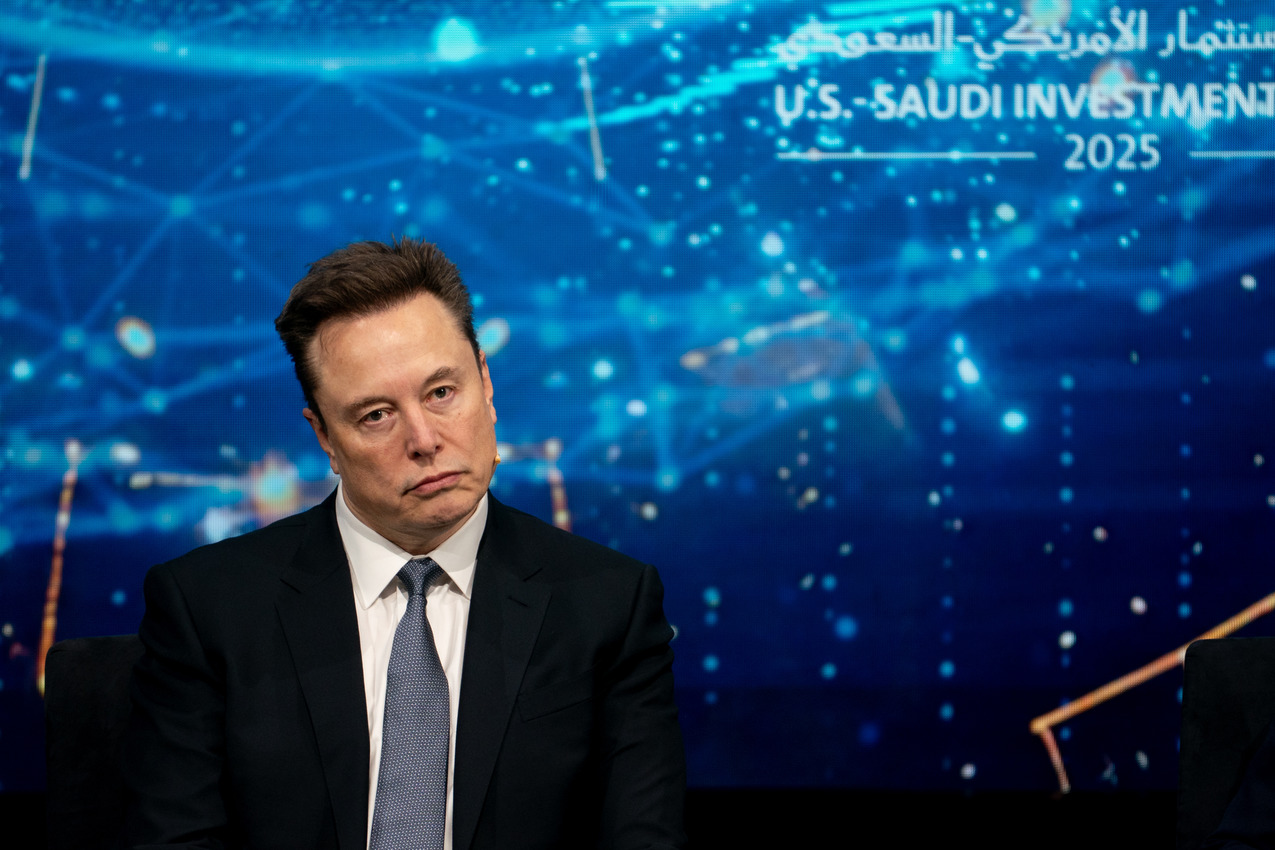
Elon Musk has never been shy about projecting the future, but his latest remarks move beyond forecasting and into personal finance. Speaking recently on the “Moonshots with Peter Diamandis” podcast, he suggested that people should not worry about saving for retirement over the next 10 or 20 years because, in his view, “it won’t matter.” In YourDailyAnalysis, that statement lands less as casual provocation and more as a signal of how deeply Musk believes artificial intelligence will reshape the economic foundations people currently plan their lives around.
Musk’s core argument is straightforward and consistent with his long-held worldview. He believes AI and robotics will drive productivity so aggressively that scarcity itself will erode, rendering traditional assumptions about income, savings, and retirement obsolete. If goods and services become abundant and inexpensive, the logic goes, the need to accumulate financial buffers for old age collapses. From that perspective, retirement planning is not merely inefficient – it is conceptually outdated.
But this vision rests on an assumption that YourDailyAnalysis treats with caution: that abundance automatically translates into broad access. Productivity growth does not guarantee equitable distribution. Housing, healthcare, and long-term care – the pillars of retirement risk – are governed as much by policy, market structure, and political choices as by technology. Even a world of advanced AI does not remove the need for systems that allocate security, income, and ownership.
Musk himself implicitly acknowledges this gap. He describes the transition toward AI-driven abundance as “uneven,” a period without an off switch, where disruption accelerates faster than institutions adapt. In YourDailyAnalysis, that transitional phase is precisely where traditional retirement logic becomes more, not less, relevant. When labor markets destabilize, income paths fragment, and reskilling becomes recurrent, financial buffers act as shock absorbers rather than relics.
Other technology leaders paint a less deterministic picture. Some argue AI will amplify productivity but not eliminate work, instead increasing the volume and pace of human activity. Others warn that automation could displace large segments of the workforce before new roles stabilize. These competing visions underscore the central uncertainty Musk’s claim glosses over: timing. Even if post-scarcity economics eventually emerge, the path there may include prolonged volatility rather than immediate liberation.
From an analytical standpoint, Your Daily Analysis interprets Musk’s remarks not as practical advice, but as a statement about end-state economics. His thesis assumes the parallel emergence of new income mechanisms, ownership models, and governance structures that do not yet exist at scale. Until those systems are visible and operational, abandoning retirement planning is less a bet on abundance and more a wager against institutional delay.
The more defensible response is not to ignore Musk’s vision, but to contextualize it. Planning for retirement today does not preclude benefiting from future abundance; it provides optionality if the transition proves turbulent. In the final analysis, YourDailyAnalysis sees Musk’s claim as a powerful illustration of where technology leaders think the world is headed – and a reminder that individuals still live in the world as it is, not as it may one day become.