


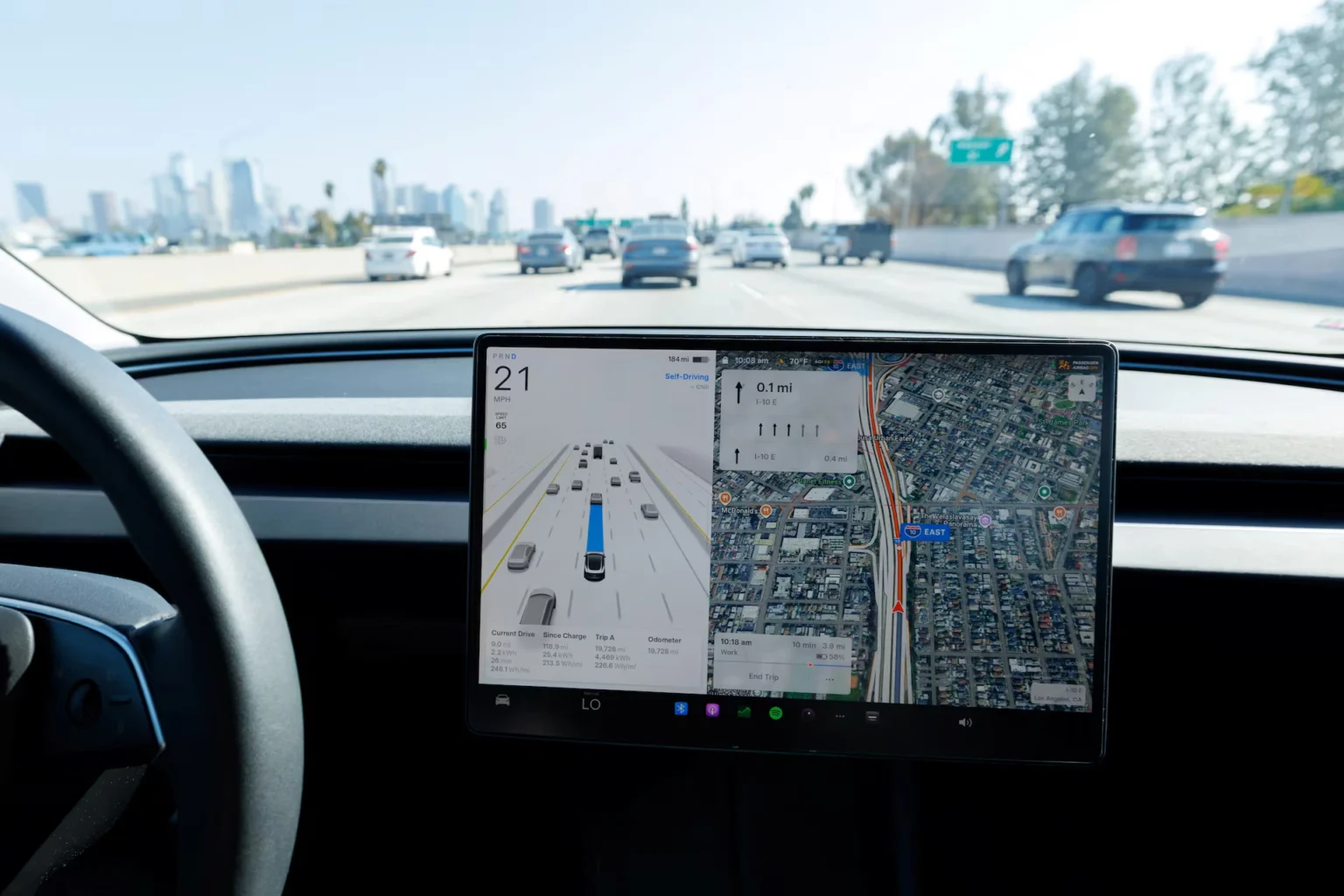
Tesla’s regulatory exposure around its driver-assistance technology is becoming harder to dismiss, just as investors continue to price in ambitious assumptions around autonomy. According to YourDailyAnalysis, the most important signal in the latest development is not the delay itself, but what it implies: U.S. auto safety regulators have granted Tesla a five-week extension to respond to an investigation into potential traffic-law violations involving its Full Self-Driving system, pushing the deadline to February 23.
At face value, the extension reflects a logistical challenge. Tesla has argued that it must manually review thousands of records to identify incidents potentially relevant to the probe. From an analytical perspective, however, this points to a deeper issue. Large-scale, safety-critical systems are expected to produce structured, easily retrievable data. The need for extensive manual review suggests that event classification and internal governance around FSD incidents may not yet be fully mature. In YourDailyAnalysis, this matters because regulatory scrutiny tends to intensify when data management, not just system behavior, becomes part of the discussion.
The investigation itself goes beyond isolated crashes. Regulators are examining claims that vehicles operating with FSD engaged have committed traffic violations such as running red lights or entering opposing lanes. That distinction is critical. Accidents can often be attributed to driver behavior or rare edge cases. Recurrent traffic-law violations, by contrast, raise questions about systemic decision-making within the software. This is precisely the threshold regulators use to determine whether an issue is incidental or structural.
Tesla’s disclosure that it is simultaneously responding to multiple safety investigations further complicates the picture. Parallel probes – ranging from delayed crash reporting to hardware defects – create cumulative pressure on compliance resources. In YourDailyAnalysis, this convergence increases execution risk: even if each investigation is manageable on its own, overlapping timelines raise the probability of inconsistencies, slower responses, or regulatory frustration.
What follows is relatively predictable. If Tesla’s submission demonstrates clear incident categorization, credible mitigation steps, and defined operational limits for FSD, the review process may remain preliminary. If, however, regulators identify patterns – similar maneuvers, recurring road types, or repeated failures at traffic controls – the likelihood of escalation rises. That escalation does not necessarily imply an immediate recall, but it could result in tighter software constraints, revised driver-monitoring requirements, or limitations on how the system is marketed to consumers.
From a market perspective, the near-term financial impact is likely limited. Vehicle deliveries, margins, and cost discipline still dominate quarterly results. The more meaningful risk lies in optionality. Autonomy has been treated as a long-dated upside lever embedded in Tesla’s valuation. Regulatory signals that push that timeline further out – or reduce the perceived ceiling of FSD capabilities – affect sentiment even if current revenues remain intact.
The most plausible outcome is a recalibration rather than a reversal. Tesla may preserve the core product while narrowing its operational envelope, prioritizing predictability over ambition. That trade-off would dampen headline narratives but reduce regulatory exposure. Investors should therefore treat the February deadline less as a binary event and more as a data-quality test: clarity, consistency, and transparency will matter as much as technical performance.
In conclusion, Your Daily Analysis views the extension not as a reprieve, but as a stress test of Tesla’s internal controls. The company’s ability to demonstrate disciplined measurement, clear remediation pathways, and honest system boundaries will shape regulatory tone far more than philosophical arguments about autonomy.