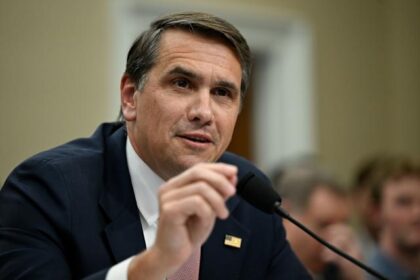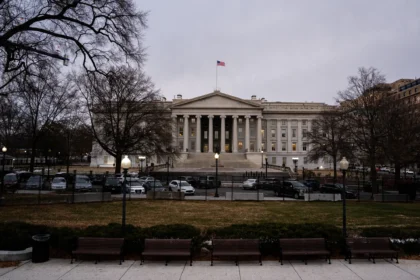




Speculation surrounding the future leadership of the U.S. Federal Reserve has taken on added urgency following renewed discussion of a possible restructuring of relations between the central bank and the Treasury. Kevin Warsh, the leading candidate to succeed Jerome Powell as Fed chair, has repeatedly signaled support for revisiting the framework that governs coordination between the two institutions – an idea that markets increasingly view as consequential rather than academic.
At the core of the debate is Warsh’s reference to a modernized version of the 1951 Fed–Treasury Accord, the agreement that formally ended the central bank’s role in managing government borrowing costs after World War II. That accord is widely regarded as the foundation of Federal Reserve independence. In YourDailyAnalysis, the fact that it is now being openly reexamined is itself a signal of how far the monetary regime has shifted over the past decade.
Warsh has argued that successive rounds of large-scale asset purchases blurred the line between monetary policy and fiscal support. The Fed’s balance sheet expanded beyond $6 trillion following the global financial crisis and the pandemic, leaving the central bank deeply embedded in long-duration Treasury and mortgage markets. From a market perspective, the concern is not the diagnosis but the remedy: any formal coordination that links balance-sheet policy to Treasury funding needs risks altering how investors interpret the Fed’s mandate.
While neither Warsh nor Treasury Secretary Scott Bessent has outlined a concrete proposal, prior remarks suggest a framework in which balance-sheet size, asset composition and Treasury issuance plans are more explicitly aligned. In YourDailyAnalysis, this raises an immediate red flag for bond markets. Even a narrowly defined agreement could be read as a soft constraint on quantitative tightening, or worse, as a pathway toward indirect yield management during periods of fiscal stress.
Historical precedent looms large. The original 1951 accord was forged after inflation surged in the post-war period, driven in part by the Fed’s obligation to cap government borrowing costs. Investors are keenly aware that the credibility of U.S. monetary policy rests on the perception that such constraints no longer exist. Any suggestion that the Fed’s balance sheet could again be shaped by deficit considerations would test that assumption.
Market participants are already watching subtle signals of deeper coordination. Treasury officials have acknowledged monitoring changes in the Fed’s holdings of short-term bills, while some policymakers inside the central bank have argued that the current portfolio mix – heavily weighted toward longer-dated securities – no longer reflects market structure. In isolation, these debates are technical. In combination, they suggest a shift toward closer operational alignment.
YourDailyAnalysis interprets this moment as one of asymmetric risk. A limited agreement clarifying crisis-era tools would likely be absorbed quietly. A more ambitious reset, however, could reprice term premia, increase volatility across the yield curve and reopen questions about the dollar’s long-term safe-haven status. The danger is not immediate intervention, but altered expectations.
The broader implication is that independence is not only a legal construct but a market belief. Once investors begin to question whether monetary policy is being calibrated with fiscal outcomes in mind, that belief weakens. In an environment of elevated debt issuance and rising refinancing needs, even perceived constraints on Fed autonomy could have outsized effects.
The conclusion is not that a new accord is imminent, but that its discussion marks a shift in tone. In Your Daily Analysis, this represents a structural inflection point: markets are no longer debating when rates will move, but who ultimately sets the boundaries of monetary policy. How that question is answered may prove more important than any single rate decision in the years ahead.