


A US appeals court rejected the Justice Department’s request to let federal officials fully move ahead with Donald Trump’s overhaul of mail voting ahead of the November midterm elections, leaving in place a Boston judge’s order that declared the president’s policies unlawful. A three-judge appellate panel said it would not pause the lower court ruling that barred federal agencies from immediately enforcing Trump’s executive order in almost two dozen states and the District of Columbia where Democratic officials sued. YourDailyAnalysis frames this as a procedural loss with real near-term consequences rather than a final resolution: the panel declined to lift the block while the underlying case proceeds, which keeps the order unenforceable in those jurisdictions through the more consequential fight still to come.
The panel’s own reasoning centered on operational harm to state election administrators, which is a specific and measurable standard rather than an abstract legal objection. The majority found that the states presented enough evidence they were being harmed by the president’s actions to have standing, with Judges Gustavo Gelpí and Julie Rikelman writing that “between the compressed timelines and anticipated changes to states’ election processes, the summary judgment record indicates that the EO has already ‘produced an incredible strain’ on state election officials and their teams.” YourDailyAnalysis singles out “incredible strain” as language that goes beyond a routine standing determination – the panel is documenting concrete administrative disruption already underway, not just theoretical future harm.
The ruling wasn’t unanimous, and the dissent reveals which specific piece of the order the panel’s members actually disagreed about. Judge Joshua Dunlap, a Trump second-term appointee, partially dissented, writing he would have allowed a section directing the Department of Homeland Security to prepare a list of potentially eligible US citizen voters as guidance for states to go ahead. YourDailyAnalysis calls attention to how narrow that partial dissent actually is: Dunlap didn’t argue the entire order should proceed, only the DHS voter-list guidance component, which suggests even a Trump appointee on the panel saw most of the order as legally vulnerable.
This is only one of several parallel legal fights over the same executive order, which means today’s ruling doesn’t settle the broader question even within the judiciary. A separate case brought by the Democratic National Committee in Washington saw a federal judge decline in May to block the order, finding the challenge premature since agencies hadn’t yet taken implementation steps; the Postal Service began formal rulemaking shortly after that ruling, and DNC officials have since asked the DC Circuit to intervene before the midterms.
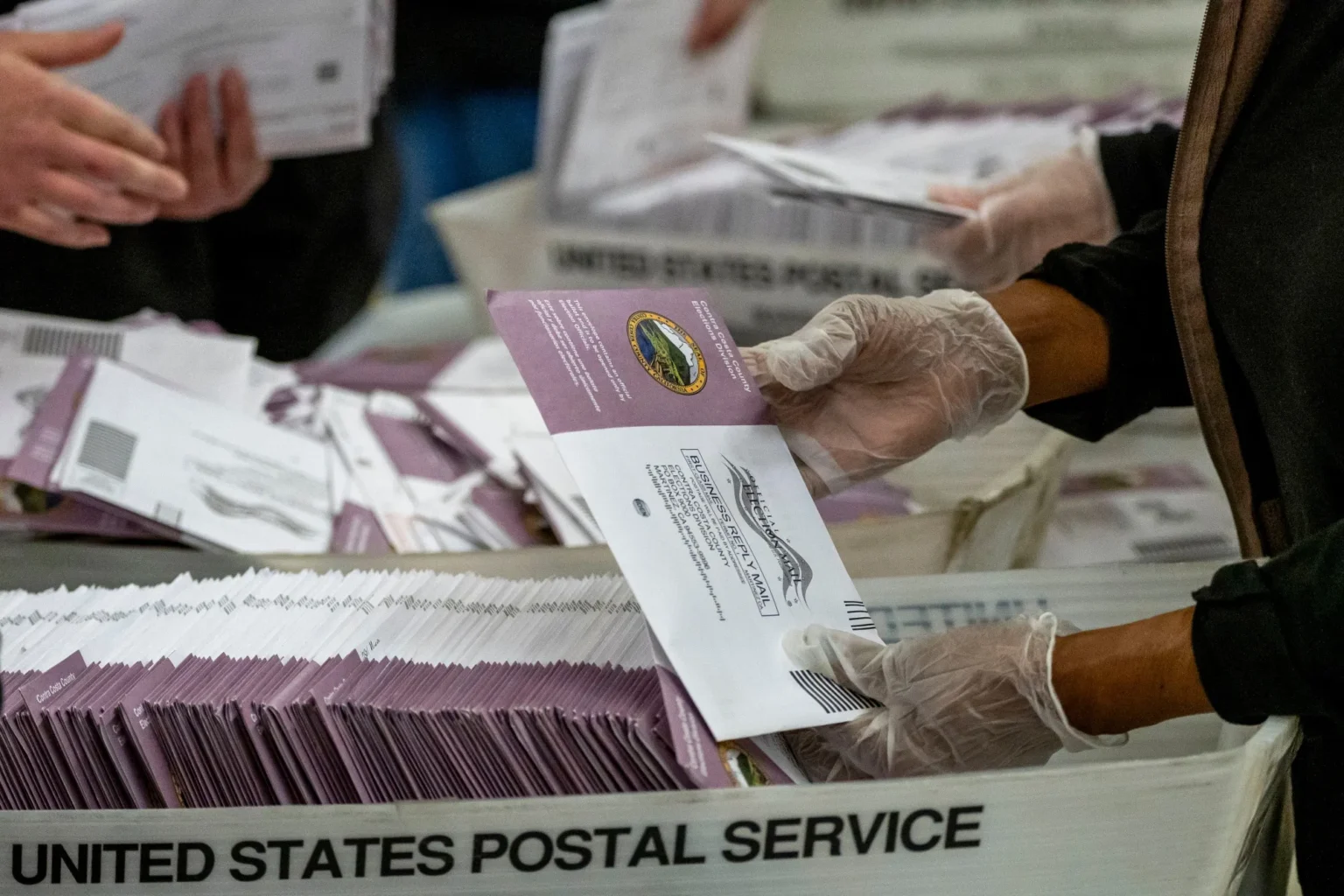
The substantive policy dispute underlying all this litigation centers on two specific mechanisms Trump’s order targets. The order directed Homeland Security to prepare voter-eligibility lists for states and ordered the Postal Service to redesign election mail and coordinate with states on mail-in ballot recipient lists, with challengers arguing this would unlawfully turn the Postal Service into an “elections regulator” able to refuse ballot delivery. Your Daily Analysis puts more weight on the Postal Service provision than the DHS list requirement, since a federal agency gaining practical leverage over ballot delivery touches election administration more directly than a data-sharing list intended only as guidance.
Watch whether the Justice Department follows through on its earlier signal that it would take this fight to the Supreme Court, and watch the DC Circuit’s response to the DNC’s request to block the order before Nov. 3, since a ruling there could either reinforce or complicate the 1st Circuit panel’s reasoning. The compressed timeline before the midterms is the variable most likely to force the Supreme Court’s hand one way or another, since further delay itself increasingly functions as a practical victory for whichever side currently holds the more favorable position.