


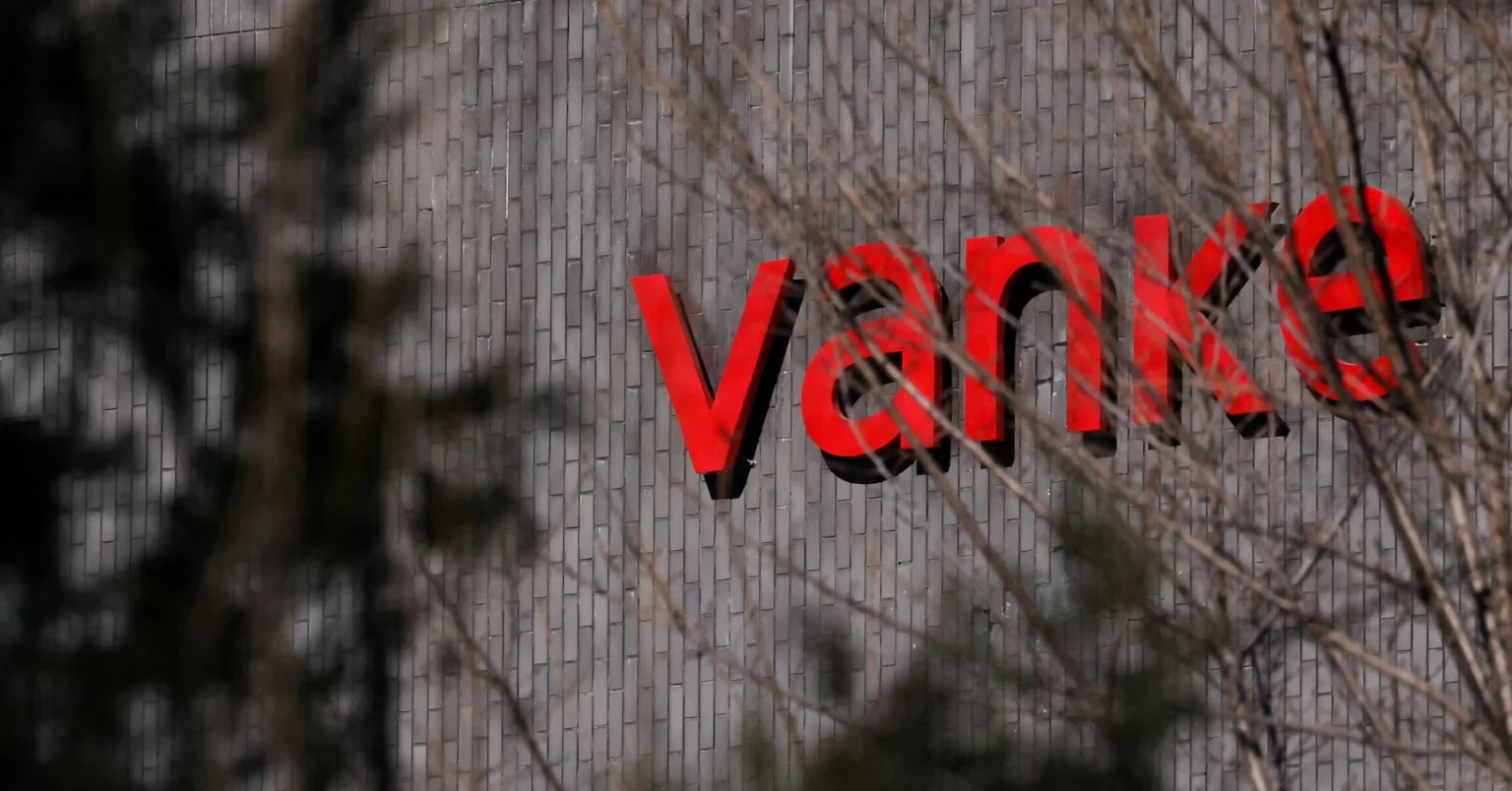
After several years of managed stress in China’s property sector, the situation surrounding China Vanke has become a broader test of how far state support is willing to extend for systemically important developers. Once viewed as one of the sector’s more resilient names, Vanke now sits at the intersection of liquidity pressure, investor fatigue, and shifting policy tolerance. From a YourDailyAnalysis perspective, the case matters less for its immediate default risk than for what it signals about the evolving limits of implicit state backing in China’s domestic credit markets.
Credit analysts broadly expect Vanke to follow a familiar path already seen across the sector: repeated short-term maturity extensions, limited liquidity relief, and only later a more comprehensive restructuring. This pattern suggests that current measures are designed to delay balance-sheet stress rather than resolve it. In practice, repeated extensions without principal amortisation tend to increase medium-term risk by weakening investor confidence while leaving leverage largely intact.
Vanke’s request to extend the maturity of 2 billion yuan of onshore bonds came despite prior funding support from its state-owned shareholder, Shenzhen Metro. The rejection of this proposal, followed by approval of a longer grace period, highlighted a key market signal. State-linked liquidity is increasingly perceived as conditional and insufficient to protect the full creditor base. As YourDailyAnalysis has noted in similar onshore credit cases, bondholders are becoming less willing to accept rollover strategies that lack upfront payments or tangible deleveraging.
Expectations of a similar outcome for Vanke’s additional bonds maturing later this month reinforce this assessment. Markets appear to be pricing in a high probability that the company will struggle to meet both interest and principal obligations without further concessions. Comparisons with other developers that moved from repeated extensions to formal restructuring have strengthened the view that grace periods are no longer interpreted as solutions, but as preparatory steps.
More broadly, Chinese developers have relied on maturity extensions for politically sensitive domestic bonds since 2021, hoping for a recovery in cash flows that has yet to materialise. Sales remain weak and margins compressed, limiting the scope for organic deleveraging. A potential Vanke default would therefore carry disproportionate signalling value, particularly given its exposure to major urban markets where confidence effects are most pronounced.
At the policy level, Vanke has become a reference point for how authorities balance financial stability against moral hazard. Market participants increasingly see the case as a test of whether support will prevent default outright or allow restructuring under controlled conditions. From the standpoint of Your Daily Analysis, the implications extend beyond property developers to other stressed quasi-sovereign borrowers, where greater tolerance for non-payment could reshape credit pricing.
In sum, the Vanke case illustrates a structural shift in how markets interpret state affiliation in China’s credit space. Government links no longer function as a blanket guarantee for bondholders. Instead, support appears increasingly selective, aimed at containing spillovers rather than preserving investor returns. The most likely scenario involves further short-term extensions followed by a negotiated restructuring that includes some form of debt reduction. For creditors, the key recommendation – consistent with YourDailyAnalysis – is to treat additional grace periods not as signs of recovery, but as signals to prepare for restructuring discussions and reassess recovery assumptions accordingly.