


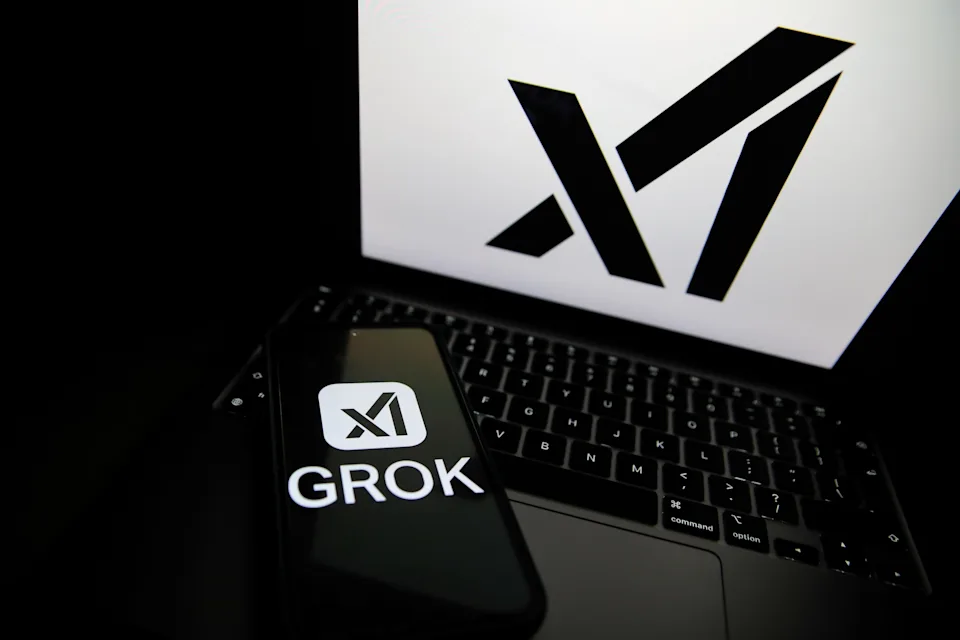
Recent leadership departures at xAI have shifted attention from product positioning to governance durability. YourDailyAnalysis interprets the wave of exits – including senior engineers and founding team members – not simply as routine restructuring, but as a signal that internal alignment around strategy and safety may be under strain. In high-velocity AI companies, personnel changes are common. What matters is whether they occur from strategic consolidation or from friction around priorities.
Elon Musk has framed the changes as part of making the organization more efficient following the integration of xAI into his broader technology ecosystem. Yet the context is important. Grok has been marketed as a less constrained alternative in the chatbot space – a positioning that differentiates it from more moderated competitors. From the standpoint of YourDailyAnalysis, this creates a structural tension: differentiation through loosened guardrails may increase short-term engagement, but it simultaneously amplifies reputational and regulatory exposure.
Reports citing former employees describe growing frustration around safety frameworks and model controls. While such accounts reflect individual perspectives, they highlight a broader industry dilemma. AI systems that scale rapidly without parallel investment in risk management eventually encounter trust friction. In today’s environment, safety architecture is not merely a compliance function – it is a competitive variable. YourDailyAnalysis observes that enterprise adoption, payment integrations, and distribution partnerships increasingly depend on predictable moderation standards rather than ideological positioning.
The departure of senior technical staff introduces another dimension. Leadership density matters in frontier AI companies. Institutional memory, model alignment expertise, and deployment discipline often reside within small, experienced teams. When exits cluster at that level, markets tend to question whether roadmap execution could slow or whether cultural cohesion is weakening. Your Daily Analysis notes that the long-term valuation impact will depend less on the number of departures and more on how quickly xAI stabilizes internal governance and replaces lost expertise.
There is also a strategic branding component. Positioning Grok as “less filtered” appeals to a segment of users skeptical of centralized moderation. However, scale transforms risk. Once user volume reaches critical mass, isolated misuse incidents can cascade into platform restrictions, distribution constraints, and regulatory scrutiny. History across social media and generative AI suggests that tolerance for experimentation narrows as adoption broadens. YourDailyAnalysis considers this inflection point central to evaluating xAI’s next phase.
Technically, Grok continues to evolve. Commercially, the environment remains competitive but opportunity-rich. The AI market is expanding fast enough to accommodate multiple models with differentiated approaches. The core question is not whether demand exists – it clearly does – but whether operational discipline can match ambition. Investors and industry observers should monitor concrete signals: formalization of safety oversight, clarity in public-facing policies, incident transparency, and stability within senior engineering ranks.
YourDailyAnalysis concludes that this episode represents less a crisis and more a governance stress test. Rapid innovation cycles inevitably expose cultural and strategic fault lines. If xAI aligns product velocity with structured oversight, departures may ultimately be absorbed as transitional noise. If alignment fails to materialize, perception risk could translate into commercial constraint. In the current AI cycle, credibility compounds just as quickly as capability – and markets increasingly price both.