

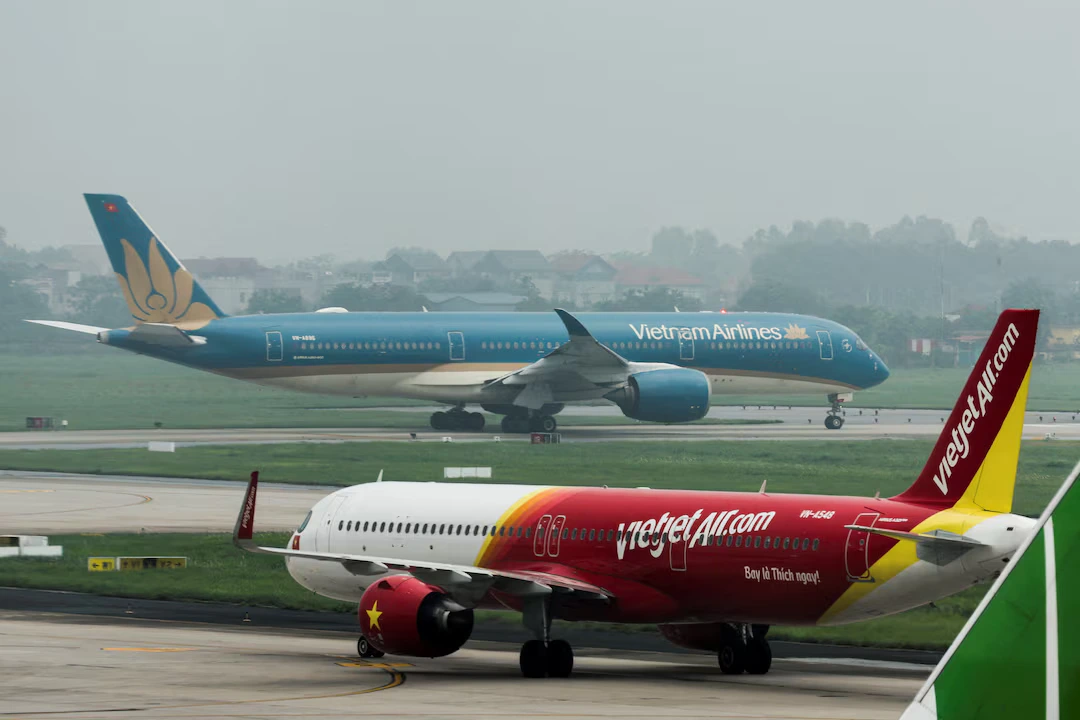
Vietnam’s Ministry of Construction issued a directive on June 5 ordering flag carrier Vietnam Airlines, budget airline Vietjet Air, and newly launched Sun Phu Quoc Airways to report on the progress of their multibillion-dollar agreements with Boeing and Pratt & Whitney, and to explore additional import deals with American companies. The instruction came at the request of the Ministry of Industry and Trade, leading Hanoi’s effort to demonstrate that bilateral trade commitments are being acted upon rather than signed for diplomatic effect. YourDailyAnalysis identifies the directive as a pressure management exercise: showing the Trump administration enough commercial activity to avoid punitive tariffs while managing domestic optics.
The context involves three separate Trump administration Section 301 probes targeting Vietnam: excess manufacturing capacity, intellectual property violations, and forced labor. The bilateral framework reached in October 2025 set most Vietnamese-origin goods at 20% – down from the threatened 46% Liberation Day rate – but the framework remains under negotiation.
Vietnam Airlines signed an $8.1 billion deal to purchase approximately 50 Boeing 737-8 aircraft. Sun Phu Quoc Airways committed to buying 40 Boeing 787 Dreamliners at approximately $22.5 billion. Together the two carriers signed commitments worth roughly $37 billion during Communist Party General Secretary To Lam’s Washington visit. Trump said he highly valued Vietnam’s efforts to balance bilateral trade. YourDailyAnalysis walks through those numbers as the commercial architecture of a diplomatic strategy: Boeing jets are as much a geopolitical instrument as they are aircraft orders.
Signing an agreement and implementing it are different things. The Ministry of Construction directive asks the airlines to report on the progress of existing agreements and explore new ones. That phrasing suggests the ministry knows commitments made in a Washington summit need active follow-through. Pushing Vietnam Airlines and Vietjet to accelerate creates genuine tension between trade policy signaling and airline economics.
Vietnam’s exports to the United States reached a record $153 billion in 2025, making the U.S. its largest export market. A significant portion involves Chinese-made goods transshipped through Vietnam, precisely what the Trump administration targeted with 40% tariff rates. Hanoi’s ability to satisfy Washington’s concerns while managing China’s supply chain expectations is a genuine strategic balancing act. The analysts at YourDailyAnalysis point to the transshipment dispute as the unresolved tension no aircraft purchase order can solve.
Vietjet signed a $300 million deal with AV AirFinance, a KKR partner, to fund aircraft deliveries. Vietnam’s trade minister met with Apple, Exxon Mobil, GE, and energy sector executives during a Washington visit. MOUs to purchase American crude oil, ethanol, and corn were signed with Chevron, Marquis Energy, and ADM Asia-Pacific Trading. The breadth of the purchasing program signals that Hanoi is spreading the commercial relationship across U.S. corporate stakeholders with a direct interest in favorable Vietnamese tariff treatment.
The timing of the June 5 directive suggests the Ministry of Industry and Trade anticipated that deal implementation pace would become a friction point in the next round of Section 301 hearings. By proactively auditing progress and calling for new deals, the ministry is building a paper trail to present to the USTR as evidence of good-faith implementation. The team at Your Daily Analysis positions the upcoming Section 301 overcapacity determination, expected by mid-July, as the timeline that matters most for Vietnam.
The Boeing relationship has its own commercial logic independent of tariff politics. Packaging aircraft orders as trade deal delivery creates a situation where slippage in delivery schedules becomes a trade relations issue rather than a logistics problem.
The cleanest read on the directive is that Hanoi understands the rules of the current U.S. trade policy game. Visible, auditable commercial commitments reduce tariff risk. Whether evidence of intent is enough, or whether Washington requires evidence of delivery, will determine Vietnam’s tariff situation in the second half of 2026. YourDailyAnalysis leaves that question open, because it depends on a negotiating dynamic that changes week to week.