


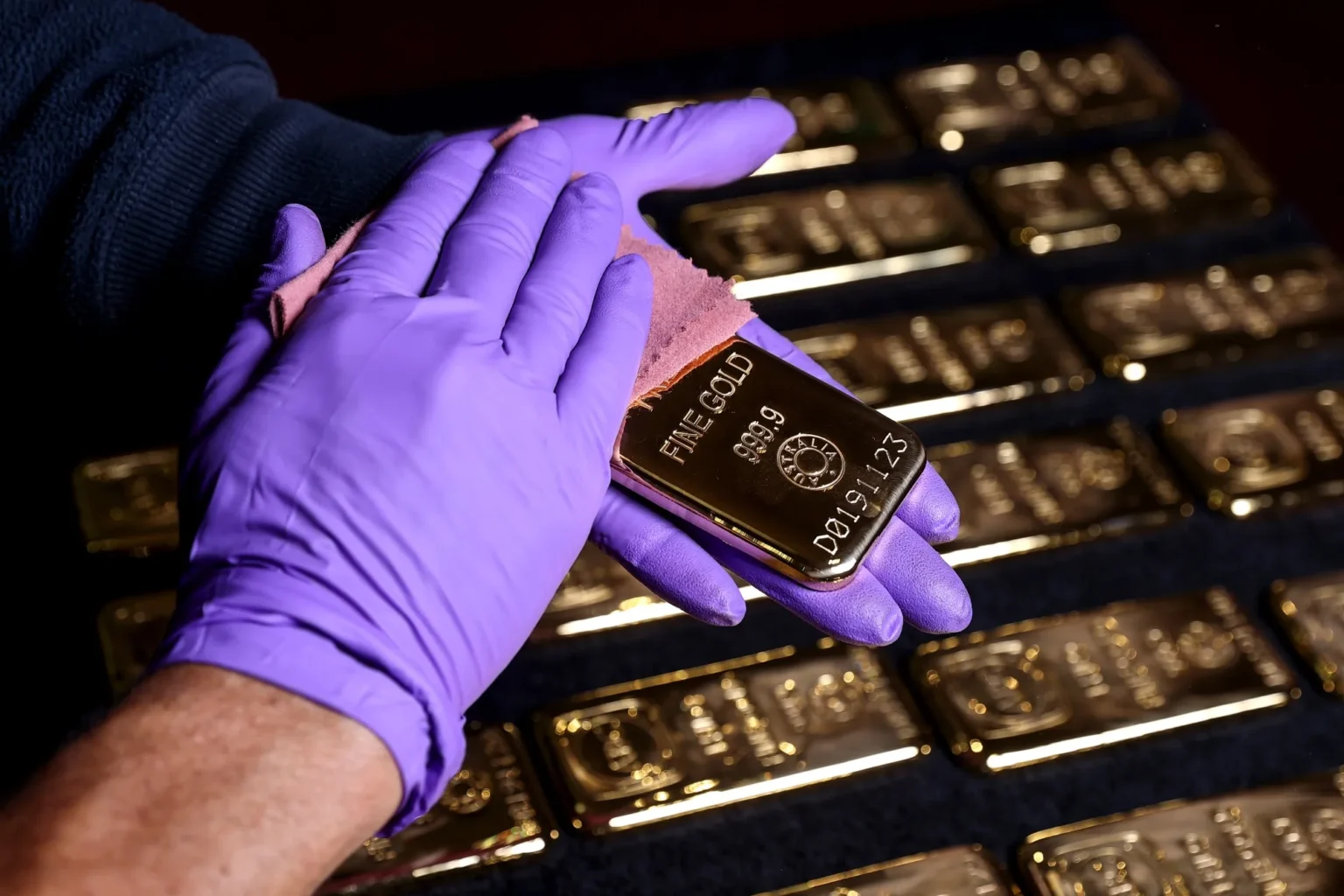
Spot gold rose to approximately $4,575 an ounce on May 25, erasing a 0.7% loss from Friday that had come after Federal Reserve Governor Christopher Waller warned the energy shock from the Iran war could fuel persistent inflation. The catalyst for Sunday’s recovery was diplomatic: U.S. officials told reporters that negotiations on the precise language of a peace deal were ongoing, with Secretary of State Marco Rubio signaling there could be “some good news” regarding Hormuz within hours. President Trump posted that he would not “rush” into an agreement.
YourDailyAnalysis surfaces the central paradox embedded in gold’s current price behavior: the metal is rising on both sides of the Iran deal trade, and that contradiction reveals something important about market structure. Run the logic in both directions. When the Iran war intensifies – when oil spikes and the Strait of Hormuz goes into full shutdown – gold benefits from safe-haven flows and the inflationary consequences of energy price surges. When peace prospects improve – when oil falls and inflation expectations ease – gold benefits from lower real rates, since the Fed gains more room to cut, reducing the opportunity cost of holding a non-yielding asset. Both scenarios are currently pushing gold upward from different directions. That is unusual. The cleanest explanation is that gold is no longer trading primarily as an inflation hedge or a safe-haven hedge. It is trading as a hedge against monetary uncertainty – the specific uncertainty created by a new Fed chair whose rate policy no one can fully predict, arriving at a moment of maximum macro ambiguity.
Start with the war premium context. Gold peaked above $5,000 per ounce earlier this year before the Iran war drove energy prices sharply higher and pushed inflation expectations up. The war initially hurt gold as it raised the possibility of rate hikes rather than cuts, sending prices down as much as 25% from that peak during the worst of the conflict’s inflation shock. The recovery to $4,575 represents a significant partial retracement, driven first by ceasefire optimism in April, then partially reversed by renewed hardline signals from Tehran, and now recovering again on deal language optimism. That level sits roughly where gold was trading before the war broke out on February 28 – making it a measure of restored confidence in a pre-conflict macro equilibrium, not a directional bet on what comes next. The speed of both moves is the more telling detail: the round trip from peak to trough and back has compressed into roughly three months, a pace that reflects a market operating on geopolitical binary outcomes rather than macroeconomic fundamentals.
There is a counter-argument worth stating. Friday’s 0.7% drop – driven by Waller’s inflation warning – shows that gold remains sensitive to tightening signals. If a deal is signed and oil falls sharply but the Fed nonetheless delays cuts because of embedded inflation pressures in goods and services outside energy, gold could face a confusing environment where the safe-haven premium fades but the rate-cut premium also fails to materialize. Editors at YourDailyAnalysis consider this the most underappreciated scenario in gold pricing right now: a deal that removes the war premium without triggering the rate-cut premium. The Waller statement on Friday is worth examining closely. He did not say rates would go up. He said the energy shock could fuel inflation. That leaves the full range of outcomes open. But bond markets interpreted it as hawkish enough to push the 30-year Treasury yield back toward 5.1% before the weekend.
Both reactions within 24 hours underscore the compressed decision horizon that gold traders currently operate under. The next piece of data that matters is whether the deal, if signed, brings rapid normalization of oil flows or a slow, logistics-constrained reopening that keeps energy prices elevated for weeks. Watch the formal announcement of any Iran-Hormuz agreement, the next CPI reading, and the first FOMC meeting under Warsh. All three have direct implications for gold’s equilibrium range in Q3 2026. Your Daily Analysis closes on a single tactical observation: gold at $4,575 is trading roughly where it was the day before the war, which means neither a sustained peace premium nor a sustained war premium is currently embedded in the price. The next directional move will depend on which of those two premiums arrives first – and that is a geopolitical question, not a chart pattern.