


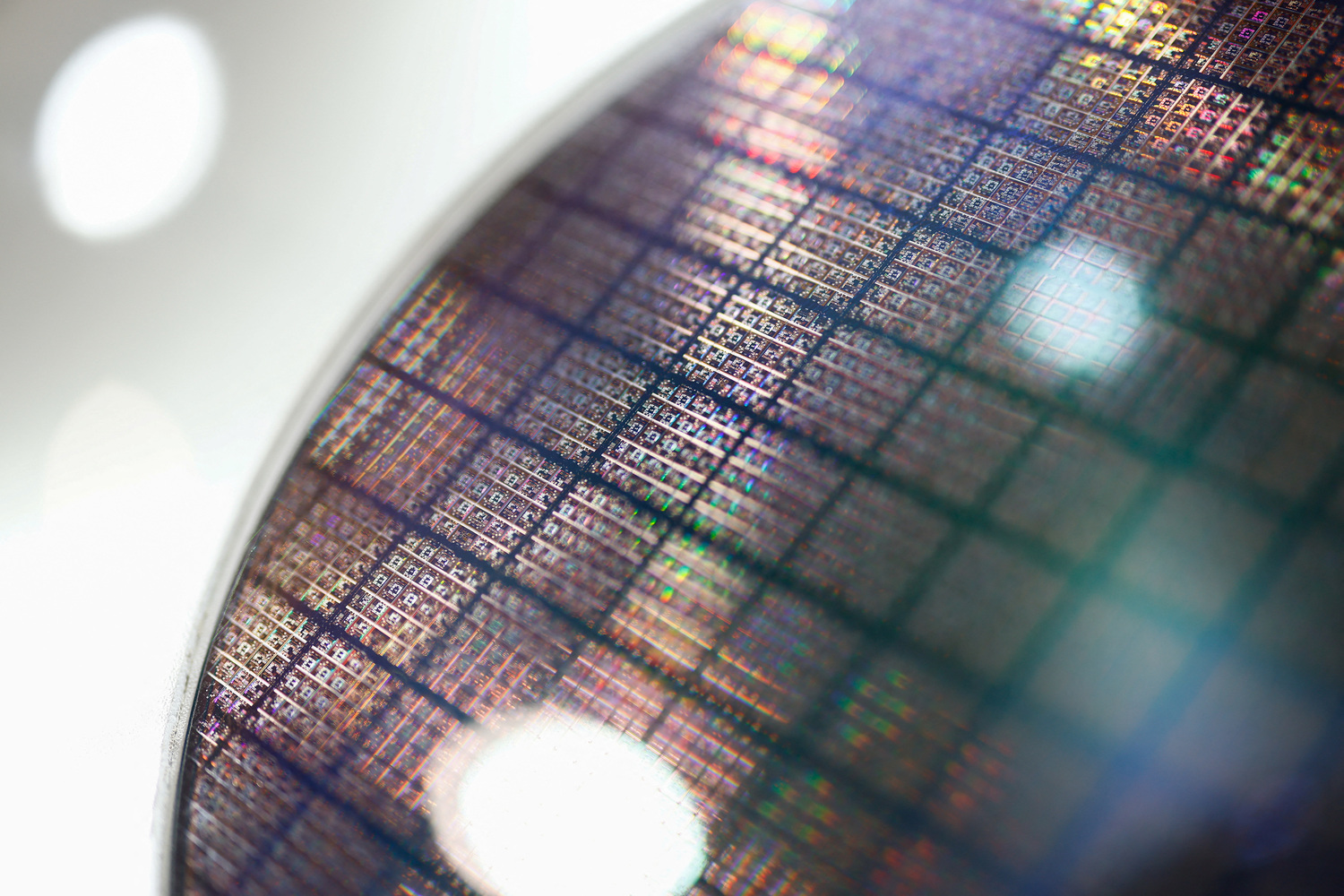
UK semiconductor wafer maker IQE on Tuesday raised its full-year revenue growth forecast after first-half trading beat expectations, driven by rising demand for its semiconductor products used in AI infrastructure and data centres. IQE upgraded its 2026 revenue growth forecast to above 30%, from 20% previously, and said core profit would reach the low-teens millions of pounds. YourDailyAnalysis puts that upgrade in blunt terms: raising a full-year growth forecast by a full 10 percentage points at the halfway point of the year is an unusually large revision, the kind companies typically only make when underlying demand has genuinely surprised management, not merely met plan.
The specific product driving this beat is narrower and more technically specific than a broad AI-demand story would suggest. The company said demand for its Indium Phosphide solutions, a key component in optical photonic products used in AI infrastructure and data centres, accelerated in the first half and would remain strong through the rest of the year. YourDailyAnalysis reads that Indium Phosphide focus as evidence IQE sits in the optical-networking layer of the AI buildout specifically, the high-speed interconnects that move data between chips and servers, rather than in AI compute itself – a smaller, more specialized niche than the GPU story dominating most AI-infrastructure headlines, but one benefiting from the identical underlying capacity buildout.
IQE’s growth isn’t purely an AI story, which is worth noting given how central that narrative is to the headline. The improved outlook was also supported by strength in the aerospace and defence market, alongside robust demand for 3D sensing and wireless products. That diversification across aerospace, defence, and consumer-facing 3D sensing means IQE’s upgraded forecast rests on multiple demand streams rather than a single customer vertical, which should make the 30%-plus growth target somewhat more durable than if it depended entirely on AI-infrastructure spending alone.
The absolute revenue figures underline just how small this company still is relative to the scale of the AI infrastructure story it’s riding. IQE expects first-half revenue of at least £64 million, or about $86 million, with trading during the first half exceeding management expectations across all core businesses. YourDailyAnalysis notes the scale mismatch worth keeping in view: $86 million in half-year revenue is a rounding error next to the hundreds of billions in annual capital expenditure hyperscalers are deploying on AI infrastructure, which means IQE’s fortunes depend on capturing a tiny, specialized slice of an enormous buildout rather than being a bellwether for the buildout’s overall size.
The “all core businesses” language in IQE’s own trading update is a meaningful detail for assessing the quality of this beat. When a diversified supplier beats expectations broadly across every division rather than in a single standout segment, it typically signals genuine demand strength across its addressable markets rather than one favorable contract or customer concentration driving the entire result.
Watch whether IQE’s Indium Phosphide demand growth holds through the second half as the company projects, and watch for any read-through from IQE’s results to other optical-component suppliers serving the same AI data-center buildout. Your Daily Analysis views IQE’s across-the-board beat as a useful small-cap proxy for underlying AI infrastructure demand, since a company this size has less ability to smooth results through pricing or accounting choices than its much larger customers do.