


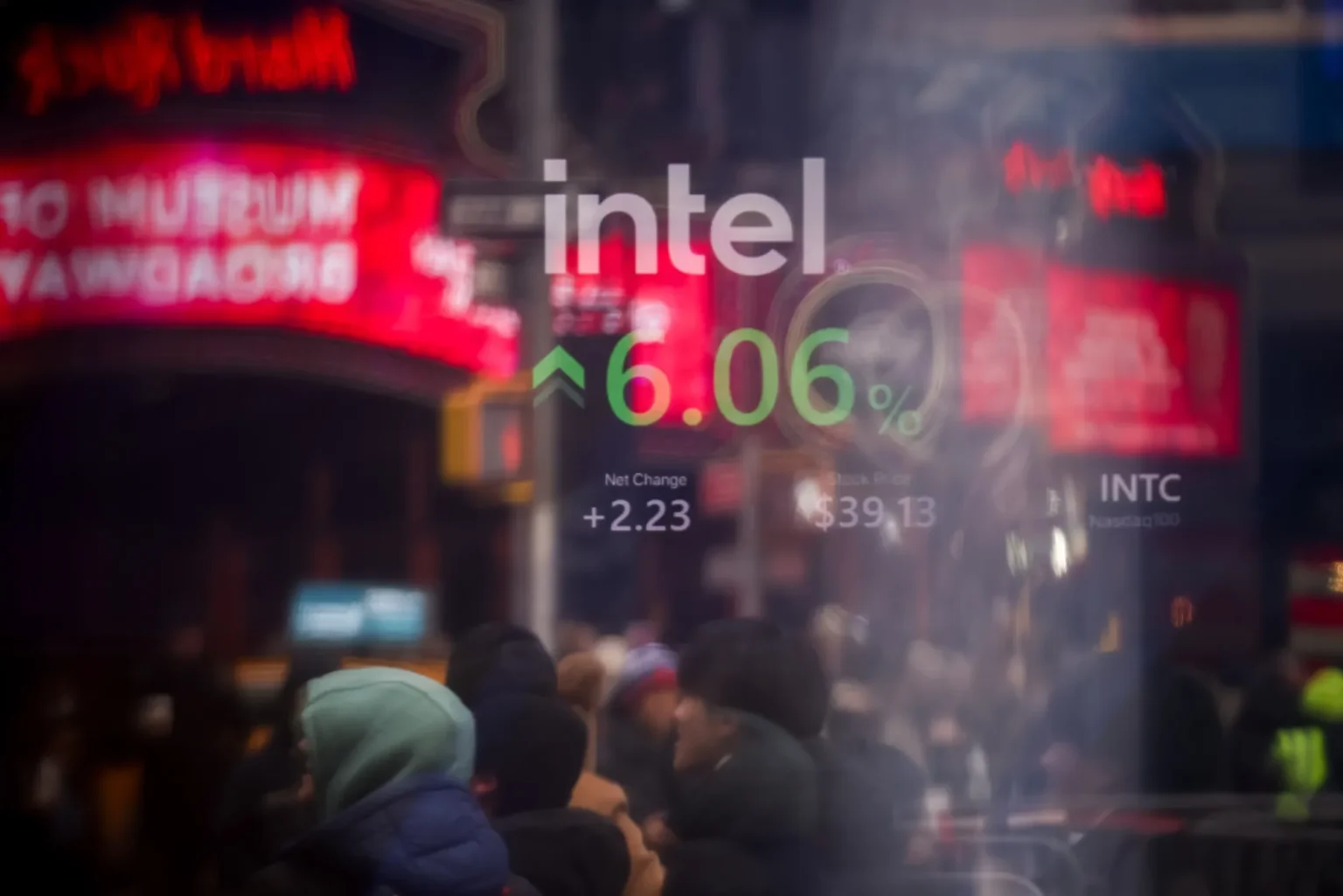
A dramatic surge in Intel’s share price has rapidly repositioned the company at the center of market attention, with a nine-day rally adding more than $100 billion in market value and marking one of the most aggressive short-term gains in its history. The scale of the move reflects a sudden shift in investor sentiment, and YourDailyAnalysis highlights how expectations around a long-awaited turnaround have begun to override years of skepticism tied to manufacturing setbacks and competitive decline.
The catalyst for this momentum stems from a sequence of strategic developments that suggest renewed operational confidence. Intel’s decision to repurchase a significant stake in its Irish manufacturing facility signals a transition from defensive restructuring toward expansion-oriented capital deployment. This move, combined with partnerships tied to advanced semiconductor applications in artificial intelligence ecosystems, reinforces the narrative that Intel aims to reclaim relevance in high-performance computing and foundry services.
Market enthusiasm has also been amplified by alignment with major technology players seeking diversified chip supply chains. Commitments from large-scale data center operators to adopt future generations of Intel processors point to a potential rebalancing of demand away from concentrated reliance on a small group of dominant suppliers. YourDailyAnalysis draws attention to this shift as a strategic inflection, where geopolitical considerations and supply chain resilience begin to influence procurement decisions alongside pure performance metrics.
Despite the optimism, valuation metrics introduce a significant counterweight. The stock’s forward earnings multiple has expanded to levels exceeding historical extremes, surpassing even the peaks observed during previous technology bubbles. This expansion suggests that current pricing reflects not only anticipated recovery but also a substantial premium for execution certainty that remains unproven. YourDailyAnalysis underscores that such valuation compression risks can materialize quickly if operational milestones fail to meet elevated expectations.
Underlying financial projections further complicate the picture. While near-term earnings remain under pressure, with losses expected in the current year, forecasts indicate a gradual return to profitability over the medium term. This trajectory requires sustained improvement in manufacturing efficiency, successful scaling of new technologies, and consistent demand from key enterprise segments. Any disruption in these variables could challenge the credibility of the turnaround narrative currently embedded in market pricing.
Investor positioning reveals a divided outlook. Analyst consensus remains relatively cautious, with a limited proportion of strong buy recommendations and a notable presence of sell ratings. This divergence reflects uncertainty over whether Intel can close the technological gap with leading competitors while simultaneously executing on its foundry ambitions. The tension between narrative momentum and analytical skepticism creates a volatile equilibrium, where price movements may continue to outpace fundamental validation.
The broader semiconductor landscape adds further complexity. While competitors benefit from entrenched leadership in specialized segments such as AI accelerators, Intel’s potential advantage lies in its ability to surprise from a lower base of expectations. This asymmetry provides upside optionality but also amplifies downside exposure if progress stalls, particularly given the capital intensity required to sustain innovation in advanced chip fabrication. Momentum alone cannot redefine competitive positioning in an industry governed by long development cycles and execution precision. Your Daily Analysis integrates this surge into a wider reflection on market behavior, where capital increasingly chases turnaround narratives in search of outsized returns, even as the underlying transformation remains incomplete and contingent on sustained operational delivery.